

Overview
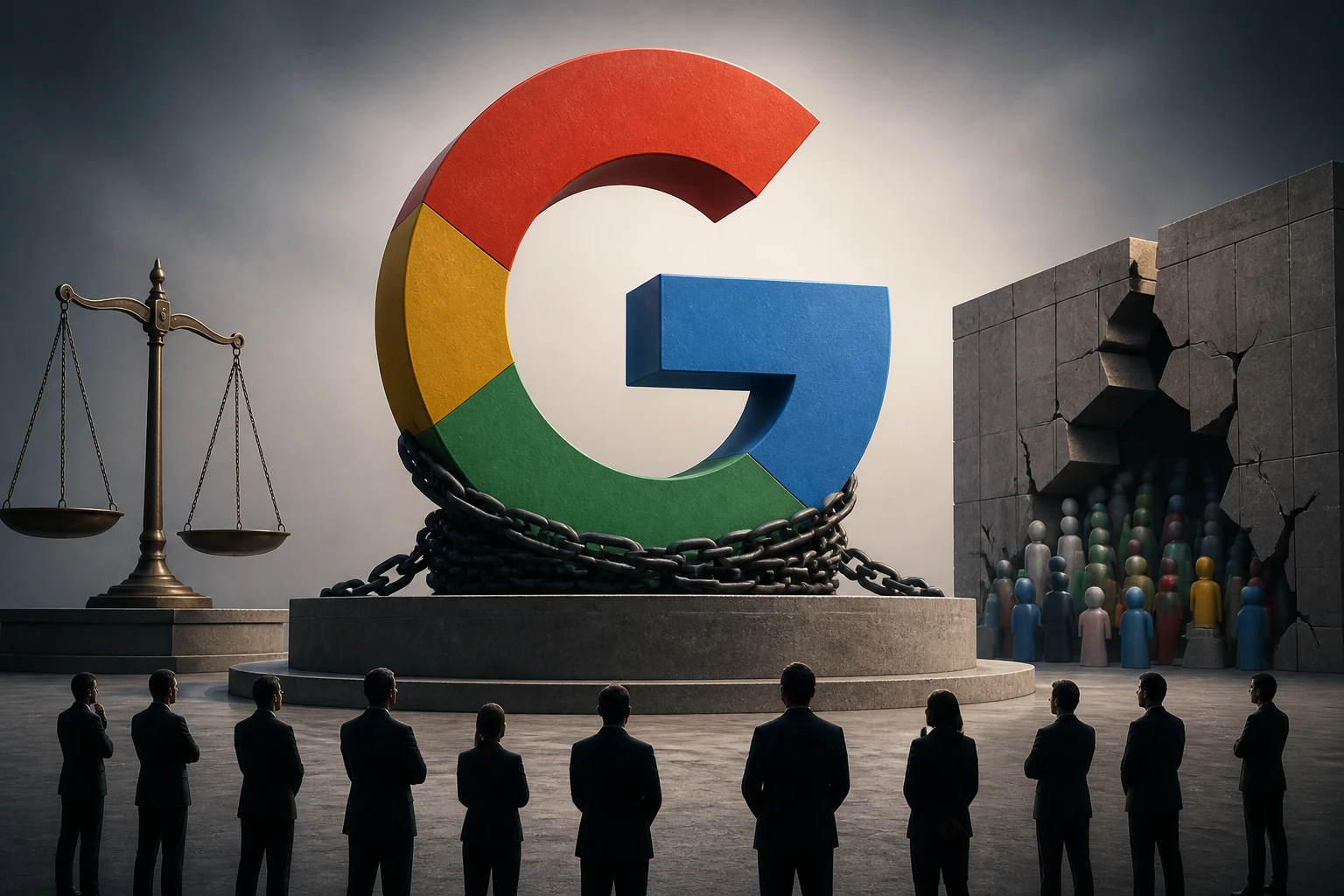
Imagine you own the biggest marketplace in town, and every time someone wants to buy something, they have to go through your store first. Now imagine you also sell your own products in that same marketplace, and you always put your items on the front shelf while hiding your competitors' products in the back corner. That's essentially what the European Union says Google has been doing with its digital advertising empire. On Friday, EU regulators slammed the tech giant with a record-breaking €2.95 billion ($3.5 billion) fine for allegedly manipulating its dominant position to favor its own advertising services over competitors. This isn't just another regulatory slap on the wrist—it represents a fundamental shift in how global authorities are confronting Big Tech's growing influence over digital commerce and information flow.
The Problem
The EU's case centers on Google's Shopping service, which displays product listings at the top of search results. Regulators found that Google systematically gave preferential treatment to its own shopping comparison service while demoting rival services in search rankings. Between 2008 and 2017, Google's own shopping service saw traffic increase 45-fold, while competitors saw their visibility plummet by up to 85%.
Here's why this matters: Google controls over 90% of Europe's search market. When the company decides which results appear first, it essentially controls what millions of consumers see when they're ready to buy. The EU argued this created an unfair competitive advantage, allowing Google to leverage its search dominance to dominate adjacent markets like e-commerce comparison shopping. This practice, known as "self-preferencing," has become a central battleground in the global fight against tech monopolies.
Analysis
This fine represents more than just punishment—it's a strategic shot across the bow of Big Tech's business model. The €2.95 billion penalty equals roughly 2.6% of Google's parent company Alphabet's 2022 revenue, making it substantial enough to grab attention but not crippling enough to fundamentally alter operations.
From an economic perspective, this ruling challenges the foundation of how platform companies monetize their dominance. Google's integrated ecosystem—search, advertising, shopping, maps—generates massive value by keeping users within its walled garden. Breaking these connections could reduce efficiency and innovation while potentially raising costs for consumers.
From a policy standpoint, the EU is positioning itself as the global leader in tech regulation. This follows previous major fines: €4.34 billion in 2018 for Android antitrust violations and €1.49 billion in 2019 for advertising restrictions. The cumulative message is clear: Europe won't tolerate unchecked digital dominance.
Business implications extend far beyond Google. The ruling establishes precedent for how regulators will evaluate platform companies that compete in markets they also control—think Amazon with its marketplace and private label products, or Apple with its App Store and competing apps.
Real-World Examples
Foundem, a UK-based price comparison site, was one of the original complainants in this case. The company saw its traffic collapse after Google launched its shopping service, eventually leading to its closure. Founder Shivaun Raff called the ruling "vindication" but noted it came too late to save many competitors.
Microsoft faced similar antitrust scrutiny in the 1990s for bundling Internet Explorer with Windows. That case reshaped how tech companies approach competition, though critics argue the remedies were insufficient to prevent today's platform monopolies.
Amazon is watching closely, as it faces parallel scrutiny for allegedly favoring its private-label products over third-party sellers. The company's "Amazon Basics" line competes directly with merchants who depend on Amazon's platform for distribution.
Industry experts like Georgetown Law professor Fiona Scott Morton argue these cases represent a broader reckoning with "platform capture"—where dominant companies use their infrastructure control to extract value from dependent businesses and consumers.
The Challenge
Regulating tech giants isn't like traditional antitrust enforcement. Digital markets move faster than legal systems, with companies able to pivot strategies, acquire competitors, or create new products while regulators are still analyzing yesterday's problems. Moreover, many consumers genuinely benefit from integrated services—Google's shopping results are often more convenient and relevant than visiting multiple comparison sites. The challenge lies in distinguishing between legitimate innovation and anticompetitive behavior.
Future Implications
This ruling could trigger a domino effect globally. The US Department of Justice and Federal Trade Commission are pursuing similar cases against Google, Meta, Amazon, and Apple. Countries like India, Australia, and South Korea are also strengthening their digital competition frameworks.
For businesses, this signals a new era of regulatory compliance costs and operational constraints. Companies may need to restructure their platforms, create artificial barriers between services, or face ongoing government oversight.
The broader question is whether these interventions will foster genuine competition or simply fragment efficient systems. Early evidence suggests mixed results: Google has modified its shopping display format but maintains significant market share, while new competitors have struggled to gain meaningful traction despite the regulatory support.
Looking Ahead
The €2.95 billion fine may be less important than the precedent it establishes. As digital platforms become the primary intermediaries for commerce, communication, and information, their power to shape markets and society grows exponentially. The question isn't whether more regulation is coming—it's whether regulators can move fast enough and smart enough to preserve competition without stifling innovation. Will this mark the beginning of a more competitive digital economy, or will it simply encourage tech giants to be more subtle in their dominance?