

The Silent Revolution in Your Pocket
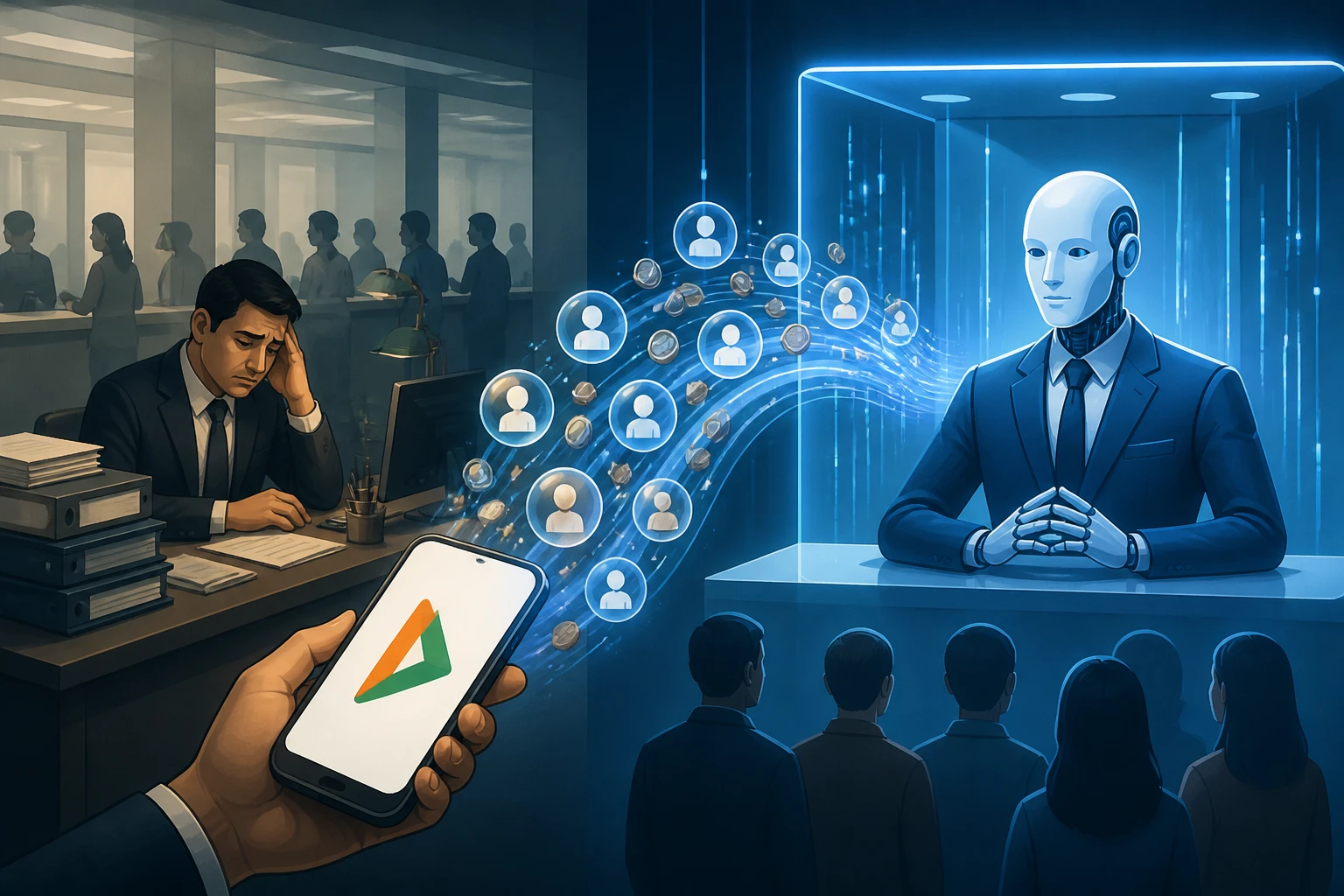
Picture this: You're at your favorite tea stall, quickly scanning a QR code to pay ₹10 for your evening chai. Within seconds, the transaction is complete. But what you don't see is the invisible army of algorithms watching, learning, and cataloging this moment. That simple UPI payment just fed a machine learning system that's quietly revolutionizing Indian banking—and potentially making thousands of bank employees obsolete.
Every tap, every scan, every digital rupee you spend is teaching artificial intelligence to understand money better than the humans who've managed it for centuries.
Here's What's Happening
Indian banks are experiencing an AI transformation unlike anywhere else in the world. Your UPI transactions—all 8.7 billion of them processed monthly—are creating the world's largest real-time financial behavior database. Banks like HDFC, ICICI, and even government-owned SBI are using this data to train AI systems that can make lending decisions in under 30 seconds.
Kotak Mahindra Bank recently launched an AI-powered loan approval system that processes applications without human intervention. Axis Bank's machine learning algorithms now handle 60% of customer queries through chatbots. The Reserve Bank of India reports that digital lending platforms approved loans worth ₹2.2 lakh crore in 2023—most without a single human reviewing the application.
The shift isn't subtle; it's seismic.
Let's Break This Down
Think of your UPI payment history as a financial diary that AI can read fluently. When you buy groceries at 8 PM on weekdays, pay rent on the 1st, and transfer money to family members regularly, you're painting a detailed picture of your financial stability, spending habits, and reliability.
Traditional banks used to require salary slips, bank statements, and in-person meetings to assess creditworthiness. Now, AI algorithms can analyze your digital payment patterns and determine your loan eligibility faster than you can fill out a form. They know you pay your bills on time, avoid late-night impulse purchases, and maintain consistent spending patterns—or they know you don't.
HDFC Bank recently revealed that their AI systems process 95% of personal loan applications without human involvement. The algorithm considers over 500 data points from your digital transactions, social media activity, and even your phone's location data to make lending decisions.
But here's the catch: this intelligence comes at a cost. Banking sector employment has already declined by 8% since 2020, according to industry reports. The Indian Banks' Association estimates that 40% of bank branches could become redundant by 2027 as digital banking and AI automation expand.
Consider loan officers who once spent hours analyzing applications. AI now does this work in milliseconds. Customer service representatives who handled queries are being replaced by sophisticated chatbots that understand context and emotion. Even relationship managers are losing ground to algorithms that know customers' needs before they do.
The Bigger Picture
This transformation affects multiple stakeholders differently. Banking employees face an uncertain future, with junior roles disappearing first and senior positions requiring completely new skill sets. Customers benefit from faster services and 24/7 availability, but lose the human touch and personalized advice that experienced bankers provided.
For small business owners and freelancers, AI-driven lending offers unprecedented access to credit. Traditional banks often rejected their applications due to irregular income patterns, but AI can identify creditworthiness in unconventional financial behaviors.
However, privacy concerns are mounting. Every UPI transaction contributes to a comprehensive profile that banks, fintech companies, and potentially government agencies can access. Your spending habits become predictive tools for everything from insurance premiums to employment opportunities.
Rural India faces a double-edged impact. While AI-powered banking brings financial services to remote areas, it also eliminates local bank jobs that provided economic stability to small towns.
What's Next?
The AI revolution in Indian banking is irreversible and accelerating. By 2025, industry experts predict that artificial intelligence will handle 80% of routine banking operations. The question isn't whether this transformation will happen—it's how quickly humans can adapt.
Banking professionals need to reinvent themselves, focusing on relationship management, complex problem-solving, and areas where human judgment remains superior. Customers must become more aware of their digital footprints and the implications of their transaction data.
Your next chai payment won't just satisfy your tea craving—it'll contribute to an AI system that's reshaping India's financial landscape, one transaction at a time.