Insightlyinsightly
Good eveningGuest.

India's First Space Unicorn Has Arrived

Skyroot Aerospace became India's first space-tech unicorn in May 2026, achieving a $1.1 billion valuation through Series C funding. The company builds cost-effective small satellite launch vehicles, targeting the growing global demand for frequent satellite deployments. This milestone validates India's space policy reforms allowing private sector participation beyond ISRO's traditional dominance. With over 400 employees and $200 million in secured contracts, Skyroot's success signals India's space sector evolution from government-led to commercially viable industry, potentially leading to 2-3 more space unicorns by 2028.

India's First Space Unicorn Has Arrived
May 12, 2026

India's Hidden $100 Billion Tech Story - Global Capability Centres

India's Global Capability Centres are projected to generate $98.4 billion by FY26, hitting 2030 targets four years early. These 1,580+ offshore hubs employ 1.66 million professionals, evolving from back-office operations to AI research and product development for multinationals like Microsoft and Goldman Sachs. With 60% now handling high-value work, GCCs represent nearly 4% of India's GDP, offering significant career opportunities for professionals while reshaping global business operations and innovation strategies.

India's Hidden $100 Billion Tech Story - Global Capability Centres
May 11, 2026

Google Breaks Ground on India's First Gigawatt-Scale AI Hub in Vizag

Google's $15 billion AI hub in Visakhapatnam marks India's entry into gigawatt-scale AI infrastructure, creating 15,000 jobs and positioning the country as a global AI services backbone. The three-campus facility, built with AdaniConnex and Nxtra by Airtel, will consume enough power for 750,000 homes while serving Asia-Pacific markets. This investment signals India's transformation from IT outsourcing hub to AI infrastructure powerhouse, creating massive opportunities in AI engineering, data center operations, and cloud services for working professionals through 2030.

Google Breaks Ground on India's First Gigawatt-Scale AI Hub in Vizag
May 3, 2026

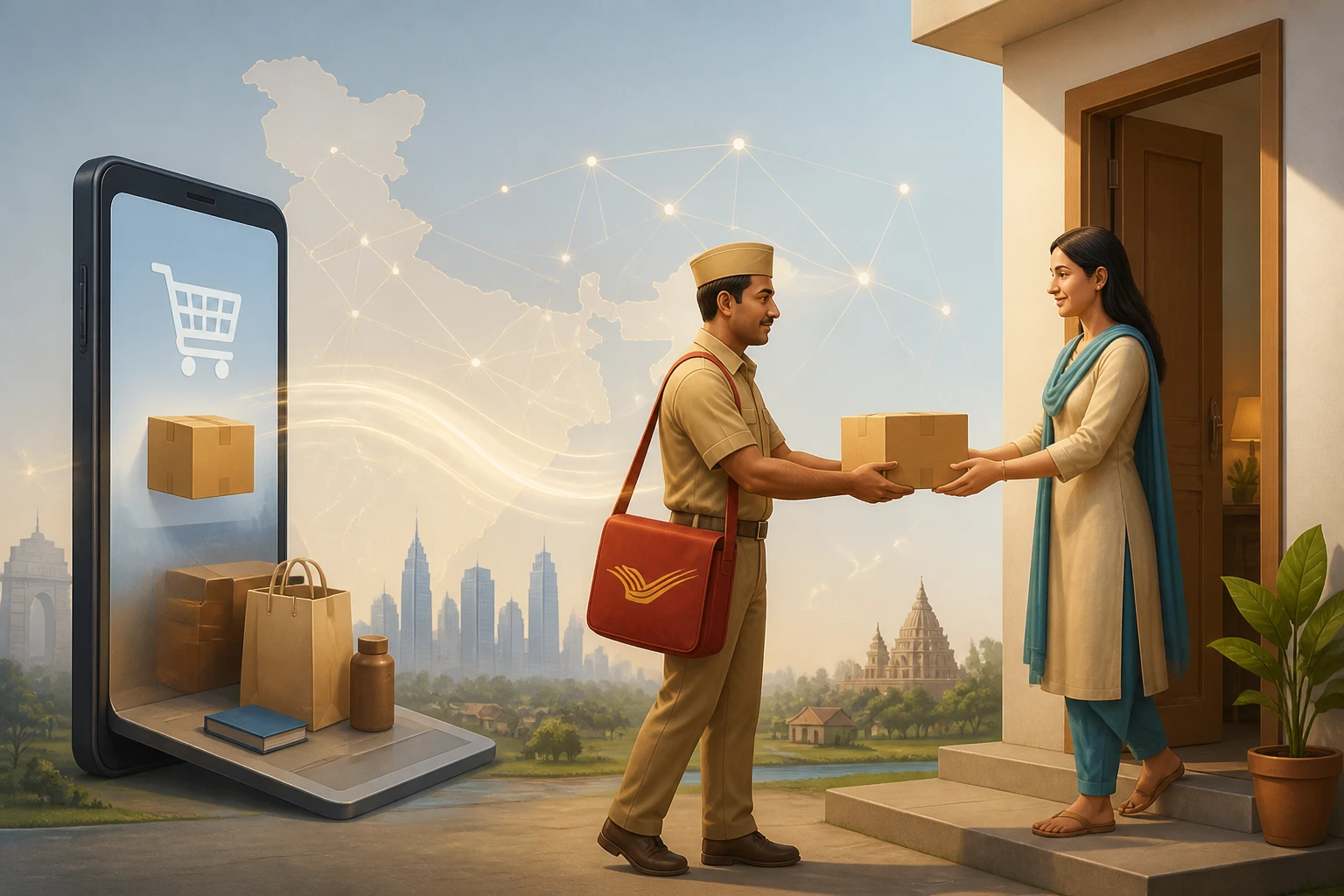
India Post Enters E-Commerce: First ONDC Order Delivered

India Post successfully completed its first ONDC e-commerce delivery in January 2026, marking its entry into digital commerce logistics. With 155,000 post offices and 100% pin code coverage, India Post could disrupt the ₹70 billion e-commerce market by offering deliveries at ₹20-40 versus ₹40-80 charged by private players. This government-backed integration with ONDC democratizes e-commerce access, particularly benefiting small businesses and rural consumers while potentially capturing 15-20% of logistics market share within three years.

India Post Enters E-Commerce: First ONDC Order Delivered
Jan 19, 2026

The Quiet Comeback of Boring Businesses

Investors are shifting capital from high-growth startups to "boring" businesses like logistics and manufacturing. Higher interest rates make steady 15% returns more attractive than risky unicorn bets. Traditional industrial companies saw 18% valuation increases in 2023 while tech valuations dropped 35%. These businesses offer recession-proof cash flows and essential services. The trend creates job opportunities in overlooked sectors and reflects market maturation toward sustainable profitability over flashy growth stories.

The Quiet Comeback of Boring Businesses
Jan 11, 2026

Why Subscription Fatigue Is Hitting Consumers

Subscription fatigue is hitting consumers hard as average households juggle 17+ subscriptions spending ₹5,200+ monthly while thinking they spend only ₹2,800. Rising inflation and accumulating "small" charges have triggered 35-40% annual churn rates, with 68% of users canceling services. Consumers are subscription hopping, favoring free tiers, and viewing auto-renewals suspiciously. The subscription economy is maturing from growth-focused to value-driven models, forcing businesses to prioritize retention over acquisition through flexible pricing and transparent billing.

Why Subscription Fatigue Is Hitting Consumers
Dec 25, 2025

The Business Model War Between Quick Commerce Apps

India's quick commerce apps like Zepto and Blinkit are locked in a high-stakes battle, burning billions while promising ten-minute deliveries. Despite raising massive funding ($665 million for Zepto alone), companies face brutal economics: dark stores cost ₹50-80 lakhs each, delivery costs run ₹45-60 per order, and unit economics remain negative. Players are pivoting to private labels and higher-margin categories while betting that urban customers will permanently embrace frequent, small-value orders over traditional planned shopping.

The Business Model War Between Quick Commerce Apps
Dec 21, 2025

The Hidden Economics Behind India's Cheap Internet

India's mobile data rates are world's cheapest at ₹7 per GB, but telecom operators face massive debt and unsustainable economics. Jio's 2016 free data strategy triggered a price war, consolidating the market to three players while revenue per user remains critically low around ₹150-200 monthly. With 5G requiring ₹1.5 lakh crore spectrum investments plus infrastructure costs, operators must raise tariffs to survive. This threatens India's digital economy built on cheap connectivity, potentially impacting everything from food delivery to streaming platforms as the era of unlimited data at throwaway prices ends.

The Hidden Economics Behind India's Cheap Internet
Dec 19, 2025

The IndiGo Meltdown: When India's Aviation Giant Grounded Itself

IndiGo cancelled over 1,000 flights on December 5, 2025, due to new pilot work hour regulations (FDTL Phase II) that reduced available pilot hours by 15-20%. The airline's efficiency-focused model couldn't adapt quickly to stricter rest requirements, causing its biggest crisis in 20 years. With 60% market share, IndiGo's failure had nationwide impact, highlighting risks of market concentration and the tension between commercial efficiency and safety compliance in India's aviation sector.

The IndiGo Meltdown: When India's Aviation Giant Grounded Itself
Dec 18, 2025

Does the Netflix-Warner deal threaten cinema?

Netflix's $82.7 billion acquisition of Warner Bros. creates an unprecedented entertainment powerhouse, combining global streaming reach with premium Hollywood content production. This vertical integration threatens traditional cinema by potentially eliminating theatrical releases for major franchises like Batman and Harry Potter. While box office revenue declined from $11.4 billion to $4.5 billion recently, Netflix's revenue grew to $29.7 billion. The deal accelerates cinema's transformation into a premium experience industry, forcing theaters to focus on immersive technologies rather than competing with convenient home streaming.

Does the Netflix-Warner deal threaten cinema?
Dec 17, 2025

The Hidden Reason Every Restaurant Suddenly Has 'Cloud Kitchens'

Restaurants are creating fake "cloud kitchen" brands to exploit Zomato's commission structure - paying 15% instead of 23% for dine-in establishments. This 8% difference saves restaurants lakhs annually, leading to 60% of Zomato's "restaurants" being phantom brands operated from existing kitchens. While beneficial for restaurants' margins, this creates authenticity concerns for customers and revenue challenges for platforms, forcing gradual tightening of verification processes across the food delivery ecosystem.

The Hidden Reason Every Restaurant Suddenly Has 'Cloud Kitchens'
Oct 5, 2025

Why Reliance is Quietly Buying Every Pharmacy in Your Neighborhood

Reliance has acquired 3,000+ pharmacies through Netmeds, transforming India's pharmacy landscape into a massive health data network. Every prescription becomes a data point, creating unprecedented insights into Indian health patterns. This isn't about selling medicines—it's about building India's largest healthcare database and controlling healthcare's crucial last mile. Traditional pharmacies are becoming tech-enabled data collection points, fundamentally changing how healthcare delivery works in India.

Why Reliance is Quietly Buying Every Pharmacy in Your Neighborhood
Oct 4, 2025

Why India's Coders are Learning Farming (And Farmers are Learning Code)

India's AgriStack initiative requires 2 million programmers with agricultural knowledge, creating unprecedented demand for tech professionals who understand farming. Agricultural software engineers now earn ₹40 lakhs annually as companies like TCS hire agricultural graduates and tech giants buy farmland for testing. This convergence of agriculture and technology is reshaping careers—coders are learning farming while farmers master programming. With agri-tech startups raising $1.6 billion in 2023, the highest-paying job of 2026 could be Agricultural Software Engineer, positioning this hybrid expertise as India's next career goldmine.

Code ↔ Farm
Oct 2, 2025

Why Every Indian Startup is Suddenly Moving to Gift City, Gujarat

Gift City, Gujarat has attracted 400 startups in six months with 0% taxes for 10 years, 100% foreign ownership, and Singapore-style regulations. This ₹2 billion smart city offers significant cost savings and regulatory advantages, but lacks basic lifestyle amenities like restaurants, apartments, and nightlife. While companies save millions in taxes, they face challenges in talent retention and employee satisfaction. Gift City represents India's bold attempt to create a financial hub rivaling Singapore, but its success depends on evolving from a business district into a livable city.

Why Every Indian Startup is Suddenly Moving to Gift City, Gujarat
Oct 1, 2025

India's new bamboo economy could kill the paper industry (And Save It Too)

India's reclassification of bamboo as grass in 2017 eliminated permit requirements, unleashing a ₹50,000 crore industry revolution. Bamboo absorbs 35% more CO2 than trees, grows 10x faster, and needs no pesticides, making it ideal for paper, construction, and manufacturing. This creates a paradox: potentially killing the traditional paper industry while offering salvation through sustainable alternatives. The sector could employ 10 million people by 2030, representing India's opportunity to lead global sustainability trends while building rural prosperity and accelerating net-zero emission goals.

India's new bamboo economy could kill the paper industry (And Save It Too)
Sep 30, 2025

Why Zomato is Secretly Building a Logistics Empire

Zomato is transforming from a food delivery app into India's logistics backbone by utilizing their 3 lakh delivery partners who sit idle for 18 hours daily. Through Zomato Instant, they're delivering documents, medicines, and groceries, targeting the $63 billion Indian logistics market. This "AWS of delivery" model leverages their existing network, hyperlocal data, and technology to offer same-day delivery services to small businesses at competitive rates, potentially making traditional courier services obsolete while democratizing access to premium logistics infrastructure.

Why Zomato is Secretly Building a Logistics Empire
Sep 30, 2025

Oracle's AI Crash: 16% Plunge Signals End of AI Bull Run?

Oracle's 16% stock decline from recent highs signals market skepticism about AI valuations rather than AI's death. Despite 70% year-to-date gains, the database-turned-AI-infrastructure giant faces questions about growth sustainability and premium valuations. The correction reflects broader AI sector recalibration as investors become more selective, distinguishing genuine AI revenue from hype-driven speculation. For young professionals, this represents a natural pause in technological transformation rather than trend reversal.

Oracle's AI Crash: 16% Plunge Signals End of AI Bull Run?
Sep 26, 2025

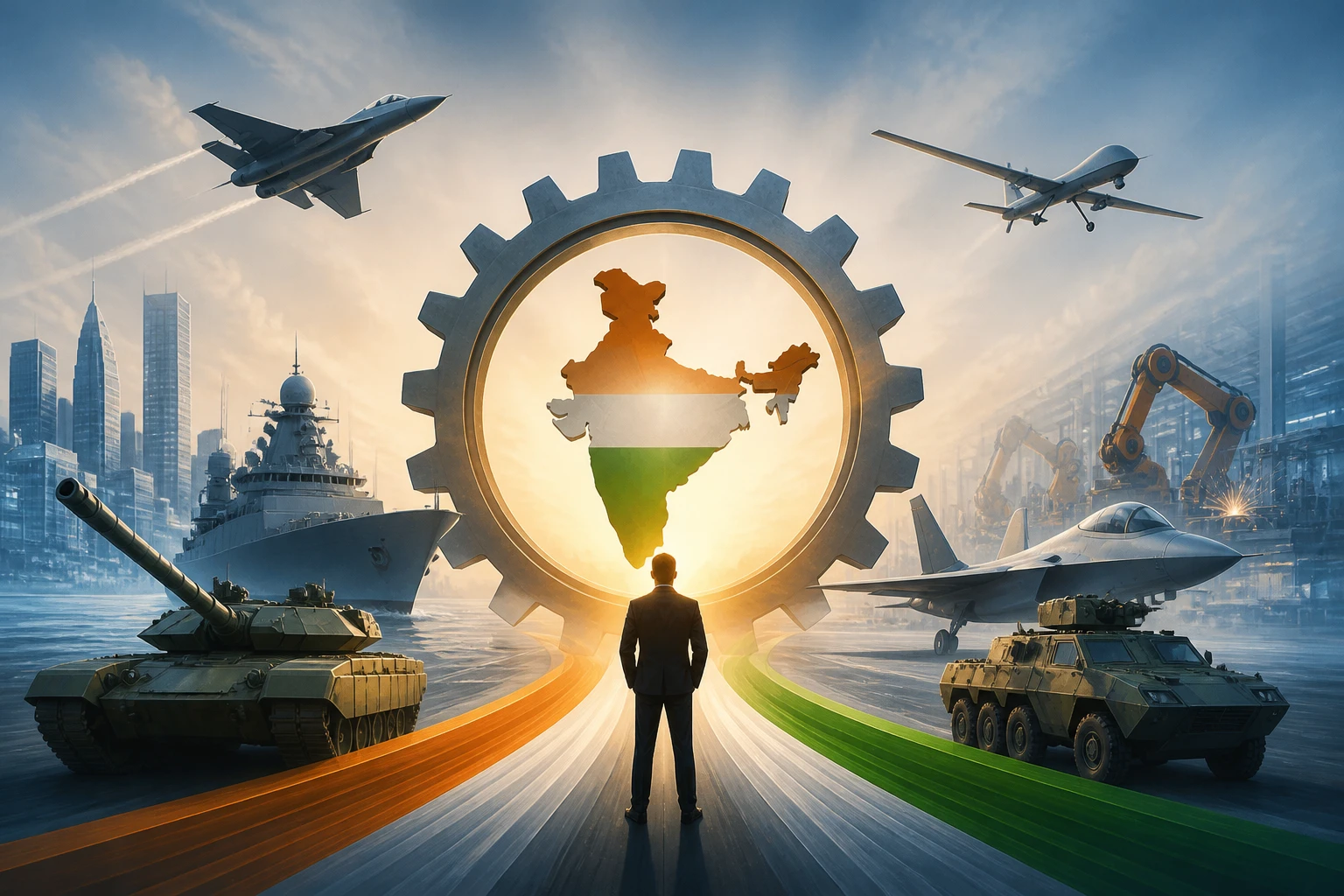
India's Defense Procurement Revolution: DPM 2025 Launched

India's Defence Procurement Manual 2025 revolutionizes military purchasing by streamlining processes that previously took 3-5 years. The reform targets revenue procurement—frequent purchases of equipment, spare parts, and supplies—introducing digital-first processes and standardized procedures across all military services. Expected to reduce procurement time by 40-50%, the manual addresses critical ammunition shortages and supports Make in India goals. This transformation could unlock a $25 billion domestic defense manufacturing ecosystem by 2030, benefiting over 1,000 defense startups while strengthening India's strategic autonomy amid growing geopolitical tensions.

India's Defense Procurement Revolution: DPM 2025 Launched
Sep 17, 2025

Critical Mineral Recycling Gets ₹1,500 Crore Government Push

The Union Cabinet approved a ₹1,500 crore scheme to boost critical mineral recycling, addressing India's dangerous 80% dependence on Chinese imports for specialty fertilizers and strategic materials. These minerals power everything from smartphones to solar panels, with global demand set to increase 500-1000% by 2030. The initiative aims to build domestic recycling capabilities, create jobs in green technology, and align with India's renewable energy targets of 500 GW by 2030, potentially positioning India as a regional recycling hub.

₹1500Cr
Sep 14, 2025

US HIRE Act 2025: The $100 Billion Threat to India's IT Industry

The proposed US HIRE Act 2025 threatens India's $100 billion IT export industry with a 25% excise tax on outsourcing payments to foreign providers. This legislation could devastate India's 5 million IT workers and force American companies to pay significantly more for services currently outsourced cost-effectively. Indian IT giants are preparing contingency plans including geographic diversification and increased US hiring. The Act reflects broader "America First" policies but may ultimately harm US competitiveness by increasing operational costs for American businesses reliant on outsourcing advantages.

US HIRE Act 2025: The $100 Billion Threat to India's IT Industry
Sep 14, 2025