

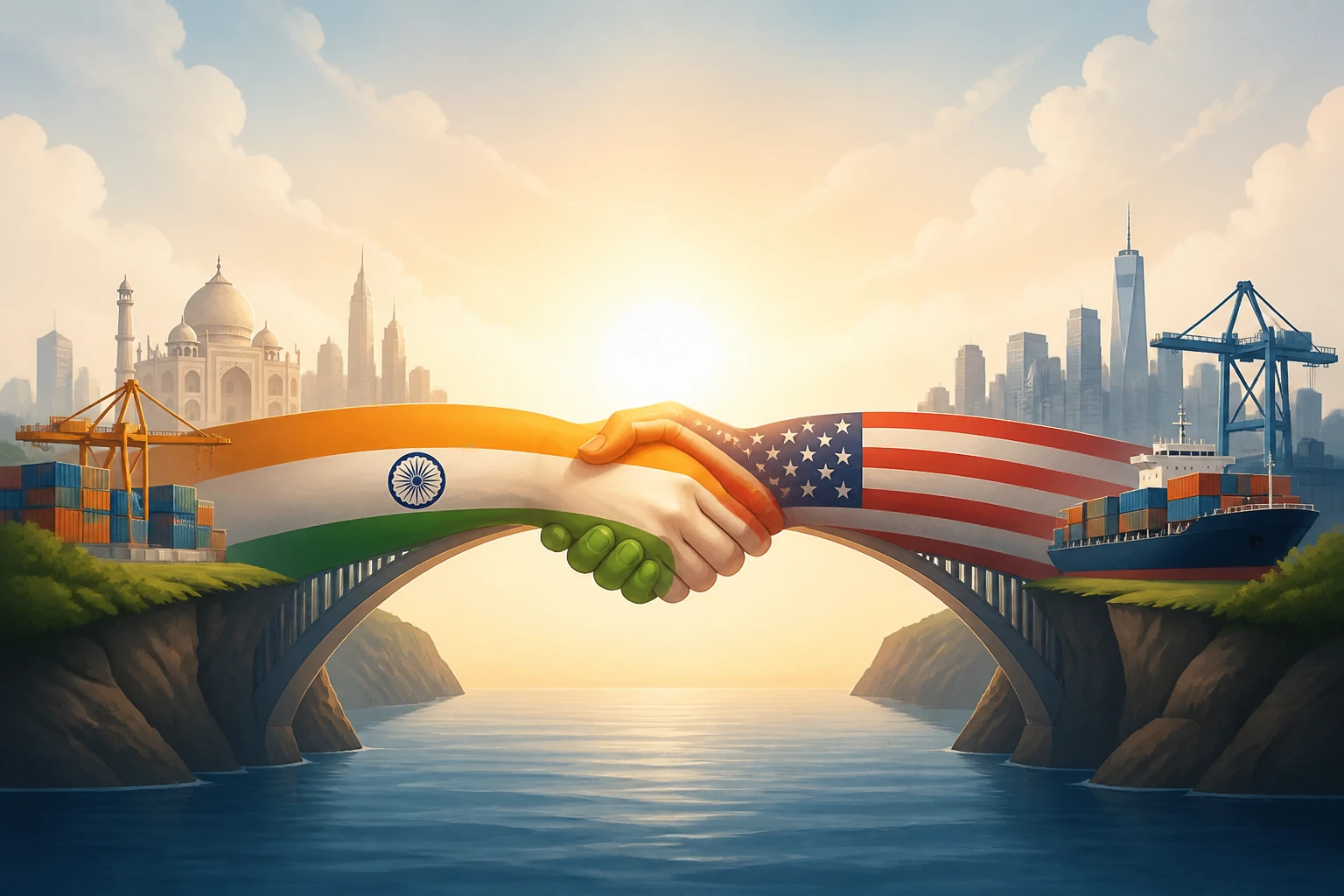
For a negotiation that has been in the works since February 2025, the India–U.S. Bilateral Trade Agreement (BTA) has arrived at an oddly precise moment. Commerce and Industry Minister Piyush Goyal said on June 1 that India and the U.S. have finalised most elements of the first phase of the deal, and that negotiations are now focused on a few minor issues — "commas and full stops." That is either a sign of genuine progress or a very diplomatic way of saying the hard part still remains. In this case, it's probably both.
How We Got Here
The framework for the BTA was launched by President Donald Trump and Prime Minister Narendra Modi on February 13, 2025, with a commitment to more resilient supply chains and additional market access. On February 7, India and the U.S. issued a joint statement finalising the contours of the first phase — an interim trade agreement. What followed was months of back-and-forth, including an Indian delegation visiting Washington D.C. from April 20 to 23, 2026 for in-person meetings with U.S. counterparts.
This week, the tables turned. A high-level U.S. trade delegation, led by Assistant U.S. Trade Representative Brendan Lynch, arrived in India for four days of negotiations aimed at finalising the proposed agreement. U.S. Ambassador to India Sergio Gor has stated that 99 per cent of the details have been finalised.
What India Is Giving, and What It Wants Back
The concessions on the table are significant. India has proposed to eliminate or reduce tariffs on all U.S. industrial goods and a wide range of food and agricultural products, including tree nuts, fresh and processed fruit, soybean oil, and wine and spirits. New Delhi has also expressed its intention to purchase $500 billion worth of U.S. energy products, aircraft and aircraft parts, precious metals, technology products, and coking coal over the next five years.
In exchange, India wants something specific: a preferential market access mechanism that gives India an advantage over its competitor countries in the U.S. market.
The Complication No One Planned For
Here's where the "commas and full stops" get complicated. A U.S. Supreme Court ruling struck down Washington's initial reciprocal tariff structure, leading to a uniform 10% global tariff — which narrowed the relative advantage India previously held over competing export economies, forcing negotiators to adjust concessions to preserve the deal's balance.
Under the agreed framework, the tariff on Indian exports to the U.S. is set to be lowered to 18%, which would increase the competitiveness of 'Made in India' products in the American market. But with competitors now also facing only 10%, India needs the deal to do more than just cut tariffs — it needs to lock in a structural edge.
Why the Stakes Are Larger Than the Headlines Suggest
The U.S. was the second-largest trading partner of India in 2025–26, with India's exports to the U.S. reaching $87.3 billion. The two sides are also working on multiple broader areas — non-tariff measures, customs and trade facilitation, investment promotion, and economic security alignment. The agreement is expected to be a catalyst for manufacturing growth, create new employment opportunities, and open new avenues for MSMEs.
A deal at this scale isn't just a tariff document. It's a signal to global supply chains about where the next decade of manufacturing and technology investment will flow — and India is making a calculated bet that this is its moment to claim that answer.
Sources
- Most aspects finalised in trade pact with US; talks now focus on minor issues, commas, full stops: Goyal
- First tranche of trade deal with US almost finalised, trying to work out mechanism for India getting preferential market access: Piyush Goyal - The Tribune
- India-US Trade Pact Talks Enter Final Stretch As American Delegation Set To Visit New Delhi From 1 To 4 June For Interim Deal Details
- India, US close to sealing first tranche of trade pact: Piyush Goyal - The Tribune
- Piyush Goyal reiterates first tranche of trade deal with US “almost finalised”
- US India trade talks restart in New Delhi from tomorrow. Here's what on table - BusinessToday
- Union Minister Mr. Piyush Goyal hails India-US trade deal; Says deal will protect sensitive sectors particularly Agriculture & Dairy | IBEF