

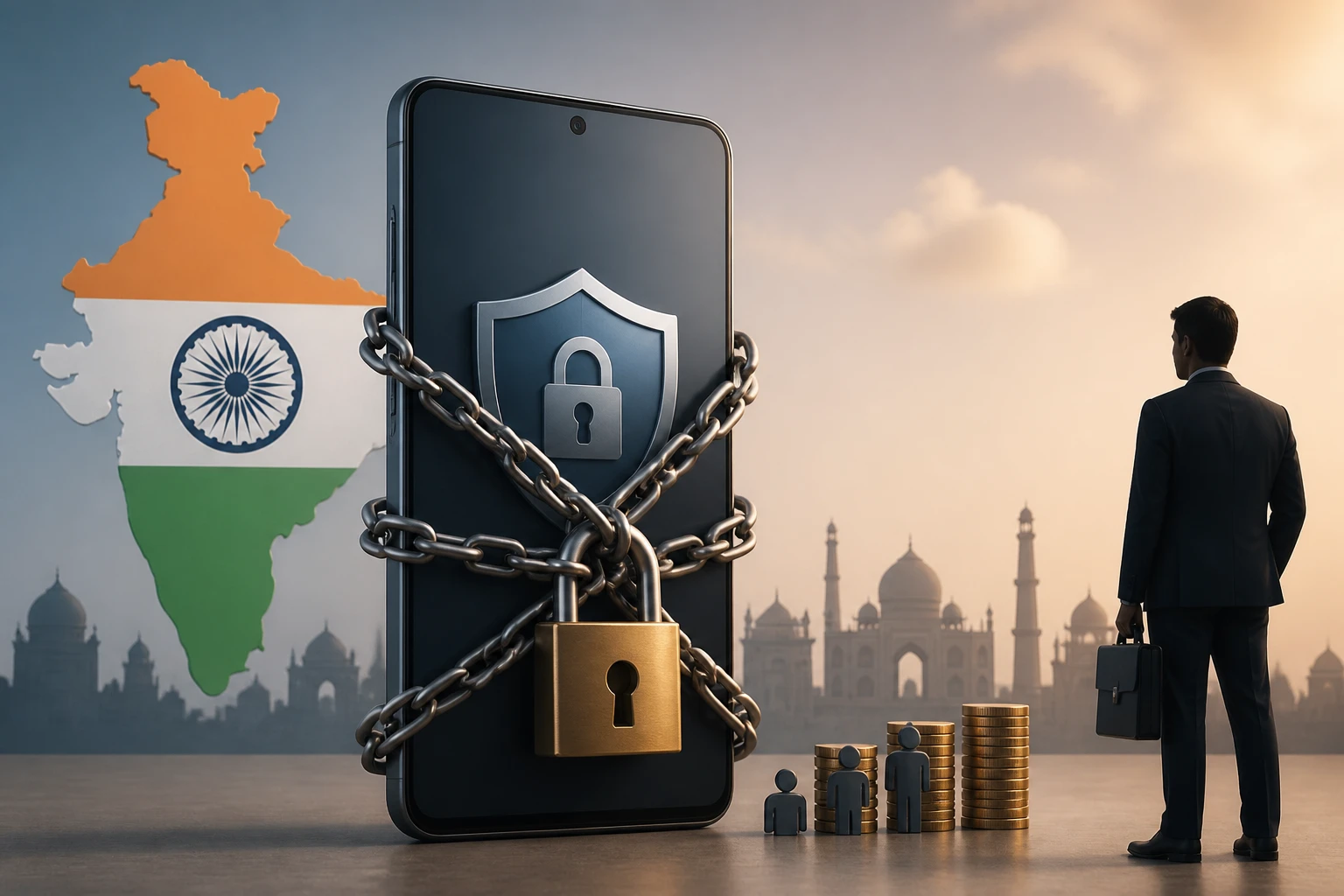
The fine print in your next smartphone EMI agreement may contain a clause that would have seemed dystopian five years ago: if you miss payments long enough, a lender can reach into your pocket — digitally — and quietly switch parts of your phone off.
India's central bank has proposed allowing lenders to remotely disable functions on a mobile phone or tablet bought on credit in cases of default. The draft directions, released last week, specify that restrictions can only kick in after a loan has been overdue for 90 days, following a staged notice process.
This isn't a fringe fintech experiment. The RBI has issued modification orders to update the 'Conduct of Regulated Entities in Recovery of Loans and Engagement of Recovery Agents,' under which banks and NBFCs would be permitted to use tech-based mechanisms to limit or disable the functionality of a financed mobile device.
The Problem the RBI Is Actually Trying to Solve
To understand why the regulator is here, follow the math of small-ticket lending.
These loans are typically small — often in the range of ₹10,000 to ₹15,000 — making traditional recovery methods economically unviable. The cost of sending a recovery agent to a borrower's home or initiating legal action often exceeds the value of the loan itself, leaving lenders with rising NPAs in the digital lending segment.
Meanwhile, the scale of the market makes the problem hard to ignore. A 2024 study by Home Credit Finance found that more than one-third of consumer electronics purchases in India, including mobile phones, are financed through small-ticket loans.
Several fintech lenders and device-financing companies had already started locking financed phones on default — often without a clear regulatory framework or borrower protections. This proposal aims to bring such practices under a formal, rights-protective framework. In other words, the digital lock already exists in corners of the market. The RBI is trying to regulate what it cannot fully ban.
What the Safeguards Actually Look Like
The draft framework is not a blunt instrument, at least on paper.
Borrowers must first receive a notice after 60 days past due, with 21 days to repay, followed by a second notice allowing at least another week — and lenders can impose restrictions only if consent was sought in the original loan contract.
Lenders would not be allowed to completely disable phones or block access to emergency services. Restrictions would be limited to non-essential applications and functionalities.
The draft norms also bar lenders from accessing personal data on locked phones. "Banks will also be prohibited from obtaining data stored in the borrower's cell phone in order to undertake loan recovery," said the RBI.
Where Consent Becomes a Fiction
Here's the tension that the safeguards don't quite resolve.
The primary fear for users is the loss of control over their own devices. Users may find themselves having inadvertently permitted intrusive access because of the rush of signing financing terms alongside purchasing a smartphone. "Explicit consent" is easy to bury in a 12-page loan agreement — and few borrowers read that far.
The deeper problem is what a restricted phone actually means in 2026. In a country where the smartphone plays an important role in identification, banking, UPI transactions, employment, and education, restricting a phone remotely is much more than simply controlling access to entertainment.
The proposal addresses the symptom of rising defaults, not the underlying cause — easy credit and aggressive consumer lending. Buyers with stable jobs can access loans for gadgets, often purchasing smartphones that cost four times their monthly salary. Defaults are naturally higher in such cases, and simply locking the phone does not solve the affordability mismatch.
A Recovery Tool That Cuts Both Ways
The RBI is threading a needle between two genuine problems: predatory recovery agents on one side, predatory lending on the other. Over the past few years, the central bank has tightened oversight of fintech lenders following concerns about predatory recovery methods, misuse of customer data, and hidden charges in digital loan products.
The mobile device restriction mechanism is an entirely new provision not present in the February draft — stakeholders including technology companies, consumer groups, and lenders now have an opportunity to comment on this novel provision before it becomes final law.
The draft directions may come into effect from October 1, 2026. The consultation window is open. Whether it produces a framework that treats a defaulting borrower as a citizen with rights — rather than a device waiting to be switched off — is the question worth watching.
Sources
- RBI Proposes To Lock Loan Financed Phones In case Of Default
- RBI Proposal May Let Banks Restrict Mobile of Defaulters
- Miss Your EMI for 90 Days? RBI’s New Proposal Could Restrict Your Smartphone Features - The Logical Indian
- RBI proposes locking phones of loan defaulters, essential services protected | Biz News - News9live
- RBI Loan Recovery Rules 2026: Device Lock, Recovery Agents, Key Changes | CorpLawUpdates.in
- RBI Proposes New Rules Allowing Lenders to Restrict Phones Bought on EMI After Loan Defaults - TechStory
- Can Banks Lock Your Phone for Missed EMI? RBI Rules
- Smartphone EMI Defaults: RBI’s Remote Lock Proposal Explained