

Overview
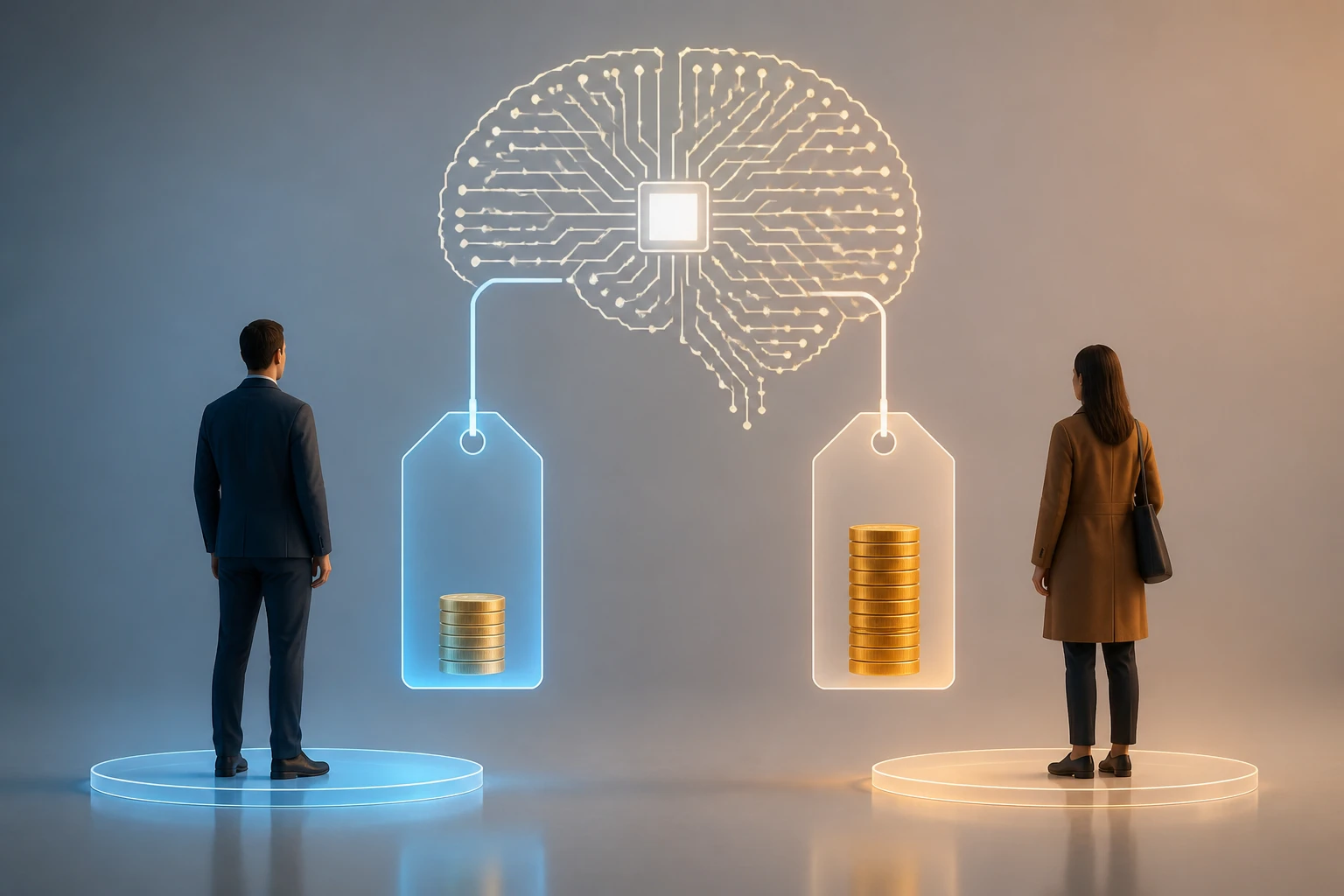
That coffee you bought for ₹150 yesterday? Your colleague might have paid ₹120 for the exact same cup from the same app. Welcome to the future of AI-driven personalized pricing, where algorithms calculate your individual willingness to pay and adjust prices accordingly. An April 2026 economic study has sent shockwaves through consumer advocacy groups, revealing how businesses are increasingly using artificial intelligence to price products differently for each customer in real-time. While this technology promises greater market efficiency, it's raising serious questions about fairness, discrimination, and whether consumers are losing their bargaining power in an AI-dominated marketplace.
Here's What's Happening
Major e-commerce platforms and service providers are quietly implementing dynamic pricing algorithms that analyze your browsing history, purchase patterns, location data, and even social media activity to determine exactly how much you're willing to pay. Amazon has been experimenting with this for years, showing different prices to different users based on their shopping behavior. Uber and Ola already use surge pricing, but the new AI models go deeper—they consider your income bracket, spending habits, and even your phone's battery level to optimize pricing.
The technology works like a sophisticated auction where you're bidding against yourself without knowing it. These algorithms can process thousands of data points in milliseconds, adjusting prices before you even realize you're being profiled.
Let's Break This Down
Think of personalized pricing like a street vendor who instinctively quotes different prices to different customers—except now it's powered by machine learning algorithms that never forget and constantly improve their accuracy. The AI analyzes patterns that would be impossible for humans to detect: maybe iPhone users pay 15% more than Android users, or customers who shop late at night are willing to pay premium prices.
McKinsey research suggests that dynamic pricing can increase profits by 20-25% for businesses, but this comes at a cost to consumers. The study found that frequent shoppers often end up paying higher prices because algorithms identify them as less price-sensitive. Meanwhile, occasional buyers get discounts to encourage purchases.
Consider Netflix's regional pricing strategy—users in Mumbai might pay ₹199 for a plan that costs ₹649 in Bangalore, based on local purchasing power. Now imagine this granularity applied to individual users rather than cities. Your Netflix subscription could cost more than your neighbor's based purely on your perceived ability to pay.
The technology becomes problematic when it inadvertently discriminates. If the AI correlates zip codes with income levels, it might charge residents of upscale areas like Bandra or Golf Course Road higher prices, effectively creating digital redlining. MIT studies have shown that pricing algorithms can perpetuate racial and economic biases present in training data.
The Bigger Picture
This shift represents a fundamental change in market dynamics. Traditional economics assumed uniform pricing with occasional discounts. Now, we're moving toward a world where the "list price" becomes meaningless—everyone gets a personalized quote.
For businesses, it's a goldmine. Zomato and Swiggy can optimize delivery fees based on your order history and location. BookMyShow might charge movie buffs more for prime seats while offering discounts to infrequent users. The efficiency gains are real—products get priced at exactly what the market will bear.
But consumers face a troubling reality: information asymmetry is growing. While businesses know everything about your purchasing power, you have no idea what others are paying. This destroys the traditional concept of fair market value and could lead to a society where your wealth determines not just what you can buy, but what you're charged for identical products.
Consumer advocacy groups argue this creates a "privacy tax"—those who share more data get better prices, while privacy-conscious users pay premiums. It's particularly concerning in essential services like healthcare, insurance, or utilities, where personalized pricing could create access barriers.
What's Next?
The regulatory response is still catching up. European GDPR provides some protection, but India's Digital Personal Data Protection Act doesn't explicitly address pricing discrimination. As AI becomes more sophisticated, we'll likely see new regulations requiring price transparency or limiting personalized pricing in essential services.
For consumers, the key is awareness. Start comparing prices across devices, locations, and accounts. Use private browsing modes and consider the trade-off between convenience and pricing power. The future of shopping isn't just about finding the best deal—it's about understanding how AI is determining what deal you're allowed to see.
The question isn't whether personalized pricing will become ubiquitous, but whether we can ensure it serves consumers rather than exploiting them.