

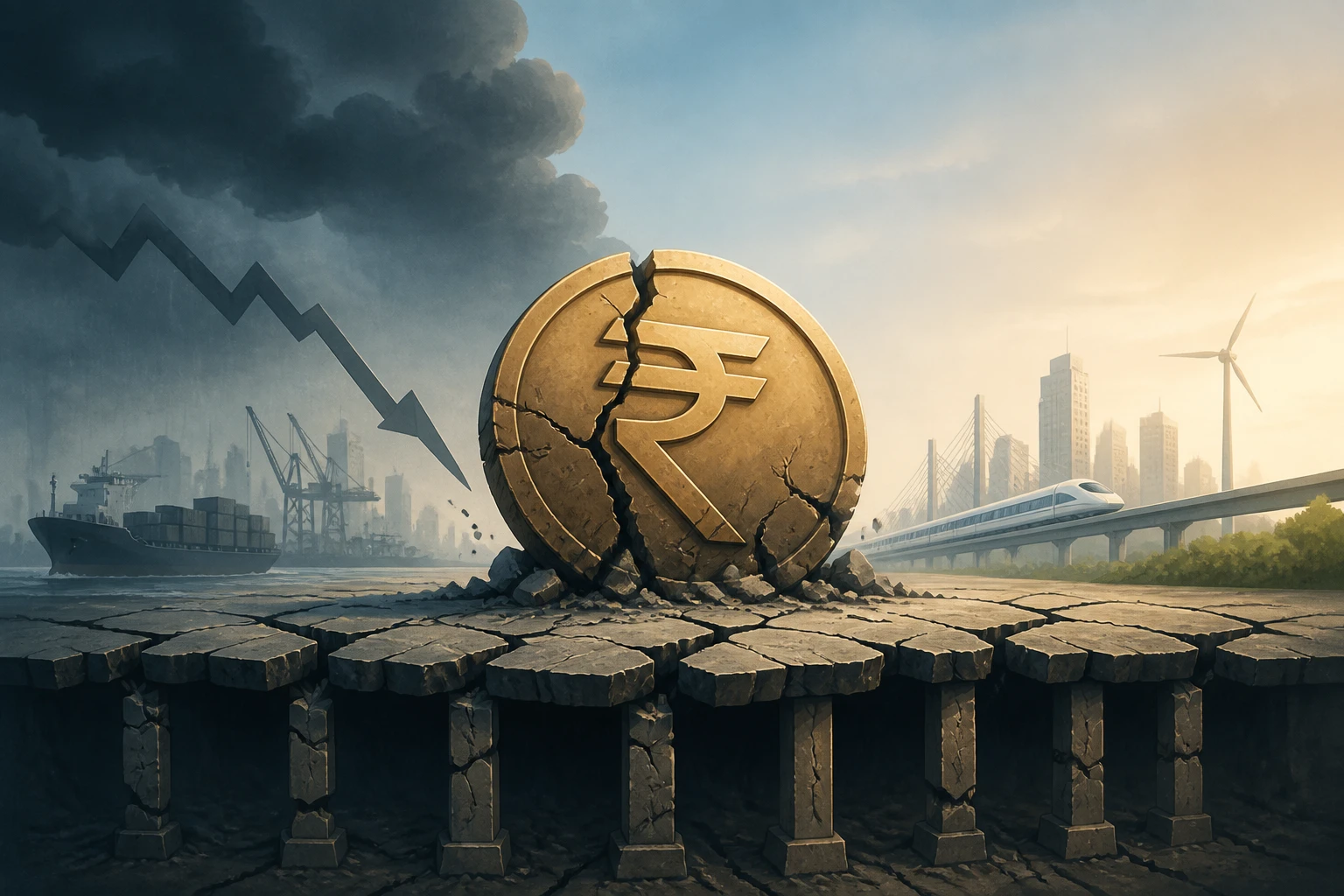
The rupee hitting record lows in May 2026 wasn't a surprise. It was a confirmation.
Every time oil prices spike — and they spiked hard after Middle East tensions escalated this year — India finds itself in the same uncomfortable position: a currency under pressure, a current account deficit widening, and a government scrambling for short-term fixes. The pattern is familiar enough that it has stopped feeling like a crisis and started feeling like a design flaw.
When the Same Shock Keeps Hitting the Same Wound
India imports over 80% of its oil. That single fact does a lot of work. When global oil prices rise, India's import bill swells almost automatically, dollars flow out faster than they come in, and the rupee takes the hit. The Middle East escalation in 2026 was, in that sense, just the latest stress test — and the rupee failed it in the most predictable way possible.
What makes this structurally worrying is the absence of a natural cushion. Countries with large export bases or deep domestic capital markets can absorb external shocks more gracefully. India's export growth, while real, hasn't kept pace with the scale of its import dependence. So every oil spike becomes a currency event, almost automatically.
The Fixes India Keeps Reaching For
When the rupee weakens sharply, India's policy toolkit tends to follow a recognizable sequence. First, the Reserve Bank intervenes by selling dollars from reserves. Then, when that feels insufficient, the government looks for ways to attract foreign currency from abroad.
This time was no different. Emergency measures under exploration reportedly included sweetening the deal for Non-Resident Indian deposits — essentially encouraging the Indian diaspora to park dollars back home — and cutting taxes for foreign investors in Indian bonds, making Indian debt more attractive to global capital.
These aren't bad ideas. NRI deposit drives have worked before, most notably during the 2013 taper tantrum when a well-structured scheme pulled in billions. Bond market liberalization is a legitimate long-term reform. But deploying them reactively, under pressure, in response to an oil shock, is a different thing entirely. It signals that India is still managing the symptom rather than treating the condition.
The Structural Trap Nobody Wants to Name
The deeper issue is that India's growth model has an embedded vulnerability: it needs cheap energy and foreign capital to function smoothly, and both are subject to forces entirely outside India's control.
This dependency isn't new — but it's becoming more expensive to manage. As India's economy grows, the absolute scale of oil imports grows with it. A larger economy with the same structural dependence isn't more resilient; it's more exposed. The rupee's record lows aren't just a number to watch — they're a signal that the gap between India's ambitions and its external balance sheet is quietly widening.
Fixing this isn't a one-budget job. It involves accelerating the energy transition to reduce oil import volumes, deepening domestic capital markets so the country isn't so reliant on flighty foreign flows, and building an export base broad enough to generate a genuine dollar cushion. None of that happens fast.
For now, India will likely stabilize the rupee. It usually does. But stabilization and structural reform are different things — and confusing the two is how a recurring problem quietly becomes a permanent one.