

Overview
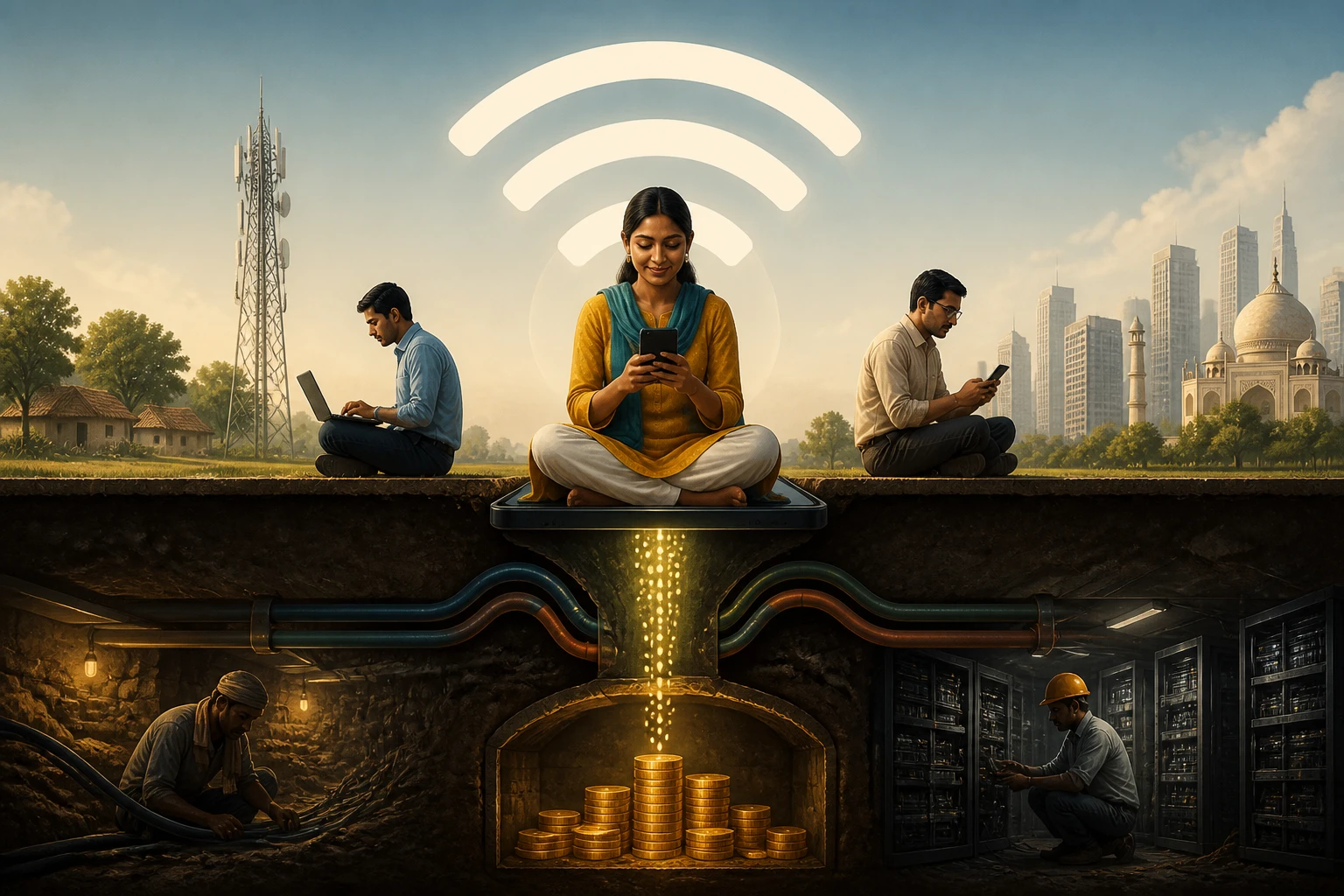
India's mobile data rates are among the world's cheapest—₹10 can buy you several gigabytes that would cost hundreds elsewhere. This digital revolution has connected over 750 million Indians to the internet, spawning everything from food delivery apps to OTT platforms. But there's a catch: telecom companies are drowning in debt while users expect unlimited data at throwaway prices. Reliance Jio's 2016 entry with free data kickstarted a price war that transformed India into a digital economy powerhouse, yet left the entire industry gasping for profitability. Now, as 5G networks demand massive investments, the economics of cheap internet are finally catching up with reality.
Here's What's Happening
Indian telecom operators are caught in a vicious cycle. Average revenue per user (ARPU) hovers around ₹150-200 per month—among the lowest globally. Meanwhile, companies like Vodafone Idea owe the government ₹70,000+ crores in adjusted gross revenue dues, while Bharti Airtel and Reliance Jio continue investing billions in network infrastructure.
The math is simple but brutal: when data is priced at rock bottom, operators need massive user bases to break even. Jio's initial strategy of free data forced competitors to slash prices, creating a market where consumers now view expensive data plans as daylight robbery. The result? A three-player market where everyone's scrambling to find sustainable business models while users demand faster speeds and unlimited connectivity.
Let's Break This Down
Think of India's telecom sector like a restaurant offering unlimited meals for ₹50. Sure, you'll pack the place, but unless you're selling 10,000 meals daily, you're headed for bankruptcy. That's essentially what happened here.
Reliance Jio entered the market in 2016 with deep pockets and a radical strategy—give away data for free, build massive scale, then monetize. This forced established players like Bharti Airtel and Vodafone Idea into a price war they couldn't win. Within three years, India's telecom landscape consolidated from 12 operators to essentially three major players.
The numbers tell the story: India's average data price per GB dropped from ₹269 in 2014 to just ₹7 in 2023. Meanwhile, data consumption exploded from 0.26 GB per user per month in 2016 to over 18 GB today. But higher usage doesn't automatically mean higher revenues when prices keep falling.
Now comes the expensive part: 5G networks. Operators collectively spent ₹1.5 lakh crores just on spectrum auctions, with deployment costs adding billions more. Unlike 4G, which could piggyback on existing infrastructure, 5G demands entirely new hardware, fiber networks, and maintenance systems. It's like upgrading from bicycles to sports cars—the infrastructure investment is enormous.
The Bigger Picture
This cheap internet revolution created India's digital economy—Swiggy, Zomato, Netflix India, and thousands of startups exist because data became affordable. Digital payments grew from ₹8.7 lakh crores in 2017-18 to ₹84 lakh crores in 2022-23, largely because internet access democratized.
But rising tariffs—which all three operators have been gradually implementing—could reshape this ecosystem. Content platforms might see reduced streaming, food delivery apps could face lower order volumes, and digital-first businesses might need to rethink their models.
For working professionals, especially in smaller cities, expensive data could mean reverting to WiFi-dependent lifestyles. The work-from-anywhere culture, enabled by cheap mobile internet, faces its first real economic challenge.
What's Next?
Telecom operators are diversifying beyond basic connectivity—enterprise solutions, cloud services, and digital ecosystems are becoming revenue drivers. Jio is building everything from e-commerce to entertainment platforms, while Airtel focuses on business services and fintech.
Tariff hikes are inevitable as operators balance survival with growth. The era of ₹199 unlimited plans is ending, but the question isn't whether prices will rise—it's whether India's digital economy can adapt. Smart money is on gradual increases that users can absorb while operators finally achieve sustainable profitability. The cheap internet party isn't over, but the bill is finally arriving.