

Overview
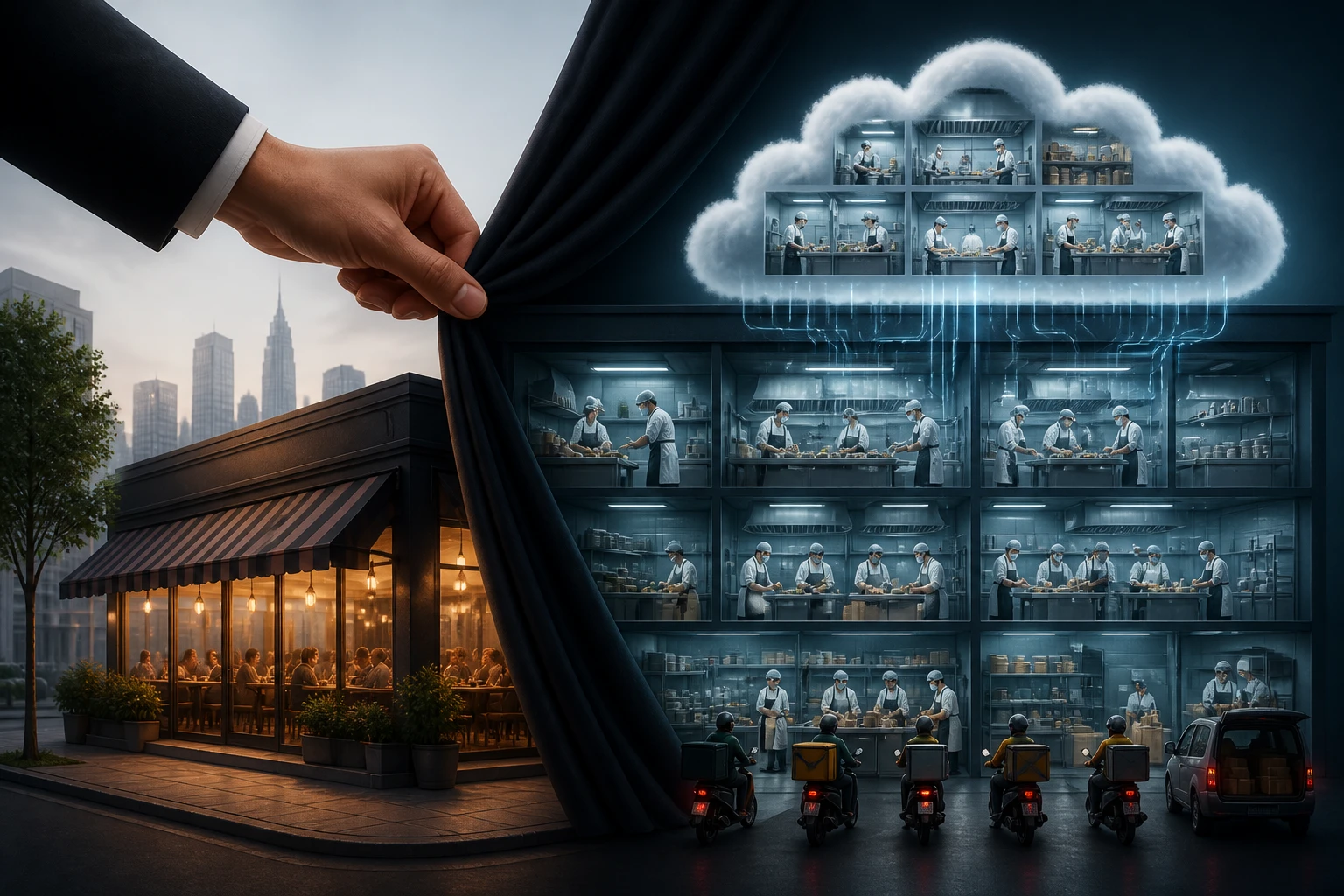
The next time you order from that trendy "Mumbai Biryani Express" or "Delhi Delights Kitchen," you might be getting your meal from the five-star hotel down the street. What looks like a thriving ecosystem of diverse cloud kitchens on Zomato and Swiggy is actually an elaborate shell game. Restaurants are creating fake digital brands to dodge hefty commission fees, and the numbers are staggering. 60% of Zomato's listed restaurants don't physically exist as standalone entities. Welcome to India's phantom food economy, where your favorite "cloud kitchen" might just be a clever accounting trick.
Here's What's Happening
Zomato charges restaurants 23% commission for dine-in establishments that also offer delivery. But here's the kicker – pure cloud kitchens without dining spaces get charged only 15% commission. That 8% difference might seem small, but for a restaurant doing ₹10 lakh monthly revenue, it translates to ₹80,000 in savings annually.
So restaurants got creative. Taj Hotel creates "Shah's Kitchen" for biryani, "Mumbai Street Food Co." for chaats, and "Dessert Dreams" for sweets – all operating from the same kitchen. On paper, these are separate cloud kitchen brands. In reality, it's the same chef, same ingredients, same kitchen, but with three different commission rates and digital identities.
Let's Break This Down
This isn't just clever accounting – it's reshaping how India eats. Restaurant aggregators like Zomato and Swiggy built their commission structure assuming clear categories: dine-in restaurants versus delivery-only cloud kitchens. The logic seemed sound – cloud kitchens have lower overhead costs, so they deserve lower commission rates.
But restaurants saw an opportunity. Why pay 23% when you can create multiple digital storefronts and pay 15% instead? A single kitchen can now operate 5-10 different brands, each targeting different customer segments and price points.
Consider Rebel Foods, India's largest cloud kitchen operator. They run over 450 brands from just 40+ kitchens across cities. Brands like Faasos, Behrouz Biryani, and The Good Bowl – all different identities, similar operations. While Rebel Foods is transparent about their multi-brand strategy, countless traditional restaurants have quietly adopted similar tactics.
The economics are compelling. A restaurant spending ₹2.3 lakh monthly on Zomato commissions can reduce this to ₹1.5 lakh by restructuring as cloud kitchen brands. That's ₹9.6 lakh annual savings – enough to hire additional staff or expand operations.
But there's a catch. Creating convincing brand identities requires investment in separate packaging, branding, menu photography, and marketing. Some restaurants hire agencies specialized in creating these phantom brands, complete with backstories and brand personalities.
The Bigger Picture
This ghost kitchen phenomenon reflects deeper tensions in India's food delivery ecosystem. Platform companies need sustainable unit economics, but restaurants operate on razor-thin margins. The average restaurant profit margin in India is 3-5%, while delivery platforms charge 15-23% commission plus additional fees for advertising and priority listings.
From Zomato's perspective, this creates a revenue challenge. If most "restaurants" pay lower cloud kitchen rates, platform profitability suffers. But cracking down too hard might drive restaurants to competitors or direct delivery models.
Customers face the most complex implications. That "authentic family recipe from Sharma Aunty's Kitchen" might actually be a ₹500 crore hotel chain's standardized preparation. The diversity and authenticity that food apps promise becomes an illusion of choice – multiple storefronts selling variations of the same kitchen's output.
Food safety and quality control also become murkier. With multiple brand identities per kitchen, tracking hygiene standards, customer complaints, and quality consistency becomes challenging for both platforms and regulatory authorities.
What's Next?
Zomato and Swiggy are caught in a delicate balance. They're gradually tightening verification processes, requiring more documentation to prove cloud kitchen authenticity. Some platforms now demand separate FSSAI licenses for each brand, increasing compliance costs.
The restaurant industry will likely see further consolidation, with larger players better equipped to manage multi-brand strategies effectively. Smaller restaurants might struggle to compete against this phantom brand proliferation.
For consumers, expect increased transparency requirements. Platforms might soon display "operated by" information, showing when multiple brands share the same kitchen – similar to how Amazon shows when different seller names represent the same company.
This ghost kitchen evolution represents India's broader digitization story: traditional businesses adapting platform economics through creative workarounds, ultimately forcing platforms to evolve their models in response.