

Overview
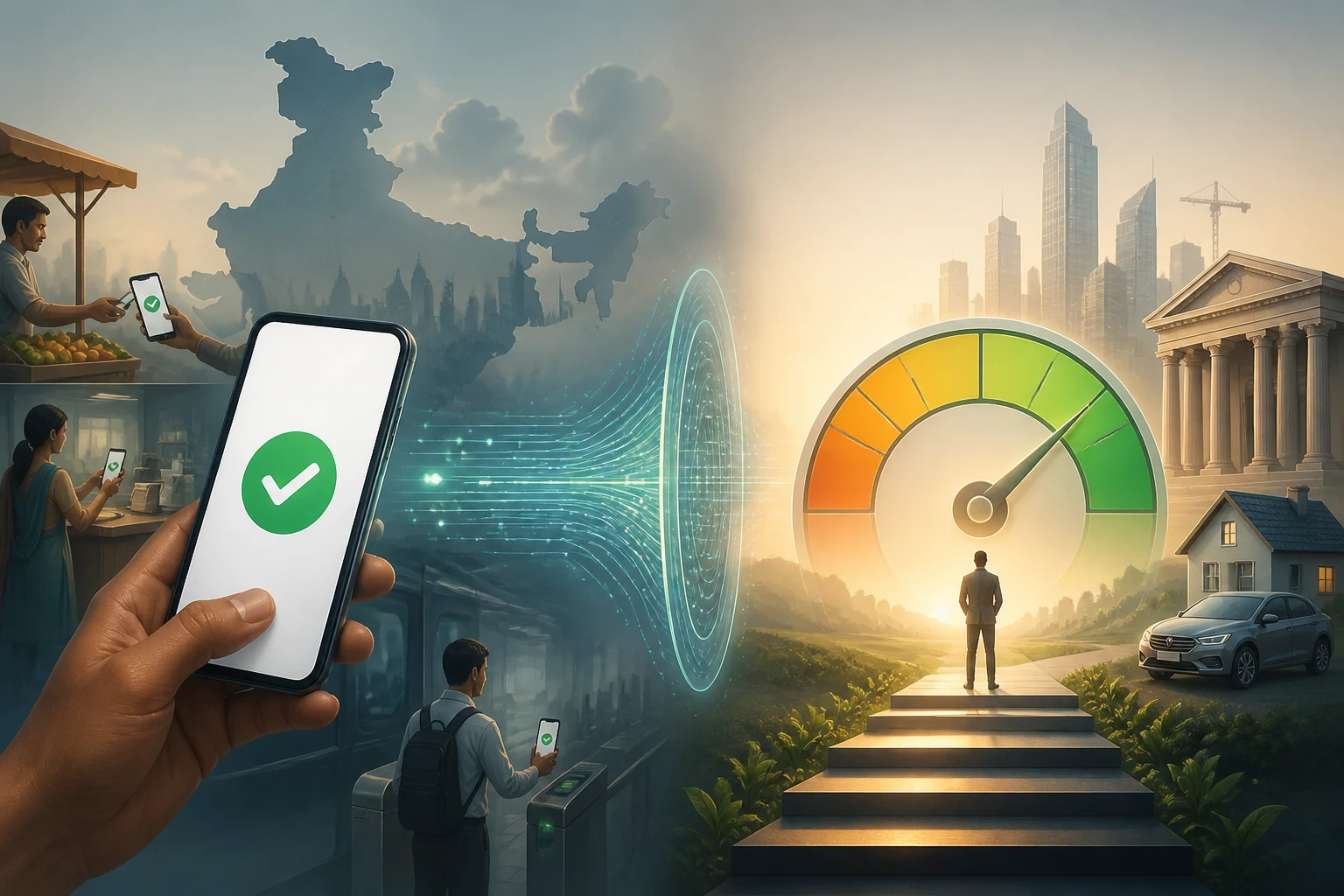
Imagine this: You've been diligently paying for your morning coffee, cab rides, and grocery bills via UPI for the past three years. Meanwhile, your friend with a traditional credit card gets instant loan approvals while you're stuck filling endless paperwork. Sound familiar? Here's the plot twist – your ₹50 chai payments might soon carry more weight than his credit card history. India's financial ecosystem is quietly undergoing a massive transformation where your Google Pay transaction for street food could determine your home loan eligibility. With over 8.5 billion UPI transactions processed monthly as of 2024, traditional credit scoring is being challenged by an unlikely hero: your digital payment patterns. This isn't just about convenience anymore; it's about financial inclusion on an unprecedented scale, where your smartphone becomes your credit bureau.
The Problem
Traditional credit scoring in India has always been a chicken-and-egg problem. To get credit, you need a credit history, but to build credit history, you need someone to give you credit first. Think of it like trying to get your first job – everyone wants experience, but nobody wants to give you the opportunity to gain it. Reserve Bank of India data shows that only 30% of Indians have a formal credit score, leaving 900 million people in the shadows of the financial system. This massive credit invisibility has forced millions to rely on informal lending at exorbitant rates or simply remain excluded from formal financial services. Enter UPI's digital footprint – suddenly, that daily ₹200 vegetable vendor payment or ₹500 monthly mobile recharge creates a data trail that reveals spending patterns, income regularity, and financial behavior better than any traditional metric.
Analysis
The paradigm shift happening here is profound from multiple angles. Economically, this represents India's fastest path to financial inclusion – imagine 700 million smartphone users suddenly becoming creditworthy based on their payment patterns rather than salary slips. Policy-wise, the government is actively encouraging this through initiatives like the Account Aggregator framework, which allows secure sharing of financial data with user consent. From a business perspective, fintech companies are building sophisticated alternative credit scoring models using UPI data, merchant payment patterns, and transaction frequency analysis.
Consider the economic multiplier effect: when a small business owner in rural Rajasthan can access formal credit based on his daily UPI collections from customers, he can expand inventory, hire more people, and contribute to local economic growth. CIBIL's recent partnership with UPI payment providers signals that traditional credit bureaus recognize this shift. The data richness is remarkable – while a credit card shows you paid your bill, UPI data reveals whether you buy groceries weekly (disciplined) or daily (potentially poor planning), your income patterns, spending priorities, and even seasonal business fluctuations for entrepreneurs.
Real-World Examples
Payme India, a fintech startup, successfully deployed UPI-based lending by analyzing merchant transaction patterns and achieved a 15% lower default rate compared to traditional scoring methods. Their algorithm discovered that customers who maintain consistent small-value, high-frequency transactions are actually better credit risks than those making sporadic large payments.
Amazon Pay has leveraged UPI transaction data to offer instant credit to small merchants, with their AI models predicting creditworthiness based on sales velocity and payment consistency. A Mumbai street food vendor who processes ₹3,000 daily through UPI now qualifies for working capital loans that were previously impossible to obtain.
HDFC Bank's SmartBuy platform integrates UPI payment history into their loan approval process, reducing processing time from 7 days to 2 hours for existing UPI users. Industry experts like Kunal Shah of CRED predict that within five years, UPI payment behavior will become more important than salary certificates for credit decisions, fundamentally democratizing access to formal credit across India's diverse economic landscape.
The Challenge
However, this digital credit revolution isn't without complexities. Privacy concerns loom large – your entire financial personality becomes an open book to algorithms. Data security becomes critical when payment patterns determine loan eligibility. The regulatory framework is still evolving, with questions about data ownership, consent mechanisms, and algorithmic bias requiring careful consideration. Additionally, the digital divide means rural populations with limited smartphone literacy might still face exclusion, potentially creating a new form of financial inequality based on digital sophistication rather than income levels.
Future Implications
The transformation ahead is staggering. McKinsey estimates that UPI-based credit scoring could bring 400 million Indians into the formal credit system by 2027. This means your Netflix subscription payment regularity might influence your car loan interest rate, and small businesses could access working capital based on their daily UPI collections rather than collateral. Insurance companies are exploring UPI data for risk assessment, while investment platforms might use payment patterns to customize portfolio recommendations. The shift represents India's unique opportunity to leapfrog traditional banking infrastructure, much like how mobile phones bypassed landlines. Financial services will become truly democratized, where credit worthiness is determined by actual financial behavior rather than employment type or documentation ability.
Looking Ahead
As 800 million Indians embrace UPI, we're witnessing the birth of the world's largest alternative credit ecosystem. The question isn't whether this revolution will happen – it's already underway. The real question is: Will this digital credit democracy create genuine financial inclusion, or will it generate new forms of algorithmic bias? Your next UPI payment isn't just a transaction anymore – it's a vote in your digital credit score. How will you cast it?