

Overview
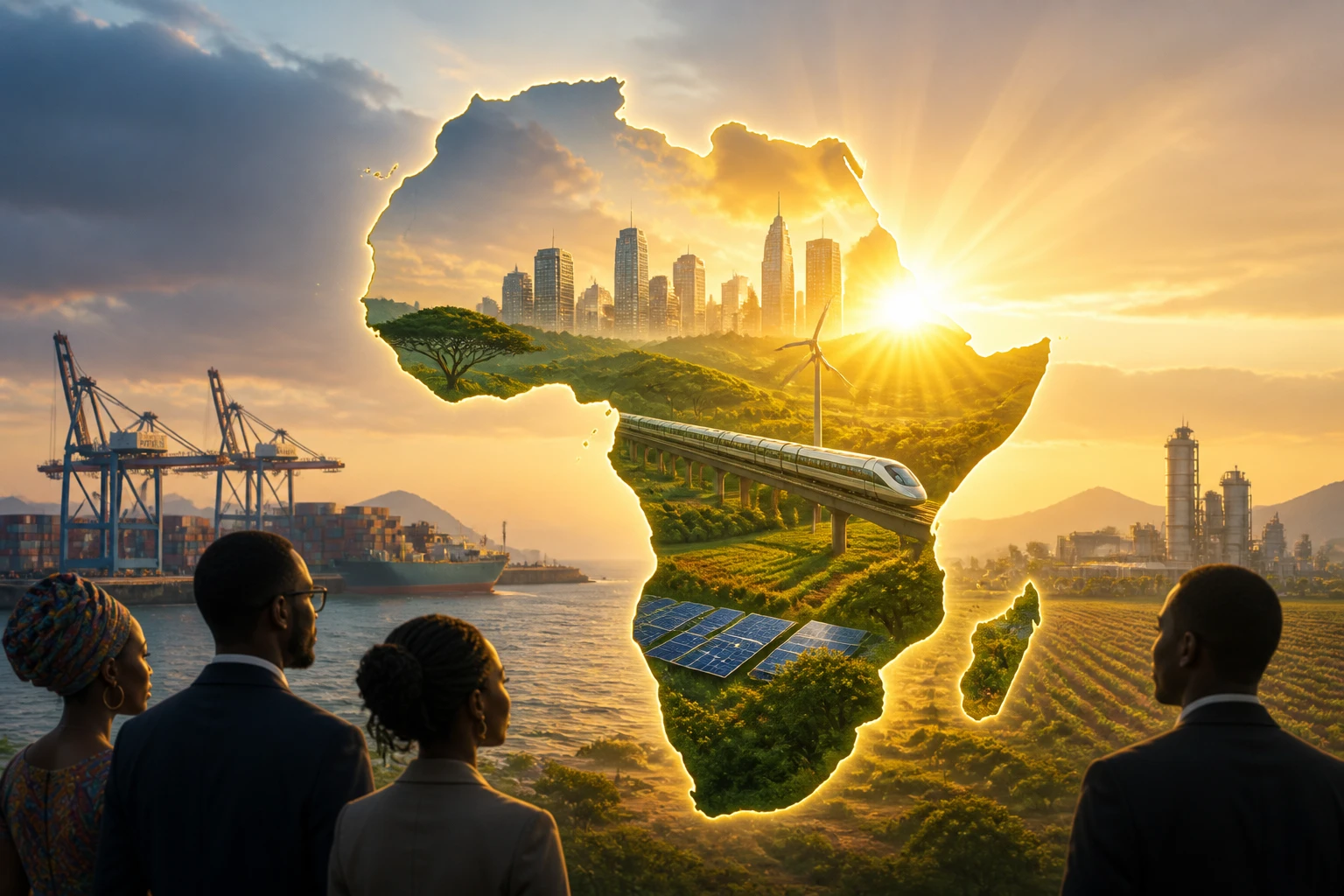
Picture this: You're at a networking event, and someone mentions they're investing in African markets. A few eyebrows raise, maybe someone makes a comment about risk. Meanwhile, that investor quietly smiles, knowing something the room doesn't. While everyone's focused on saturated Western markets and volatile Asian economies, seven of the world's ten fastest-growing economies are quietly humming along in Africa. It's like watching people fight over the last slice of pizza while an entire fresh one sits untouched on the counter. This isn't about charity or aid – this is about cold, hard economics and a demographic dividend that's reshaping global business. The question isn't whether Africa's economic awakening is real; it's whether you're paying attention to what could be the biggest growth story of our generation.
The Problem
Here's what most people miss: Africa isn't just "growing" – it's fundamentally transforming. The continent's economy expanded by 3.8% in 2023, outpacing global growth, while its population of 1.4 billion people has a median age of just 19 years. Think of it like a massive startup incubator, except instead of apps, we're talking about entire economies getting their growth engines fired up.
The real kicker? Mobile phone penetration has reached 84% across sub-Saharan Africa, leapfrogging traditional banking and creating digital economies from scratch. Countries like Rwanda have positioned themselves as the "Singapore of Africa," while Ghana has become a tech hub attracting global companies. Yet most international investors are still sleeping on these opportunities, fixated on traditional markets that are increasingly expensive and competitive. This disconnect between perception and reality creates a massive information arbitrage – and smart money is starting to notice.
Analysis
The economic implications here are staggering from multiple angles. Demographically, Africa will account for half of global population growth through 2050, creating the world's largest workforce. From a policy perspective, governments are implementing business-friendly reforms – Rwanda ranks 38th globally in the World Bank's Ease of Doing Business index, ahead of countries like Spain and Italy.
Technologically, the mobile revolution is creating unique solutions. Kenya's M-Pesa mobile money system processes more transactions than Western Union globally. This isn't just catching up to Western systems – it's pioneering entirely new approaches to financial services.
The resource angle remains compelling but evolved. Yes, Africa holds 60% of global mineral reserves, but countries are increasingly focused on value-added processing rather than raw exports. Botswana transformed from exporting rough diamonds to becoming a cutting and polishing hub, multiplying revenue per carat.
Investment flows are shifting accordingly. Foreign direct investment into Africa reached $83 billion in 2022, with services and manufacturing increasingly important alongside traditional mining investments. The African Continental Free Trade Area, representing a $3.4 trillion market, is creating economies of scale that make local production viable for the first time.
Real-World Examples
Jumia, often called the "Amazon of Africa," operates across 11 countries and went public on the NYSE, proving African tech companies can scale regionally. The company's success demonstrates how understanding local contexts – like cash-on-delivery preferences – creates sustainable competitive advantages.
Equity Bank in Kenya shows how financial innovation works. Starting as a building society, it became East Africa's largest bank by assets through aggressive financial inclusion, serving previously "unbankable" populations profitably.
In manufacturing, Ethiopia's textile industry exemplifies the transformation. Companies like H&M and PVH Corp have moved production there, attracted by competitive labor costs and improving infrastructure. Ethiopia's industrial parks now employ over 200,000 people in manufacturing jobs that didn't exist a decade ago.
Morocco's automotive sector tells another story – the country now produces more cars than South Africa, hosting major plants for Renault and Peugeot. This wasn't luck; it was strategic positioning as a gateway to both European and African markets.
The Challenge
But here's the complexity: this isn't uniform growth across 54 different countries with vastly different political systems, infrastructure levels, and economic policies. Debt sustainability remains a critical issue – Ghana recently defaulted, while countries like Zambia struggle with Chinese debt obligations.
Political stability varies dramatically. While countries like Botswana maintain strong democratic institutions, others face governance challenges that can quickly derail economic progress. Currency volatility and regulatory uncertainty make planning difficult, especially for smaller businesses without sophisticated risk management capabilities.
Future Implications
For working professionals, this economic awakening creates several implications. Supply chain diversification strategies increasingly include African components, meaning procurement and operations teams need Africa literacy. Consumer markets are emerging that will reshape global brands' strategies – Nigeria's middle class alone represents 23 million people.
The talent arbitrage is real. African universities are producing skilled graduates at competitive costs, making the continent attractive for everything from software development to financial services back-office operations. Climate technology presents massive opportunities as Africa builds new infrastructure with sustainability priorities.
Investment portfolios ignoring African exposure may increasingly look unbalanced. African stock markets have outperformed many developed markets over the past decade, and this trend seems likely to continue as local capital markets deepen and international access improves.
Looking Ahead
The question isn't whether Africa's economic awakening will continue – the demographic and technological fundamentals make that almost inevitable. The question is whether businesses and investors will position themselves to benefit from this transformation, or whether they'll remain focused on saturated traditional markets while the continent quietly builds the next chapter of global economic growth. What does your Africa strategy look like?