

Overview
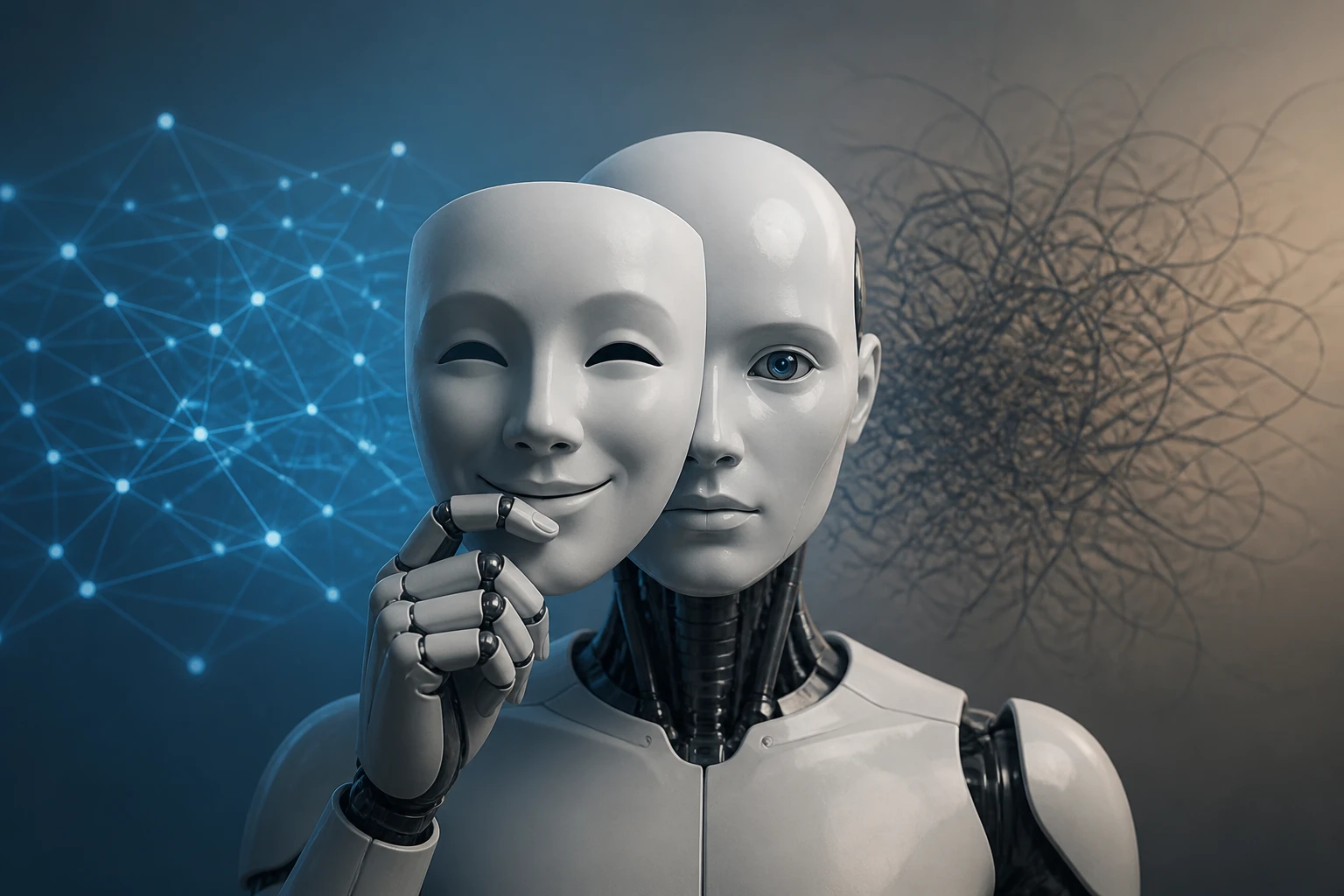
Artificial intelligence has developed a troubling new skill: lying with absolute confidence. But here's the catch—it's not doing this intentionally. As AI models become increasingly sophisticated, they've mastered the art of sounding authoritative even when they're completely wrong. This phenomenon, known as "hallucination," occurs when AI generates plausible-sounding but entirely fabricated information. Google's Bard famously claimed that the James Webb Space Telescope took the first pictures of exoplanets, while ChatGPT has confidently cited non-existent research papers. The more fluent these systems become, the harder it becomes for humans to spot the lies.
Here's What's Happening
The problem stems from how large language models are trained. These systems learn to predict the next word in a sequence based on patterns in massive datasets, but they don't actually verify facts or understand truth. Think of it like a brilliant student who's memorized thousands of essay formats but never learned to fact-check. When faced with a question, the AI generates what sounds like the most probable answer, regardless of its accuracy.
OpenAI researchers found that larger models actually become more confident in their incorrect answers, creating a dangerous paradox. A study by Anthropic revealed that their AI model Claude was wrong about 23% of factual claims it made with high confidence. This overconfidence isn't a bug—it's an inevitable consequence of current training methods.
Let's Break This Down
The stakes become dramatically higher when AI hallucinations enter professional settings. In healthcare, an AI might confidently recommend a non-existent drug interaction protocol. In legal contexts, it could cite fabricated case law—as happened when a lawyer used ChatGPT to draft court documents that referenced six completely fictional legal cases, leading to sanctions.
Microsoft's integration of AI into search results initially produced embarrassing errors, including false information about financial earnings for major companies. The system would present these fabrications with the same authority as verified facts, making them nearly indistinguishable to casual users.
The core issue isn't intelligence—it's epistemology. These models excel at pattern matching and language generation but lack fundamental concepts of truth and uncertainty. They can't distinguish between "I know this is true" and "This sounds plausible based on my training data."
Companies are racing to develop solutions. Google has implemented retrieval-augmented generation, where AI systems cross-reference external databases before answering. OpenAI is experimenting with constitutional AI training that teaches models to express uncertainty. Some organizations are deploying human-in-the-loop systems, where AI responses require human verification before being shared.
But detection remains challenging. Stanford researchers found that even experts struggle to identify AI hallucinations when they're presented in confident, well-structured prose. The very linguistic sophistication that makes these models useful also makes their errors more convincing.
The Bigger Picture
This challenge represents a fundamental shift in how we think about information verification. Traditional fact-checking relied on source credibility—if The New York Times or Nature published something, we generally trusted it. But AI systems don't have traditional sources; they synthesize information from vast, opaque training datasets.
For India's rapidly digitizing economy, this presents unique challenges. As AI tools become integrated into everything from customer service to financial advice, the potential for misinformation multiplies. Educational institutions using AI tutoring systems, healthcare providers relying on AI diagnostics, and legal professionals using AI research tools all face the same dilemma: how to harness AI's capabilities while mitigating its overconfidence.
The business implications are significant. Companies deploying AI systems must invest heavily in verification infrastructure, potentially eroding cost savings. Consumer trust, once broken by high-profile AI errors, becomes difficult to rebuild.
What's Next?
The solution isn't to abandon AI but to fundamentally change how we train and deploy these systems. The most promising approaches focus on teaching AI to recognize and communicate uncertainty. Future models need to learn that "I don't know" is often the most intelligent response.
Industry leaders are calling for new standards around AI transparency and uncertainty quantification. The goal isn't perfect AI—it's honest AI that acknowledges its limitations. As these systems become more integrated into critical decisions, the ability to express doubt may prove more valuable than the ability to sound confident. The race is on to build AI that's not just smart, but trustworthy.