

Overview
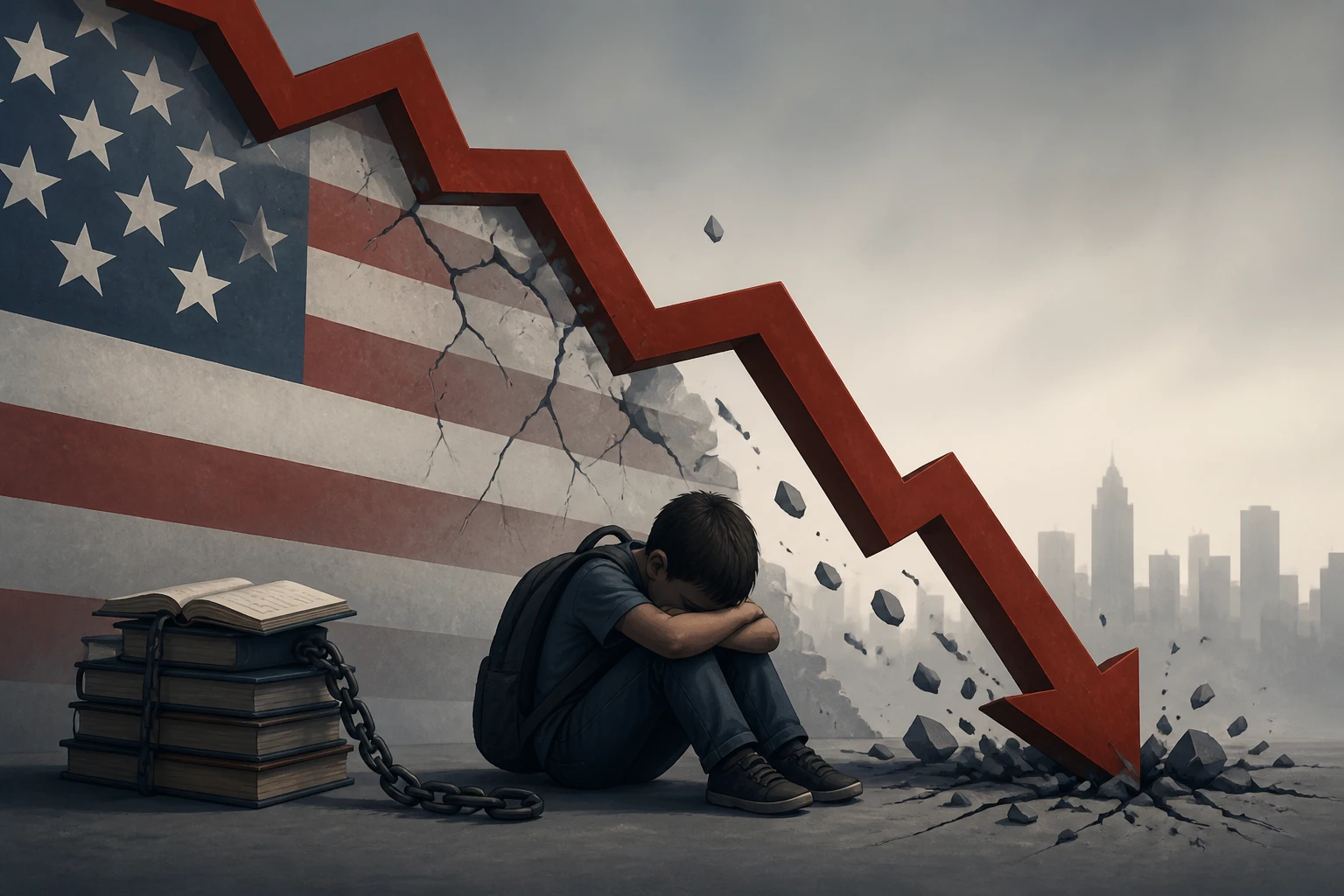
Imagine you're teaching a kid to ride a bike, but every year they're getting worse at it instead of better. That's essentially what's happening in American classrooms right now. The Nation's Report Card, officially known as the National Assessment of Educational Progress (NAEP), has delivered sobering news: student performance in core subjects is declining at unprecedented rates. For working professionals who rely on a skilled workforce and worry about their children's futures, this educational crisis isn't just a policy problem—it's an economic time bomb.
The Problem
The numbers paint a stark picture. Only 35% of fourth-graders now meet proficiency standards in reading, down from 37% in 2017. Mathematics scores have plummeted even more dramatically, with only 41% of fourth-graders and 34% of eighth-graders meeting proficiency benchmarks. Science performance tells a similar story, with less than 25% of students demonstrating grade-appropriate mastery. These aren't just statistics—they represent millions of young Americans entering adulthood without fundamental skills needed for today's economy.
Analysis
Think of education funding like watering a garden. When you reduce water (funding), plants (students) struggle to grow. The Trump administration's proposed education budget cuts of approximately $9.2 billion have coincided with this academic decline, though correlation doesn't necessarily equal causation.
From an economic perspective, this crisis threatens America's competitive advantage. Companies like Google and Microsoft already struggle to find qualified domestic talent, spending billions on H-1B visas and international recruitment. A McKinsey study estimates that educational underperformance costs the U.S. economy $2.3 trillion annually in lost productivity.
The policy implications are equally concerning. States with the largest funding cuts—including Arizona, Oklahoma, and Kansas—show some of the steepest declines in student achievement. Meanwhile, countries like South Korea and Finland, which maintain robust education investments, continue outpacing American students in international assessments.
For working professionals, this means a shrinking pool of qualified entry-level candidates and increased training costs as companies compensate for educational gaps.
Real-World Examples
Amazon recently announced it would spend $700 million retraining workers because traditional education systems aren't producing job-ready graduates. Similarly, IBM has created "new collar jobs" and extensive apprenticeship programs to bridge skills gaps that schools once filled.
Salesforce CEO Marc Benioff has donated over $200 million to San Francisco schools, calling education funding "a national emergency." His company now operates internal universities because new hires lack basic analytical and communication skills.
In Detroit, where reading proficiency rates hover around 7%, local businesses report spending 30% more on employee training compared to national averages. General Motors has partnered with community colleges to create specialized programs, essentially rebuilding educational infrastructure that traditional schools haven't maintained.
The Challenge
Solving this crisis isn't as simple as throwing money at schools. Regulatory complexity creates layers of bureaucracy that often prevent resources from reaching classrooms. Federal mandates, state standards, and local policies frequently conflict, creating what education experts call "implementation paralysis."
Teacher shortages compound the problem—44 states report critical educator shortages. Many qualified teachers leave for higher-paying positions in corporate training or ed-tech companies, creating a brain drain in traditional education. Unlike other industries, education can't quickly pivot or innovate due to political constraints and union negotiations.
Future Implications
This educational decline threatens America's long-term economic competitiveness. Countries with stronger educational foundations will likely dominate emerging industries like artificial intelligence, renewable energy, and biotechnology. For working professionals, this means increased competition from international talent and potential economic stagnation.
Companies will likely accelerate investments in corporate universities and skills-based hiring rather than degree requirements. The traditional college-to-career pipeline may become obsolete, replaced by alternative credentialing and continuous learning platforms.
Looking Ahead
The question isn't whether America can afford to fix education—it's whether we can afford not to. Will your company be training high school graduates in basic math, or competing globally with the world's best talent?