

Overview
Remember when Siri first arrived in 2011, promising to revolutionize how we interact with our phones? Fast forward 13 years, and many users still find themselves shouting "Hey Siri" multiple times, only to get responses like "I didn't quite get that." But Apple's latest announcement for iOS 26.4 suggests those days might finally be numbered. The tech giant is partnering with Google to rebuild Siri from the ground up using Gemini AI, while maintaining privacy through Apple's Private Cloud Compute. This isn't just an update—it's a complete reimagining of voice assistance.
Here's What's Happening
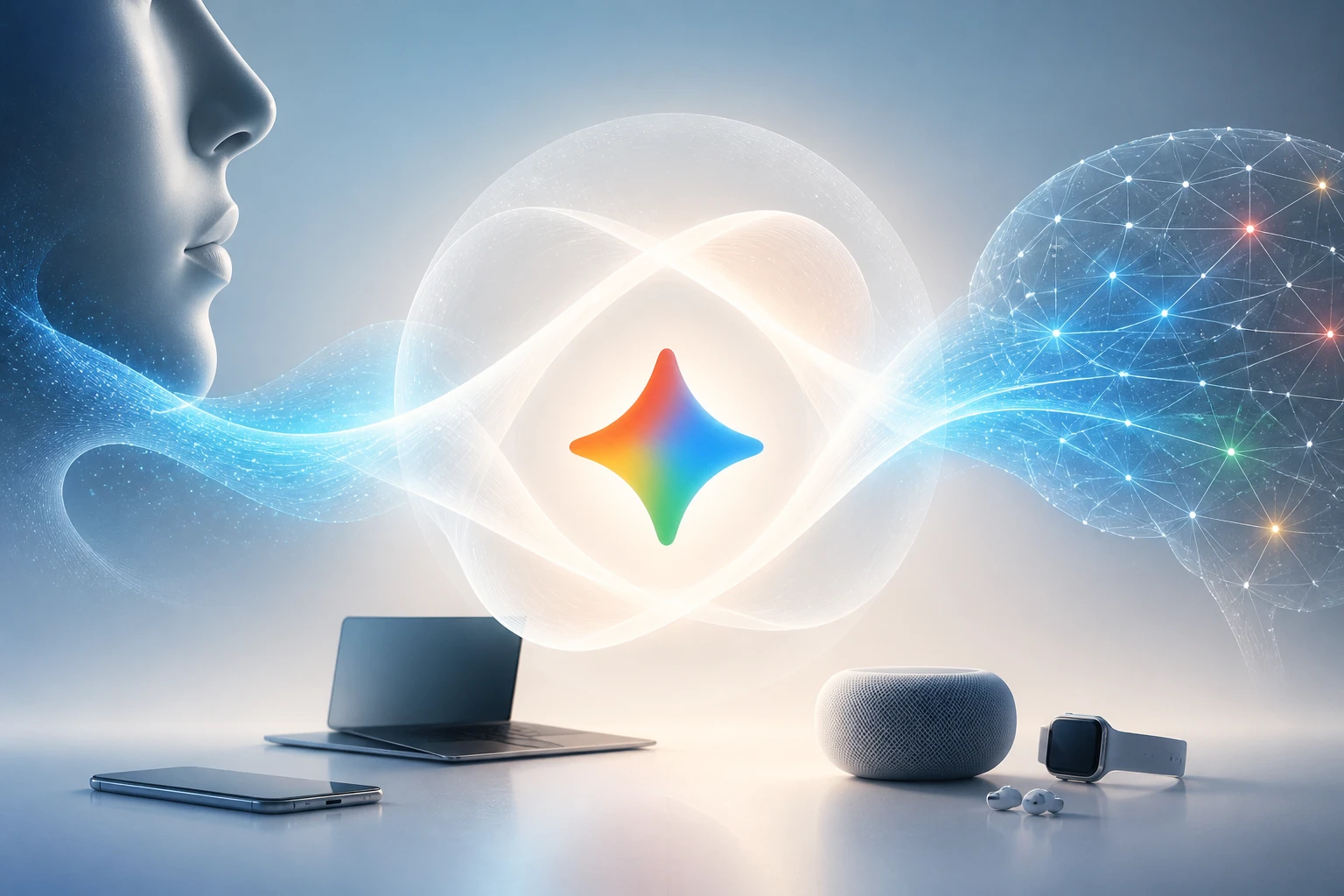
Apple has officially announced a partnership with Google to integrate the Gemini AI model into a completely rebuilt Siri, set to launch with iOS 26.4. The new Siri will feature on-screen awareness, meaning it can see and understand what's currently displayed on your device, and deep cross-app integration capabilities that allow seamless interaction between different applications.
The partnership addresses a critical challenge: while Apple excels at hardware and privacy, Google's Gemini has demonstrated superior natural language processing capabilities. Rather than compromising on privacy, Apple is routing Gemini's processing through its Private Cloud Compute infrastructure, ensuring user data never directly reaches Google's servers. This hybrid approach combines Google's AI prowess with Apple's privacy-first philosophy.
Let's Break This Down
Think of this partnership like hiring a brilliant translator who works behind a one-way mirror. Google's Gemini provides the language intelligence, but all your personal data stays within Apple's secure environment. The Private Cloud Compute acts as that protective barrier, processing requests through Apple's servers before engaging with Gemini's capabilities.
The on-screen awareness feature represents a quantum leap in functionality. Current voice assistants operate blindly—they can't see what you're looking at. The new Siri will understand context by actually "seeing" your screen. If you're viewing a restaurant's website and ask "What are their hours?", Siri won't need you to specify which restaurant.
Deep cross-app integration means Siri can perform complex, multi-step tasks across different applications. Instead of saying "Open Photos, find pictures from last vacation, and share them via WhatsApp," you might simply say "Share my vacation photos with mom." The AI will understand the intent and execute the entire workflow.
Industry analysts estimate that voice assistant market penetration among smartphone users has reached 87% globally, but satisfaction scores remain below 60% for complex queries. Apple's move acknowledges that incremental improvements aren't enough—the entire foundation needed rebuilding.
For Indian users, this could be particularly significant. With Hindi becoming the second-most used language on the internet and India representing Apple's fastest-growing market, enhanced natural language processing could finally deliver truly localized AI experiences.
The Bigger Picture
This partnership signals a broader shift in Big Tech dynamics. Traditionally, Apple, Google, Amazon, and Microsoft competed by building isolated ecosystems. Now, we're seeing strategic collaboration where companies leverage each other's strengths while maintaining their core differentiators.
For Google, this partnership provides access to Apple's premium user base without requiring direct data collection. For Apple, it's an admission that building world-class AI requires specialized expertise and massive computational resources that even they can't match alone.
The timing is crucial. OpenAI's ChatGPT has over 100 million active users, and Google's Bard continues gaining traction. Apple risked falling further behind in the AI race. This partnership allows them to leapfrog competitors while maintaining their privacy narrative—a critical differentiator for security-conscious users.
What's Next?
The iOS 26.4 launch will be a litmus test for whether privacy-preserving AI partnerships can deliver competitive performance. If successful, expect similar collaborations across the industry—perhaps Microsoft integrating OpenAI more deeply into Windows, or Amazon partnering with specialized AI companies for Alexa.
For working professionals, this could fundamentally change smartphone productivity. Imagine dictating complex emails that require data from multiple apps, or having Siri automatically generate meeting summaries by analyzing calendar events, messages, and documents.
The real question isn't whether this partnership will improve Siri—it's whether it will set a new standard for AI assistants that competitors must match or exceed.