

Overview
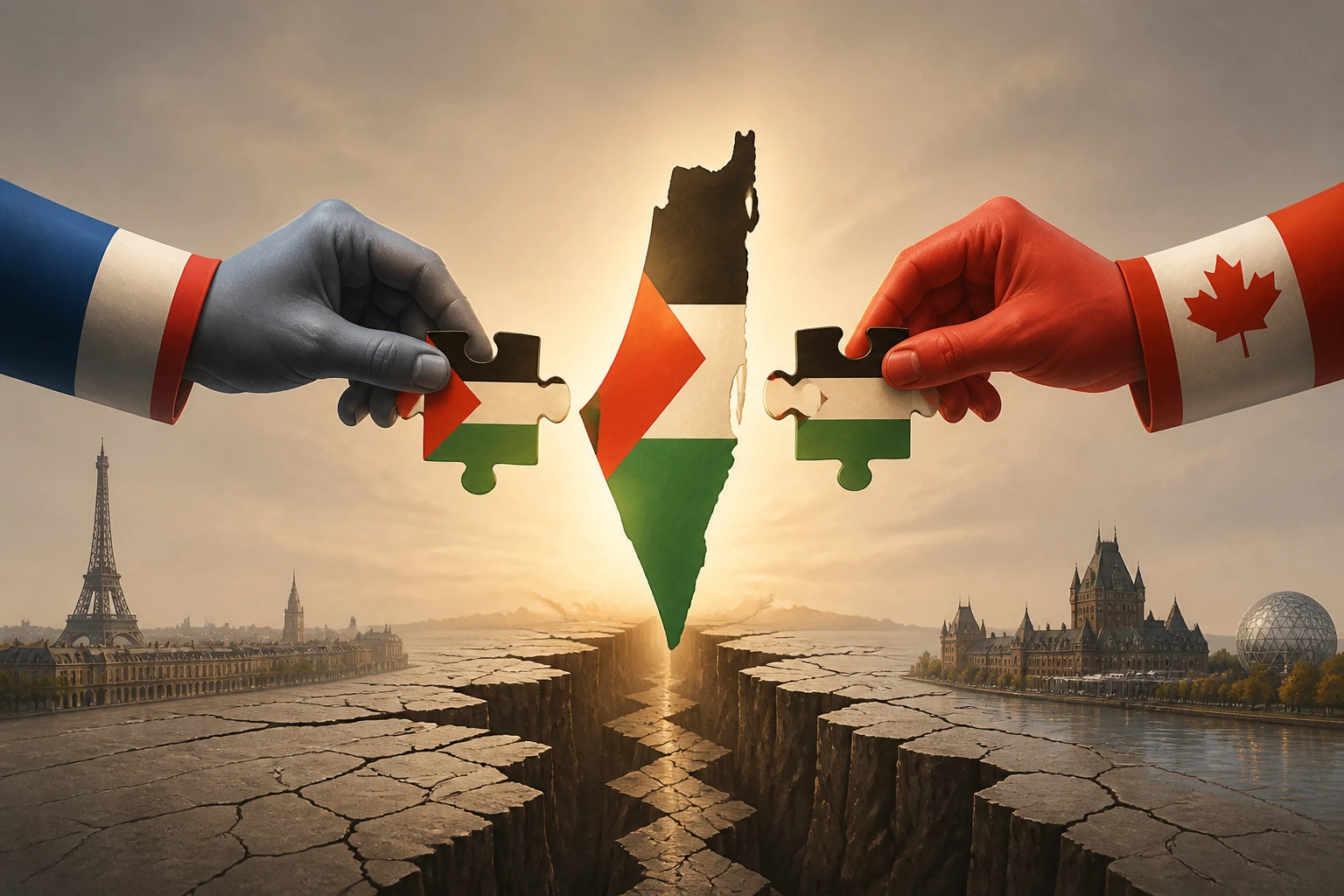
Imagine you're at a family dinner where two influential cousins suddenly announce they're supporting your controversial life choice that everyone else has been avoiding. That's essentially what happened last week when France and Canada announced their coordinated plan to formally recognize Palestine as a sovereign state at the United Nations. This isn't just diplomatic theater—it's a seismic shift that could reshape Middle Eastern geopolitics and challenge decades of U.S.-led Western policy. For working professionals tracking global markets, supply chains, and international business, this move represents far more than symbolic politics. It's a diplomatic earthquake that could trigger cascading effects across energy markets, defense contracts, and international trade relationships worth billions of dollars.
The Problem
Here's what's actually happening: France and Canada, two of America's closest allies, plan to jointly sponsor Palestine's recognition at the UN Security Council next week. Currently, 138 out of 193 UN member states recognize Palestine, but most Western nations have held back, following America's lead in supporting the two-state solution through negotiated settlement rather than unilateral recognition.
This coordinated move breaks ranks with U.S. Middle East policy for the first time since the Oslo Accords. Think of it like this: if international diplomacy were a carefully choreographed dance, France and Canada just decided to change the music mid-performance. The timing isn't coincidental—it comes as Israeli-Palestinian tensions have reached new heights, with recent conflicts causing over $18.5 billion in regional economic damages and disrupting key shipping routes through the Red Sea that handle 12% of global trade.
Analysis
The implications stretch far beyond diplomatic ceremonies. Energy markets are already responding, with oil futures climbing 3.2% since the announcement as traders price in potential regional instability. For businesses, this represents three critical shifts worth monitoring.
First, there's the economic dimension. Palestine's formal recognition could unlock international development funding worth an estimated $4.2 billion annually, creating new market opportunities but also potentially disrupting existing Israeli-Palestinian economic arrangements that currently generate $3.1 billion in bilateral trade.
Second, the policy implications are massive. If France and Canada succeed, Germany, Spain, and Italy are reportedly considering similar moves. This could create a domino effect where Western recognition becomes the norm rather than the exception, fundamentally altering the negotiation dynamics that have defined peace processes for decades.
Third, there's the business angle. Companies operating in the region face new compliance challenges around sanctions, trade regulations, and ESG requirements. Major corporations like Microsoft, Google, and Intel—which have significant Israeli operations—must now navigate potentially conflicting diplomatic frameworks between their home countries and operational bases.
Real-World Examples
Airbus, the European aerospace giant, provides a telling case study. With major operations in both France and Canada, the company now faces potential pressure to recalibrate its $2.8 billion annual business with Israeli defense contractors. Similarly, Bombardier, Canada's aviation leader, must consider how recognition affects its Middle Eastern market strategies.
The banking sector offers another lens. BNP Paribas and Royal Bank of Canada are already reviewing their exposure to Israeli settlements in anticipation of stricter regulatory oversight. Early reports suggest they're preparing to divest approximately $890 million in potentially problematic assets to avoid future compliance issues.
Energy companies are watching closely too. TotalEnergies has significant investments in both Israeli offshore gas fields and potential Palestinian energy projects. The recognition could accelerate development of Palestinian energy infrastructure, potentially worth $1.5 billion in new investment opportunities, while creating regulatory hurdles for existing Israeli partnerships.
The Challenge
Why hasn't this happened before? The answer lies in the complexity of international law and economic interdependence. Recognition isn't just diplomatic symbolism—it triggers legal obligations around trade agreements, security cooperation, and financial regulations.
France and Canada must now navigate conflicting treaty obligations with both the U.S. and their newly recognized Palestinian state. This creates what international lawyers call "recognition complications"—scenarios where allies find themselves legally bound to opposing positions on territorial disputes, security arrangements, and economic sanctions.
Future Implications
For working professionals, this diplomatic shift signals several trend lines worth tracking. Supply chain managers should monitor potential disruptions to Mediterranean shipping routes, which handle $847 billion annually in global trade. Financial professionals need to understand how recognition affects ESG compliance and international banking regulations.
The broader pattern suggests we're entering an era of "coalition diplomacy" where traditional allies increasingly act independently on major international issues. This could reshape everything from NATO decision-making to G7 economic coordination. Companies with global operations must prepare for more complex, multi-polar regulatory environments where allies no longer automatically align on major policy positions.
Investment patterns are already shifting, with $2.3 billion in Middle Eastern venture capital reportedly being repositioned based on anticipated political changes.
Looking Ahead
The real question isn't whether France and Canada will follow through—all indicators suggest they will. The question is whether this represents a temporary diplomatic rift or a permanent realignment of Western policy toward the Middle East.
For professionals navigating global markets, the lesson is clear: the era of predictable, U.S.-led Western consensus on major international issues may be ending. Are you prepared for a world where traditional allies increasingly chart independent courses on critical business and policy issues?