

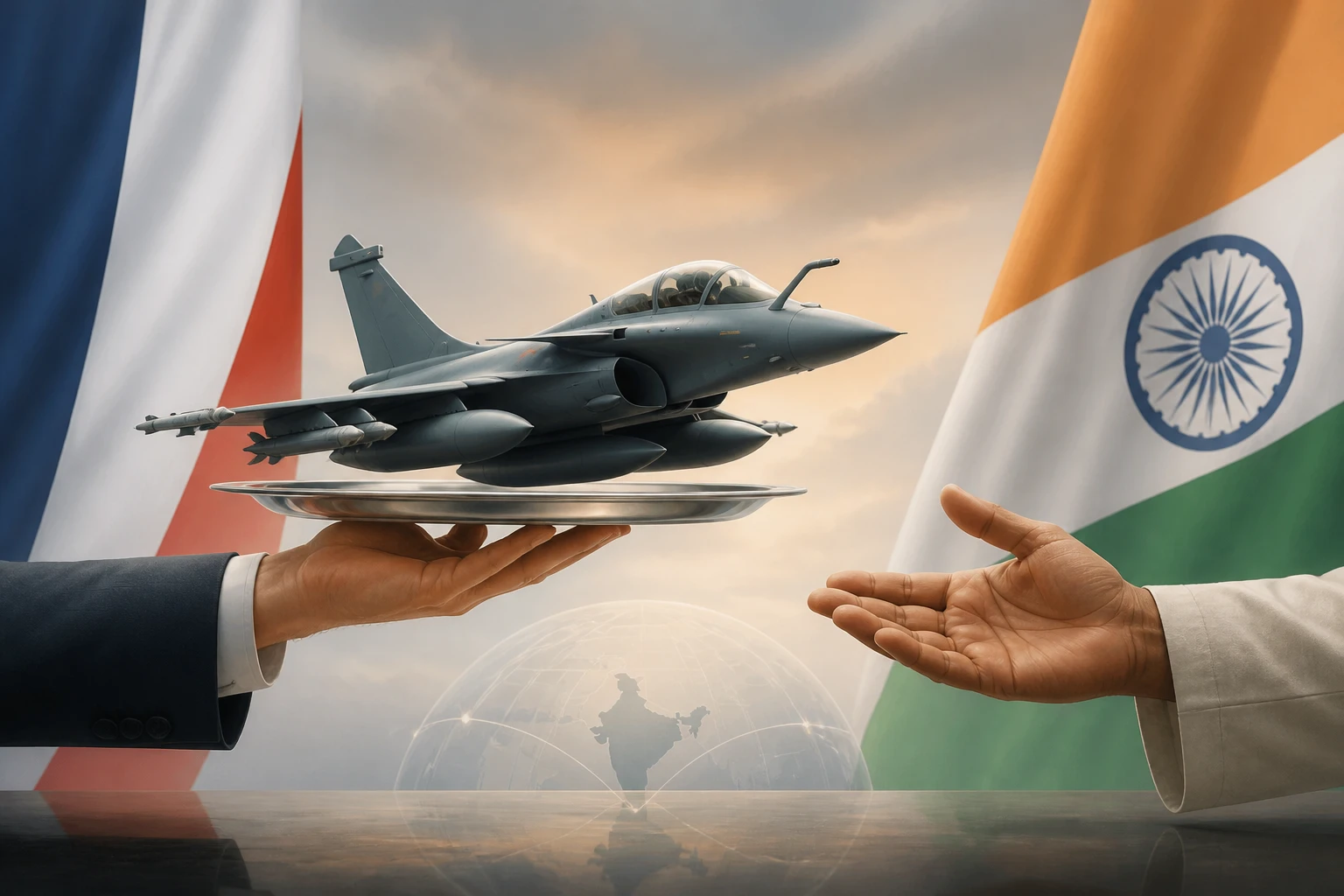
India's IAF currently flies 29 fighter squadrons against a sanctioned strength of 42. That gap isn't just a statistic on a parliamentary report — it's the reason one of the world's largest defence deals is now moving off the drawing board.
The Shrinking Sky Problem
The IAF's squadron strength has been declining due to the retirement of ageing aircraft, including Russian-origin MiG fighter jet variants, and delays in the induction of indigenous platforms such as the LCA Mark 1A and LCA Mark 2. The Rafale, already battle-proven in India's service, is the answer New Delhi is reaching for — again.
During Operation Sindoor in May 2025 — a calibrated tri-services response to the Pahalgam terror attack — the Rafale fleet played a decisive role in spearheading deep-strike missions and establishing air dominance. That operational credibility accelerated the paperwork. India issued the Letter of Request to France for 114 Rafale fighter jets for the Indian Air Force in May this year.
What France Actually Put on the Table
France delivered a detailed technical and commercial bid directly to India's Ministry of Defence, moving to secure a mega-deal for 114 Rafale fighter aircraft valued at ₹3.25 lakh crore ($39 billion).
The structure of the deal is where it gets substantive. The terms proposed by France stipulate that 94 out of the 114 aircraft are to be built in India in partnership with a domestic industry partner. Under the procurement terms, India will receive 18 aircraft in fly-away condition — these models will feature an upgraded Advanced Electronically Scanned Array radar, enhanced self-protection suites, satellite links and artificial intelligence-based pilot assistance.
Domestic industry participation is expected to create opportunities worth approximately ₹1.6 lakh crore for Indian defence companies such as Tata and Larsen & Toubro.
India's Non-Negotiables
This isn't a buyer taking whatever the seller offers. India has laid down a set of non-negotiable clauses, including the integration of indigenous weapons and secure data links. Specifically, the Indian side will closely analyse the French response to India's demand for integrating Indian weapons like the variants of the Astra air-to-air missiles and indigenous content in the aircraft.
Dassault Aviation has introduced the upgraded 'F-4' version, and India is seeking a mix of the 'F-4' and the upcoming 'F-5' variants. The transfer of technology will cover the engine, airframe and avionics, and the integration of Indian weapons, missiles and ammunition on all 114 jets is also part of the agreement.
A Fleet That Compounds on Itself
The logic for Rafale goes beyond capability — it's also about logistics. The existing operational ecosystem means that expanding the Rafale fleet would also reduce logistics, maintenance and training costs. A Rafale flight training and MRO facility is already operational at the IAF base in Ambala.
Bilateral diplomatic engagements have reinforced the acquisition: during his visit to France in June, Prime Minister Narendra Modi and French President Emmanuel Macron elevated the relationship to a Special Global Strategic Partnership.
The bid is now with the Defence Ministry's Acquisition Wing and the IAF for review. Once all listed procedures are complete, the Cabinet Committee on Security, chaired by the Prime Minister, will clear the deal. India's sky gap won't close overnight — but the paperwork, at least, is moving.
Sources
- France offers deal for 114 Rafale fighter jets, with 94 to be made in India
- ₹3.25 lakh crore defense deal: France proposes to build 94 Rafale jets in India - BusinessToday
- 114 Rafale jet deal: France submits detailed proposal for Rs 3.25 lakh crore aircraft deal to India
- France submits proposal for India’s 114-Rafale fighter jets
- 114 Rafales, ₹3.25 Lakh Cr; How India's Biggest Fighter Jet Deal Will Transform IAF – Outlook Business
- France submits bid for 114 Rafale jets deal to India - The Tribune
- India finalises letter of request for 114 Rafale jets, 90 to be made in India with Dassault - BusinessToday
- 114 Rafales, ₹3.25 Lakh Cr; How India's Biggest Fighter Jet Deal Will Transform IAF