

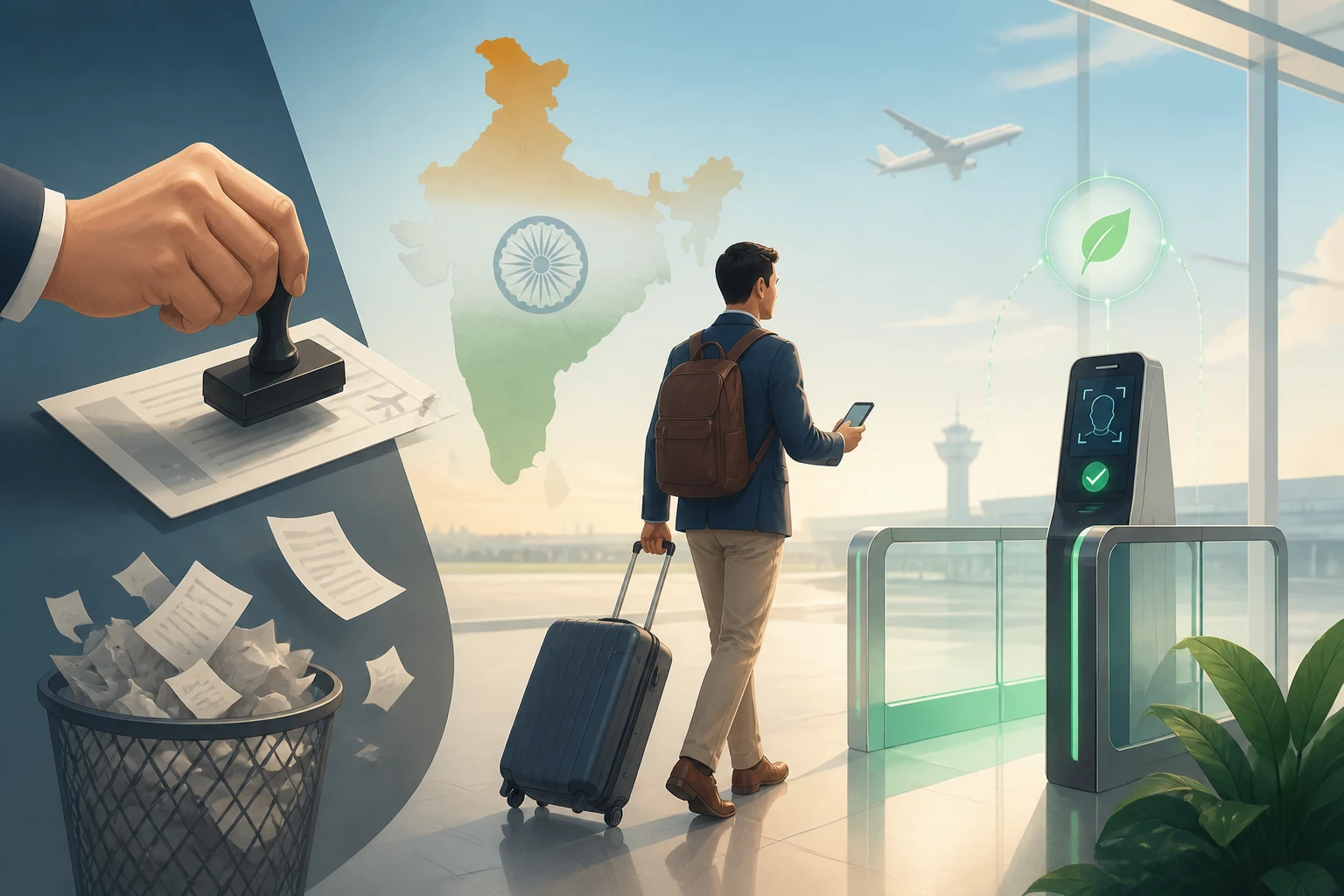
For anyone who has caught an international flight from an Indian airport, the ritual is muscle memory. You clear security, walk to the immigration counter, hand over your passport and your boarding pass, wait for the officer to review both — and then listen for the thud of an ink stamp on the paper before you're waved through. That thud, a fixture of Indian airport departures for decades, is about to go silent.
A Surprisingly Consequential Rubber Stamp
From September 1, passengers flying abroad from Indian airports will no longer need to get their boarding passes stamped at immigration counters — in a move aimed at making the clearance process simpler and more convenient. The Bureau of Immigration will now accept e-boarding passes on smartphones at all international airports.
The directive came from the Bureau of Immigration (BoI), which functions under the Ministry of Home Affairs. The communication has been sent to key stakeholders, including international airport operators and the Central Industrial Security Force (CISF). The reason? The stamp was causing more problems than it solved. Authorities noted that "improper or incorrect" physical ink stamps routinely smeared or obscured critical barcodes, creating reading errors at final boarding gates.
The CISF Already Figured This Out Years Ago
What makes the BoI's decision overdue rather than pioneering is this detail: the CISF had already ended its own practice of stamping physical boarding passes during security checkpoints several years ago. Immigration was, in effect, the last checkpoint still insisting on a paper ritual that security had quietly dropped long before. The stamp had become an island of analogue process in an otherwise increasingly digital journey.
The boarding-pass stamp had increasingly resembled an analogue step within an otherwise digitised immigration process. With airlines already issuing electronic boarding passes and Indian airports steadily adopting biometric and digital processing, there was little reason for passengers to continue carrying a piece of paper simply so an immigration officer could stamp it.
This Is One Step in a Longer Walk
The boarding pass change is not a standalone event. The Bureau of Immigration is reportedly working towards ending immigration entry and exit stamps for Indian passport holders as well. Officials said a pilot project is currently underway to test the system. If successful, the new process could eventually be introduced across airports in India, further reducing paperwork and making international travel more digital.
This layered approach — boarding pass stamps first, passport stamps potentially next — mirrors India's broader immigration modernisation push, which has included a digital e-Arrival Card for foreign nationals and the Fast Track Immigration – Trusted Traveller Programme at major airports.
For the frequent international flyer, the practical change from September 1 is immediate and zero-friction: an e-boarding pass on a smartphone will be enough for immigration clearance, while those carrying a physical boarding pass can still use it without getting it stamped. The stamp, it turns out, was never really about security. It was about habit — and India is finally breaking it.
Sources
- India To End Boarding Pass Stamping For International Flyers From September 1
- India Ends Boarding Pass Stamping for International Flyers from September 1: E-Boarding Passes Accepted at All Airports
- Immigration update: India to scrap boarding pass stamping for international flyers starting Sept 1 - BusinessToday
- India Will Stop Stamping Boarding Passes At Immigration From September 1 - Live From A Lounge
- India to End Boarding Pass Stamping for International Flyers From September 1