

Overview
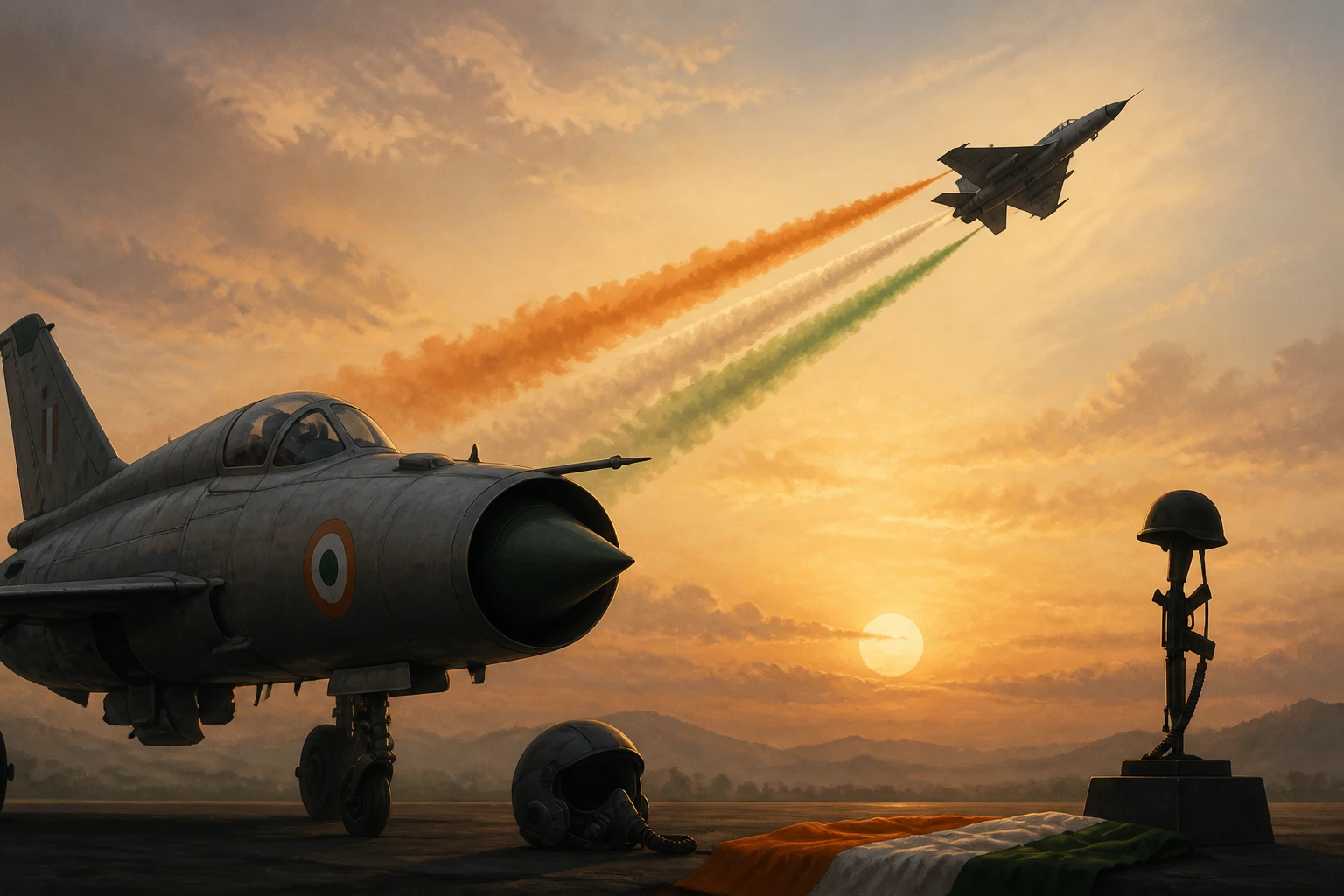
Picture this: a fighter jet that's been the backbone of your air force for 60 years suddenly takes its final bow. That's exactly what happened when India bid farewell to the legendary MiG-21 fighter aircraft. Defence Minister Rajnath Singh didn't just call it a retirement ceremony—he dubbed the MiG-21 the "bird of all seasons" that shaped generations of Indian Air Force pilots. But here's the thing: this isn't just about retiring an old plane. It's about closing a chapter that defined India's aviation prowess through wars, conflicts, and technological evolution.
Here's What's Happening
The Indian Air Force officially retired its last MiG-21 squadron, marking the end of an era that began in the early 1960s. The aircraft, originally designed by the Soviet Union, became India's workhorse fighter jet through multiple conflicts including the 1971 Indo-Pak war and the 1999 Kargil conflict.
Over its service life, India operated more than 874 MiG-21 variants, making it one of the largest operators of this aircraft globally. The "Flying Coffin," as critics often called it due to safety concerns, was simultaneously praised as the "Flying Ballet" by pilots who admired its agility. The final squadron to operate these jets was the No. 51 Squadron based in Rajasthan, which hung up its MiG-21 Bison boots for good.
Let's Break This Down
Think of the MiG-21 as that reliable old motorcycle that's been in your family for decades—it may not have all the modern features, but it gets the job done and holds incredible sentimental value.
The numbers tell a fascinating story. The MiG-21 participated in over 40 years of active combat operations, with Indian pilots flying more than 1.2 million flight hours on these machines. During the 1971 war, MiG-21s were credited with shooting down Pakistani F-104 Starfighters, proving their mettle against supposedly superior Western technology.
However, the aircraft's safety record became increasingly concerning. Over the decades, India lost more than 400 MiG-21s to accidents, earning it the unfortunate "Flying Coffin" moniker. The crash rate of approximately 0.6 accidents per 1,000 flying hours was significantly higher than modern standards, though comparable to other aircraft of its generation.
What made the MiG-21 special wasn't just its combat capability—it was the foundation of India's indigenous aviation industry. The aircraft was manufactured under license at Hindustan Aeronautics Limited (HAL), creating thousands of jobs and establishing India's aerospace manufacturing ecosystem. This technology transfer laid the groundwork for future projects like the Tejas Light Combat Aircraft.
From a pilot's perspective, the MiG-21 was both loved and feared. Its delta-wing design made it incredibly agile in dogfights, but also unforgiving to novice pilots. Veterans often describe it as a machine that demanded respect and precision—qualities that shaped some of India's finest fighter pilots.
The Bigger Picture
The MiG-21's retirement represents more than just fleet modernization—it's a strategic shift towards fourth and fifth-generation fighters. India is replacing these aging warriors with modern aircraft like the Rafale, Tejas, and potentially the F-21 or Gripen through ongoing procurement processes.
For India's defense industry, this transition signals a move towards greater self-reliance. The lessons learned from six decades of MiG-21 operations are being incorporated into indigenous programs. The Advanced Medium Combat Aircraft (AMCA) program, aimed at developing India's first fifth-generation fighter, draws heavily from this accumulated expertise.
International partners are watching closely too. Countries like Russia, France, and the United States see this as an opportunity to strengthen ties with India through technology transfers and joint development programs. The retirement also sends a message to regional adversaries about India's commitment to modernizing its defense capabilities.
What's Next?
The MiG-21's farewell isn't just nostalgia—it's a calculated move towards building a more capable, technologically advanced air force. The Indian Air Force is targeting a fleet strength of 42 squadrons by 2032, with a mix of indigenous and imported fourth-generation fighters.
For young defense enthusiasts and policymakers, the MiG-21 story offers valuable lessons about balancing cost, capability, and indigenous development. As India aims to become a $5 trillion economy, its defense modernization strategy will play a crucial role in both national security and industrial growth.
The "bird of all seasons" may have flown its last mission, but its legacy lives on in every Indian pilot who learned to fly and fight in its cockpit.