

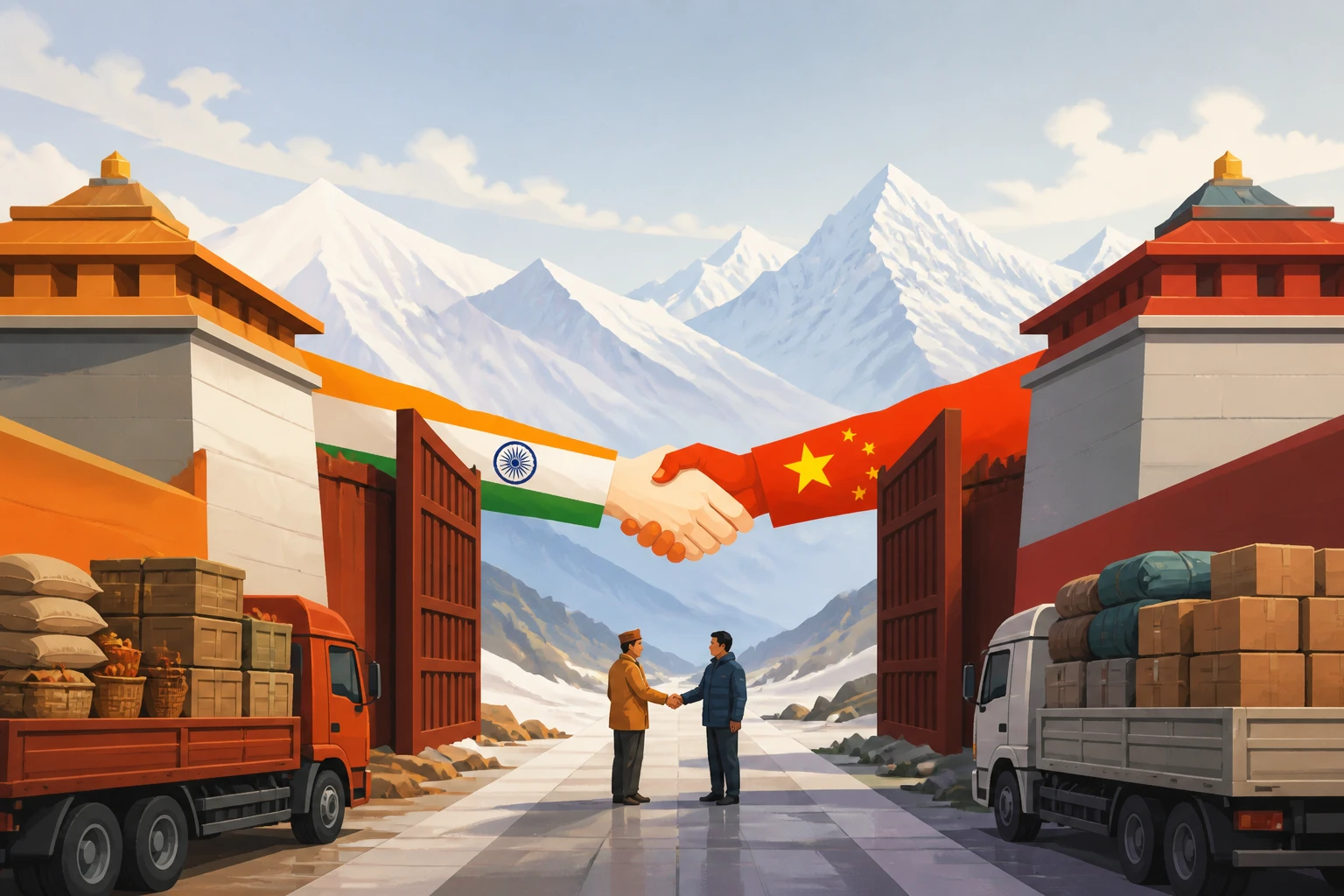
On Saturday, mules and merchants weren't the ones walking through Nathu La — it was paperwork, permits, and cautious optimism. The Nathu La Pass, connecting India's Sikkim with China's Tibet at 4,310 metres above sea level, reopened to commerce for the first time since 2020. Six years is a long time for a mountain pass to sit idle, and the reasons it stayed shut say as much as the reason it's open again now.
Why It Closed, and Why It Stayed Closed
Border trade through the Himalayan passes was suspended after the onset of the Covid-19 pandemic in early 2020. But with the military stand-off along the Line of Actual Control in eastern Ladakh casting a shadow over the entire bilateral relationship, the trade could not be restarted even after the pandemic ended. Nathu La became a casualty not just of a virus, but of a five-year freeze in India-China ties that neither side wanted to formally own.
What Wang Yi's Visit in August 2025 Actually Unlocked
The diplomatic thaw came in stages. Chinese Foreign Minister Wang Yi held a series of meetings in New Delhi on August 18 and 19, 2025, on a trip aimed at restoring high-level dialogue between Asia's two largest powers. The meeting between External Affairs Minister S. Jaishankar and Wang Yi saw India and China agreeing to restart border trade through three designated points — Lipulekh Pass in Uttarakhand, Shipki La in Himachal Pradesh, and Nathu La in Sikkim. Nathu La was simply the first to move from agreement to action.
The visit came at a crucial time, as both countries face pressure from shifting US trade orientations, resulting in a push for pragmatic recalibration of ties. Trade normalisation, in other words, isn't purely sentimental — it has a geopolitical logic.
What Actually Gets Traded Here
Don't picture container ships. This is deliberately small-scale, tightly regulated commerce. Under the existing terms, about 36 authorised goods such as handicrafts, handloom goods, agricultural equipment, processed food products, and traditional religious items can be exported from India. Imports from the Tibetan side include ready-made clothing, yak items, butter, borax, and other authorised goods. Trade runs for six months, from May to November, with both nations trading the current list of permitted items from Monday through Thursday.
Past trade across these high-altitude Himalayan passes was usually small in volume, but any resumption is significant for its symbolism. That's the honest framing — this isn't a trade corridor that moves macro-economic needles. It's a confidence-building measure dressed in the language of commerce.
The Infrastructure, the Traders, and What Comes Next
The Nathu La Integrated Check Post's infrastructure, which suffered degradation during the prolonged shutdown and severe Himalayan winters, has been restored and is now operating. The Indo-Tibetan Border Police will send more troops to Nathu La, including an all-women unit, for the first time.
For the roughly 600 registered traders in Sikkim who used to depend on this ancient route, the reopening means a livelihood restored. But for policymakers in Delhi and Beijing, Nathu La is more ledger entry than trade policy — proof that two countries who nearly came to blows in 2020 can, at minimum, wave goods across a mountain pass again. The reopening follows the earlier resumption of the Kailash Mansarovar Yatra through the same pass in 2025 — part of a broader, deliberate choreography of normalisation.
The question isn't whether this trade route changes anything on its own. It doesn't. The question is what it signals — and right now, it signals that both sides have decided the cost of staying frozen is higher than the discomfort of thawing.
--- Tags: India-China Relations, Nathu La, Border Trade, Sikkim, Wang Yi, Line of Actual Control, Diplomacy
Sources
- India and China revive Himalayan trade at high-altitude pass | South China Morning Post
- india%2Fdelhi rejects nepals objection to restart of india china border trade through lipulekh pass 3690092
- Wang Yi Visit to India Sets the Stage for Modi-Xi Meeting – The Diplomat
- India–China Rapprochement: Wang Yi’s Visit and the Road Ahead | India's World
- India, China resume Nathu La border trade after six-year hiatus - The Tribune
- malaymail.com
- Centre to Resume Nathu La Border Trade After Six-Year Suspension