

Overview
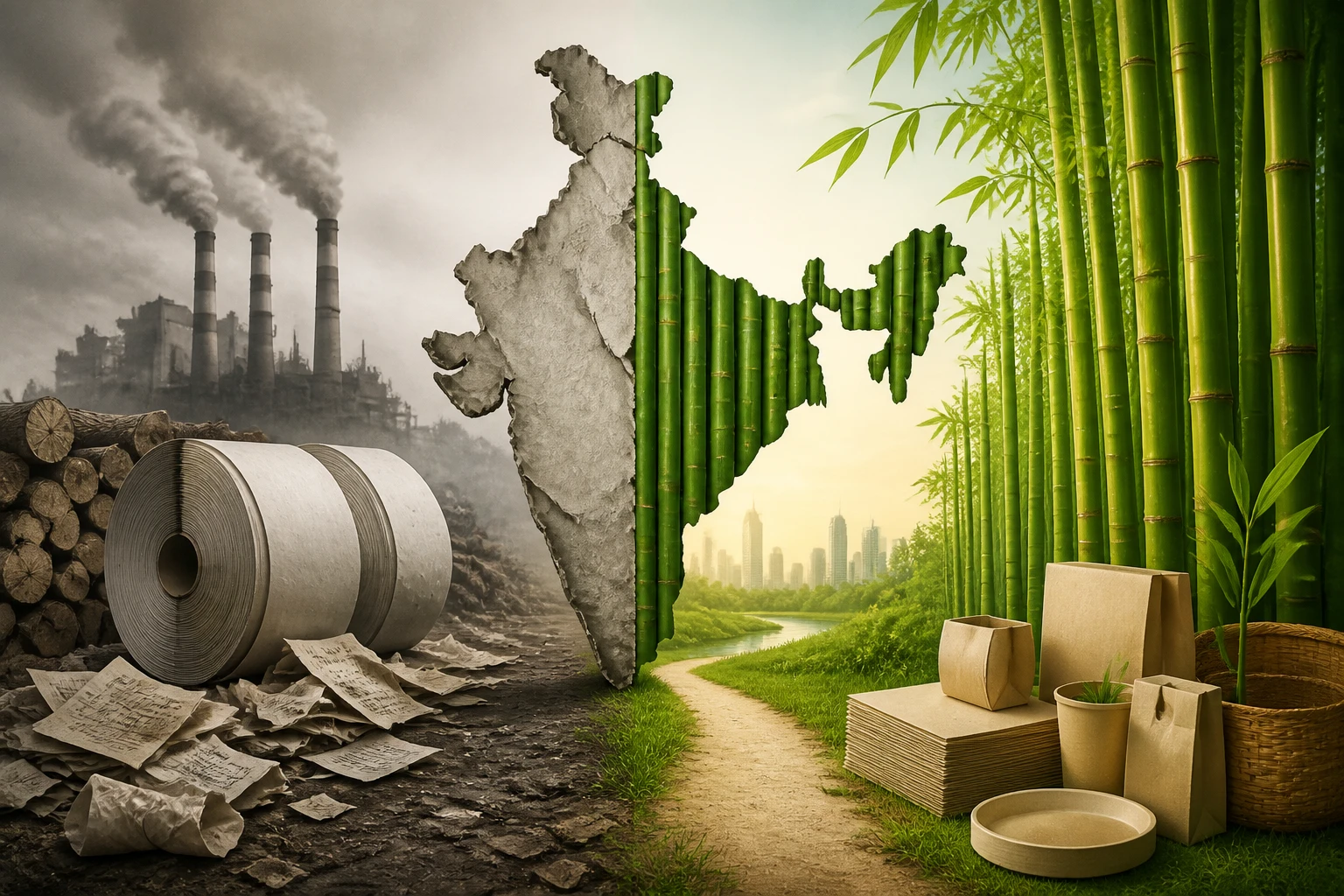
Picture this: A single regulatory change transforms an entire industry overnight. That's exactly what happened when India reclassified bamboo as grass instead of a tree in 2017. What seemed like bureaucratic fine-tuning has unleashed a ₹50,000 crore economic revolution that's reshaping everything from toilet paper to smartphone manufacturing. Farmers who once needed permits to cut a bamboo stick can now harvest freely, creating an environmental and economic windfall that could fundamentally alter India's industrial landscape.
Here's What's Happening
The reclassification removed bamboo from the Indian Forest Act of 1927, ending decades of permit requirements that stifled growth. Previously, farmers needed government permission to harvest bamboo from their own land – imagine needing a license to cut grass in your backyard. This bureaucratic nightmare kept India's bamboo potential locked away despite having 8.96 million hectares of bamboo resources, the second-largest in the world after China.
Now, entrepreneurs are racing to capitalize on bamboo's extraordinary properties. One hectare absorbs 35% more CO2 than traditional trees, grows 10 times faster than hardwood, and requires zero pesticides. Companies like Bambrew are producing bamboo toilet paper, while Bamboo House India manufactures everything from construction materials to smartphone cases.
Let's Break This Down
Think of bamboo as nature's Swiss Army knife – versatile, sustainable, and incredibly efficient. Unlike trees that take 25-50 years to mature, bamboo reaches full height in just 3-4 years. It's like comparing a Ferrari to a bullock cart in terms of growth speed.
The numbers tell a compelling story. Bamboo produces 20 times more timber per hectare than most tree species. For paper production, this translates to massive cost savings and environmental benefits. Traditional paper mills require 17 trees to produce one ton of paper, while bamboo can produce the same amount using significantly less raw material.
The economic impact is staggering. The National Bamboo Mission estimates the sector could generate employment for 10 million people by 2030. States like Assam, Meghalaya, and Manipur – which collectively hold 60% of India's bamboo resources – are experiencing an entrepreneurial boom.
Yohan Poonawalla's Bambrew exemplifies this transformation. Starting with bamboo toilet paper in 2018, the company now produces tissues, napkins, and paper towels, targeting the ₹7,000 crore tissue paper market. Their products cost 20-30% less than wood-based alternatives while offering superior strength and absorbency.
But it's not just paper. Bamboo's tensile strength rivals steel, making it ideal for construction. Companies are manufacturing bamboo flooring, furniture, and even bamboo fiber clothing that's naturally antibacterial and moisture-wicking.
The Bigger Picture
This bamboo revolution presents a fascinating paradox for India's paper industry. Traditional paper manufacturers face disruption from a faster-growing, cheaper, and more sustainable alternative. Yet, the same companies can pivot to bamboo-based production, potentially saving themselves while dramatically reducing environmental impact.
From a farmer's perspective, bamboo represents financial security. Unlike seasonal crops, bamboo provides continuous income through multiple harvests per year. A farmer can earn ₹50,000-80,000 per hectare annually from bamboo compared to ₹20,000-30,000 from traditional crops.
Environmental advocates see bamboo as a carbon sequestration superhero. With India committed to achieving net-zero emissions by 2070, bamboo cultivation could significantly accelerate this timeline while creating economic opportunities in rural areas.
However, challenges remain. Processing infrastructure needs massive investment, and quality standardization requires attention. Many consumers still associate bamboo products with inferior quality, despite technological advances proving otherwise.
What's Next?
The bamboo economy represents India's potential to lead global sustainability trends while building domestic prosperity. As climate consciousness increases and ESG investing grows, bamboo products are positioned for exponential growth.
Watch for technology integration – startups are developing bamboo-based composites for automotive and construction industries. The export potential is enormous, with global demand for sustainable materials accelerating.
For young professionals, this sector offers diverse opportunities – from agri-tech startups to sustainable manufacturing ventures. The bamboo revolution isn't just changing what we produce; it's redefining how we think about sustainable development in the Indian context.