

Overview
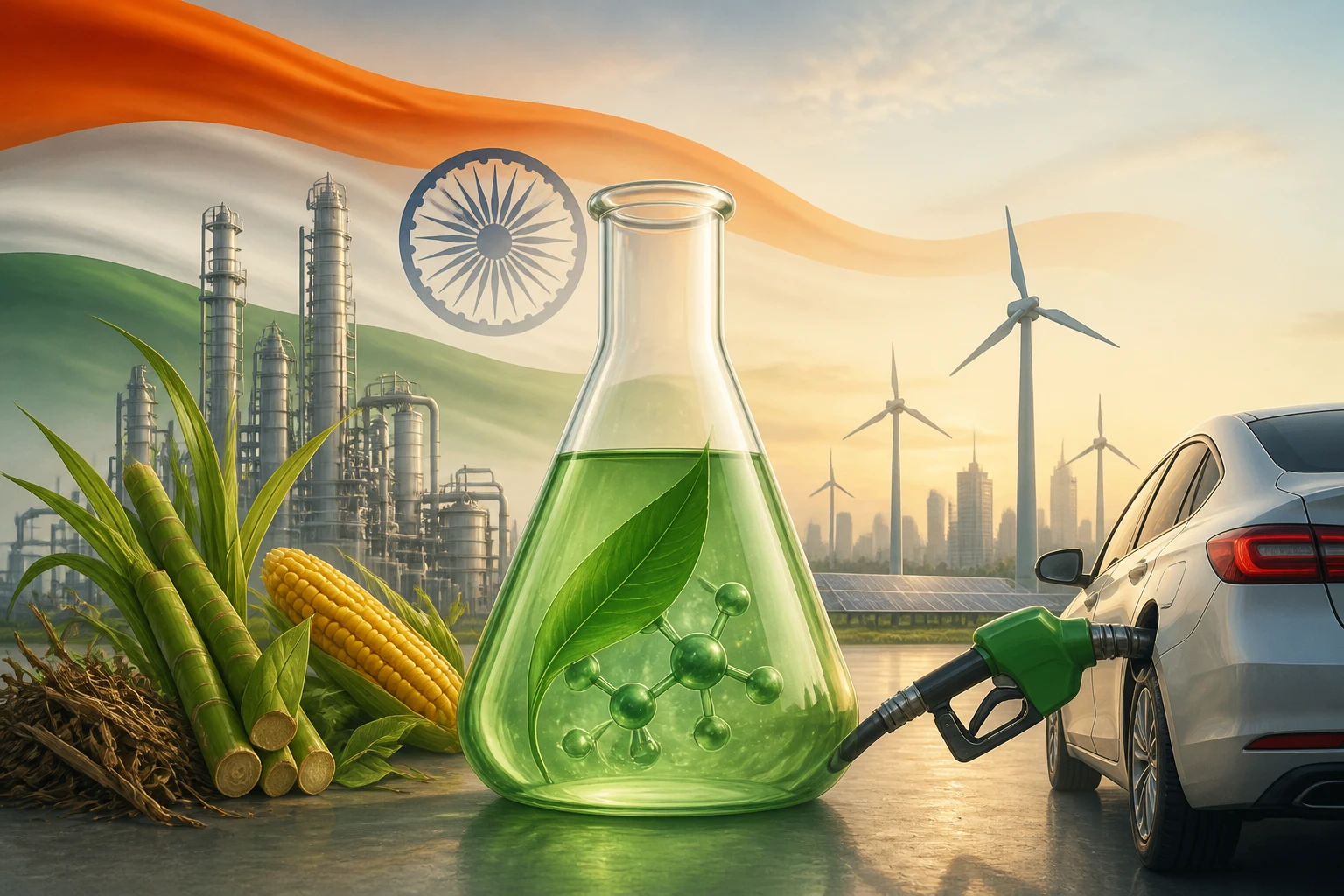
Picture this: You're filling up your car at a petrol pump, and the fuel flowing into your tank isn't just refined crude oil from the Middle East – it's partly made from sugarcane grown in Maharashtra or corn from Punjab. This isn't science fiction; it's India's ambitious push toward energy independence. But here's the plot twist – while the world was watching India's ethanol-diesel blend experiments, something more interesting was brewing in the labs. The Automotive Research Association of India (ARAI) is now testing something called isobutanol, a biofuel that could change everything we know about Indian transportation.
Here's What's Happening
India is quietly testing 10% isobutanol blends with diesel, marking a significant shift in the country's biofuel strategy. This move comes after ethanol-diesel blends failed to deliver the expected results in real-world conditions. Unlike ethanol, which caused compatibility issues with existing diesel engines, isobutanol shows promise as a more engine-friendly alternative.
ARAI, the government's premier automotive testing body, is conducting extensive trials to evaluate how isobutanol performs in Indian conditions. The timing isn't coincidental – India imports nearly 85% of its crude oil requirements, spending approximately $140 billion annually on energy imports. With global oil prices remaining volatile and India's energy consumption growing at 3-4% annually, finding domestic alternatives isn't just an environmental goal; it's an economic necessity.
Let's Break This Down
Think of isobutanol as ethanol's more sophisticated cousin. While both are alcohols that can be derived from biomass, isobutanol has a longer carbon chain, making it more similar to conventional fuels in terms of energy density and compatibility.
Here's where it gets interesting: ethanol-diesel blends ran into several problems during India's earlier trials. Ethanol is hygroscopic – it absorbs moisture from the air like a sponge. This caused fuel degradation, corrosion in fuel systems, and inconsistent engine performance, especially in India's humid climate. Isobutanol, however, has lower water absorption and better stability.
The numbers tell a compelling story. Isobutanol contains about 95% of the energy density of gasoline, compared to ethanol's 67%. This means vehicles can travel further on the same volume of fuel. For a country where freight transportation accounts for 40% of diesel consumption, this efficiency gain translates to significant cost savings.
But here's the real kicker – isobutanol can be produced from various feedstocks including agricultural waste, algae, and even industrial waste gases. India generates approximately 350 million tonnes of agricultural residue annually, much of which is currently burned, contributing to air pollution. Converting this waste into isobutanol could address two problems simultaneously: energy security and environmental degradation.
The production process involves fermenting biomass using engineered microorganisms, similar to brewing beer but with a different end product. Companies like Gevo and Butamax have already demonstrated commercial-scale production in other countries, proving the technology's viability.
The Bigger Picture
This isobutanol experiment reflects India's broader energy transition strategy. The government has set ambitious targets: 20% ethanol blending with petrol by 2025 and exploring higher diesel blends. But the real game-changer is the potential for domestic production chains.
Consider the ripple effects: successful isobutanol adoption could create new revenue streams for farmers, reduce stubble burning in Punjab and Haryana, and decrease India's trade deficit. The Ministry of Petroleum and Natural Gas estimates that every 1% increase in biofuel blending saves approximately $400-500 million in import costs.
However, challenges remain. Production costs are currently higher than conventional diesel, and scaling up manufacturing requires significant investment. The infrastructure for collection, processing, and distribution of agricultural waste needs development. Moreover, ensuring consistent quality and supply chains across India's diverse agricultural landscape presents logistical complexities.
What's Next?
ARAI's test results will likely determine whether India pursues isobutanol at scale or explores other alternatives. Early indicators suggest positive outcomes, but commercial viability depends on production costs coming down through technological improvements and economies of scale.
The success of this initiative could position India as a leader in advanced biofuels, potentially creating export opportunities. More immediately, it represents a crucial step toward reducing the country's vulnerability to oil price shocks and geopolitical tensions in oil-producing regions.
For young professionals entering the energy, automotive, and agricultural sectors, this shift signals emerging opportunities in biotechnology, sustainable engineering, and supply chain management. The convergence of agriculture, technology, and energy is creating entirely new career paths.