

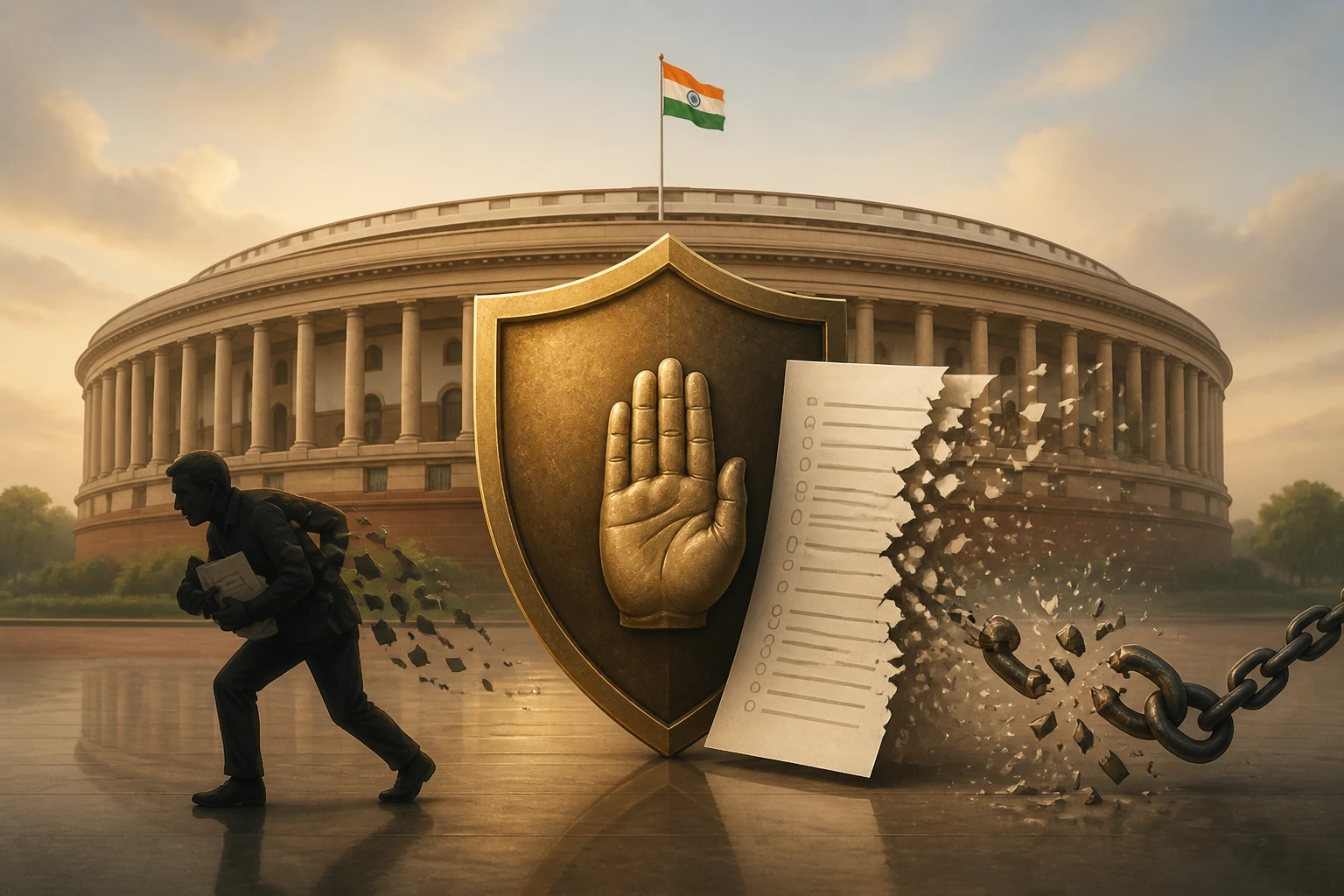
A resignation, weeks of tear gas, and one hunger strike later — Parliament has finally moved. The Public Examinations (Prevention of Unfair Means) Amendment Bill, 2026, was cleared by a voice vote in the Rajya Sabha, a day after it was passed by the Lok Sabha. The government called it a response to "major issues affecting students." For millions of aspirants who've been caught in the crossfire of leaked papers and cancelled exams, it's a reckoning — however belated.
What the Streets Forced Parliament to Do
The protests didn't start with a bill. A series of demonstrations took place at Jantar Mantar, New Delhi, between June 6 and July 25, 2026, initiated by the Cockroach Janta Party — a youth-based satirical political movement — along with left-wing student organisations. Protesters demanded the resignation of Union Education Minister Dharmendra Pradhan over irregularities in several national examinations, including the 2026 NEET paper leak. At one point, police fired tear gas and baton-charged demonstrators as they tried to march to Parliament. Pradhan resigned on July 25, 2026. Days later, Parliament introduced the bill.
What the Amendment Actually Changes
The 2024 parent law set a baseline. This amendment raises the stakes considerably:
- Stiffer jail terms: Individuals involved in paper leaks or unfair means will now face a minimum of five years and a maximum of 10 years in jail, plus a fine of up to ₹50 lakh.
- Heavier penalties for institutions: The bill proposes enhanced punishment for managerial personnel of service providers — imprisonment up to 10 years and a maximum fine raised from ₹1 crore to ₹5 crore.
- Fast-track courts: The amendment empowers state governments and UTs to designate any Court of Session as a special fast-track court, with trials mandated to be completed within three months from the filing of the charge sheet.
- Special task force: The bill empowers the central government to constitute a special task force for investigation of any offence, if necessary.
- Time-bound investigation: The bill adds that investigation of an offence must be completed within two months.
- Longer debarment: Service providers engaging in unfair means were previously barred for four years from conducting public examinations; the bill extends this period to eight years.
The law applies to examinations conducted by the UPSC, SSC, Railway Recruitment Boards, IBPS, and the National Testing Agency, among other central government bodies.
The Opposition's Unfinished Argument
The bill passed, but not without dissent. Several Opposition members in the Rajya Sabha demanded that the government scrap the National Testing Agency, while the DMK urged the government to do away with NEET itself. These are structural demands — the bill, for all its teeth, doesn't touch the architecture of how exams are designed and administered. Stricter punishment for leaks is necessary, but it doesn't answer why the system keeps producing leaks in the first place.
The law is now sharper. Whether it's aimed at the right target is the question that will outlast this monsoon session.
Sources
- Parliament passes anti-paper leak bill - The Tribune
- 2026 Delhi Jantar Mantar protests - Wikipedia
- Indian student protests: What’s next after Modi’s promise on exam leaks? | Education News | Al Jazeera
- Union Minister Dr. Jitendra Singh Introduces the Public Examinations (Prevention of Unfair Means) Amendment Bill, 2026 in Lok Sabha
- The Public Examinations (Prevention of Unfair Means) Amendment Bill, 2026
- Parliament passes anti-paper leak Amendment Bill with stricter norms | India News - Business Standard