

Overview
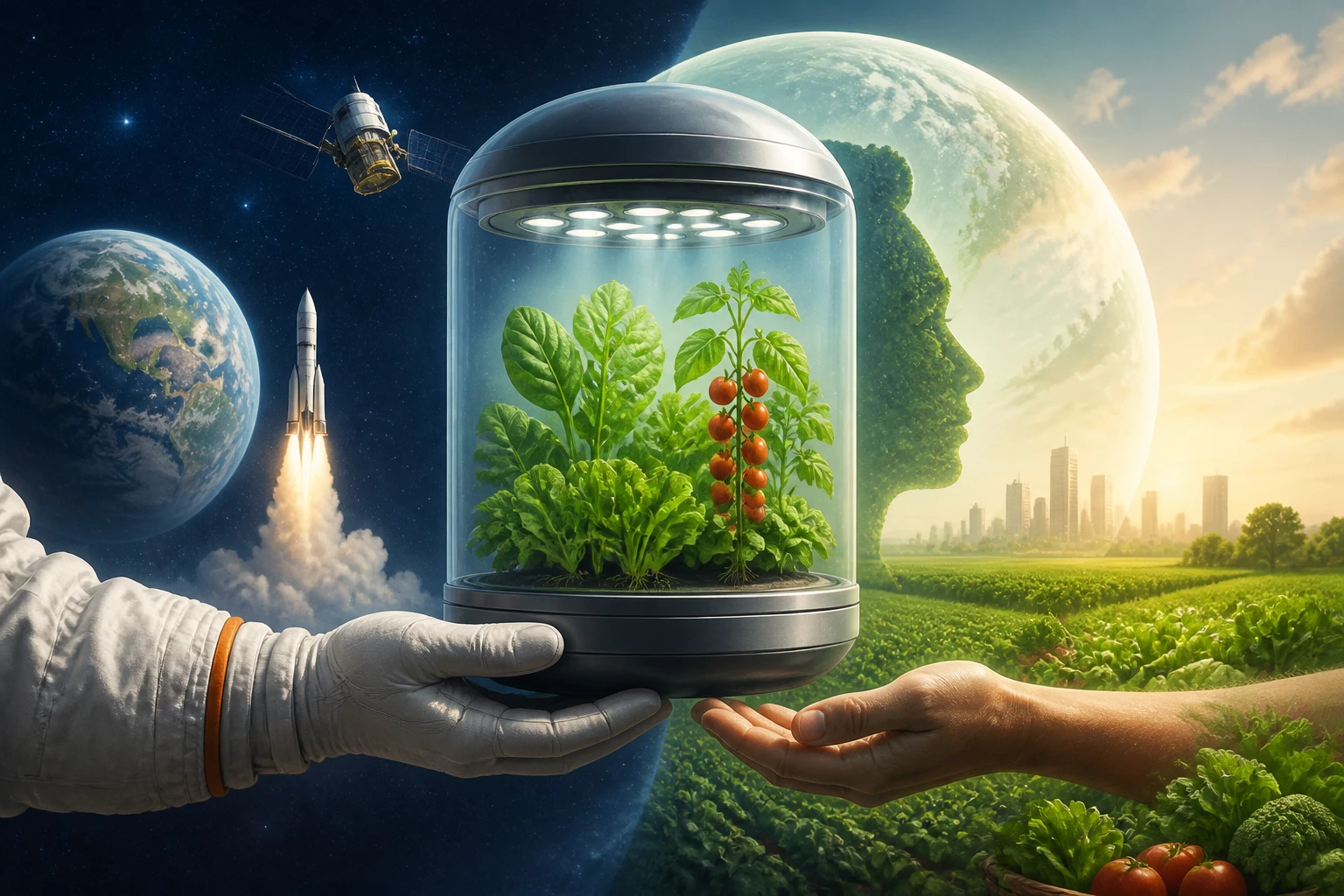
Picture this: while millions worry about dwindling farmland and rising food prices, Indian Space Research Organisation (ISRO) scientists are quietly growing tomatoes in space using 90% less water and achieving 3x higher yields. But here's the real kicker – they've brought this space-age technology down to Earth, successfully testing it in Rajasthan's harsh desert. What started as a space mission might just be the solution to transform India's 60 million hectares of wasteland into productive farmland. Sometimes, the answer to world hunger really is rocket science.
Here's What's Happening
ISRO's Bioastronautics Division has been working on controlled environment agriculture systems for future Mars missions. Their breakthrough came when they successfully grew cherry tomatoes in simulated space conditions using hydroponic systems and LED lighting. The results were stunning: plants grew faster, used minimal water, and produced significantly more fruit per plant.
But the real game-changer happened when they decided to test this technology in terrestrial conditions. In Rajasthan's Thar Desert, where temperatures soar above 50°C and water is scarce, ISRO's space farming modules produced fresh vegetables year-round. The controlled environment agriculture pods require no soil, use 95% less water than traditional farming, and can operate in the harshest conditions imaginable.
Let's Break This Down
Think of these farming pods as sophisticated greenhouses on steroids. They use precise climate control, nutrient-rich water solutions, and specially tuned LED lights that mimic optimal sunlight conditions. It's like giving plants a luxury spa treatment while using minimal resources.
The numbers are impressive. Traditional farming requires approximately 2,500 liters of water to produce 1 kg of tomatoes. ISRO's system needs just 250 liters – that's like comparing a swimming pool to a bathtub. Meanwhile, yield per square meter increased from 15-20 kg annually in conventional farming to 45-60 kg in controlled environments.
Here's where it gets interesting for India's agriculture crisis. The country has 60 million hectares of degraded land – that's roughly the size of France sitting unused because it's too arid, saline, or nutrient-poor for conventional farming. But ISRO's technology doesn't need good soil or favorable climate. It creates its own perfect growing conditions.
Indian farmers, especially younger ones, are taking notice. In Punjab, where groundwater depletion threatens traditional agriculture, pilot projects using space-derived farming techniques are showing promising results. Farmers report 40% reduction in input costs and year-round production cycles instead of seasonal dependency.
The technology stack includes Internet of Things (IoT) sensors for real-time monitoring, artificial intelligence for optimizing growth conditions, and renewable energy systems for power. It's essentially Agriculture 4.0 – farming for the smartphone generation.
The Bigger Picture
This isn't just about growing vegetables in space anymore. Food security experts estimate that feeding India's projected 1.7 billion people by 2050 will require 70% more food production. Traditional farming expansion isn't viable when we're already losing fertile land to urbanization and climate change.
Venture capitalists are paying attention too. Agritech startups adapting ISRO's techniques have raised over ₹500 crores in funding this year. Companies are scaling down the technology for urban farming, rooftop agriculture, and indoor cultivation centers.
International organizations like the UN Food and Agriculture Organization are studying India's space farming model for replication in sub-Saharan Africa and Middle Eastern deserts. What ISRO developed for Mars colonization could help feed millions in Earth's most challenging environments.
However, traditional farmers express concerns about high initial setup costs and the technical expertise required. The technology currently costs ₹15-20 lakhs per acre to establish, though operational costs are significantly lower than conventional farming.
What's Next?
ISRO plans to launch 100 demonstration units across different climate zones by 2025. They're also working on mobile farming pods that can be deployed in disaster-affected areas for emergency food production.
The real transformation will come when costs decrease and government subsidies make the technology accessible to small farmers. Early adopters in Maharashtra and Karnataka are already reporting 300% returns on investment within three years.
For young professionals considering agritech careers or agricultural entrepreneurship, this space-to-farm technology pipeline represents a massive opportunity. The future of farming isn't just about going back to the roots – sometimes it's about reaching for the stars first.