

Overview
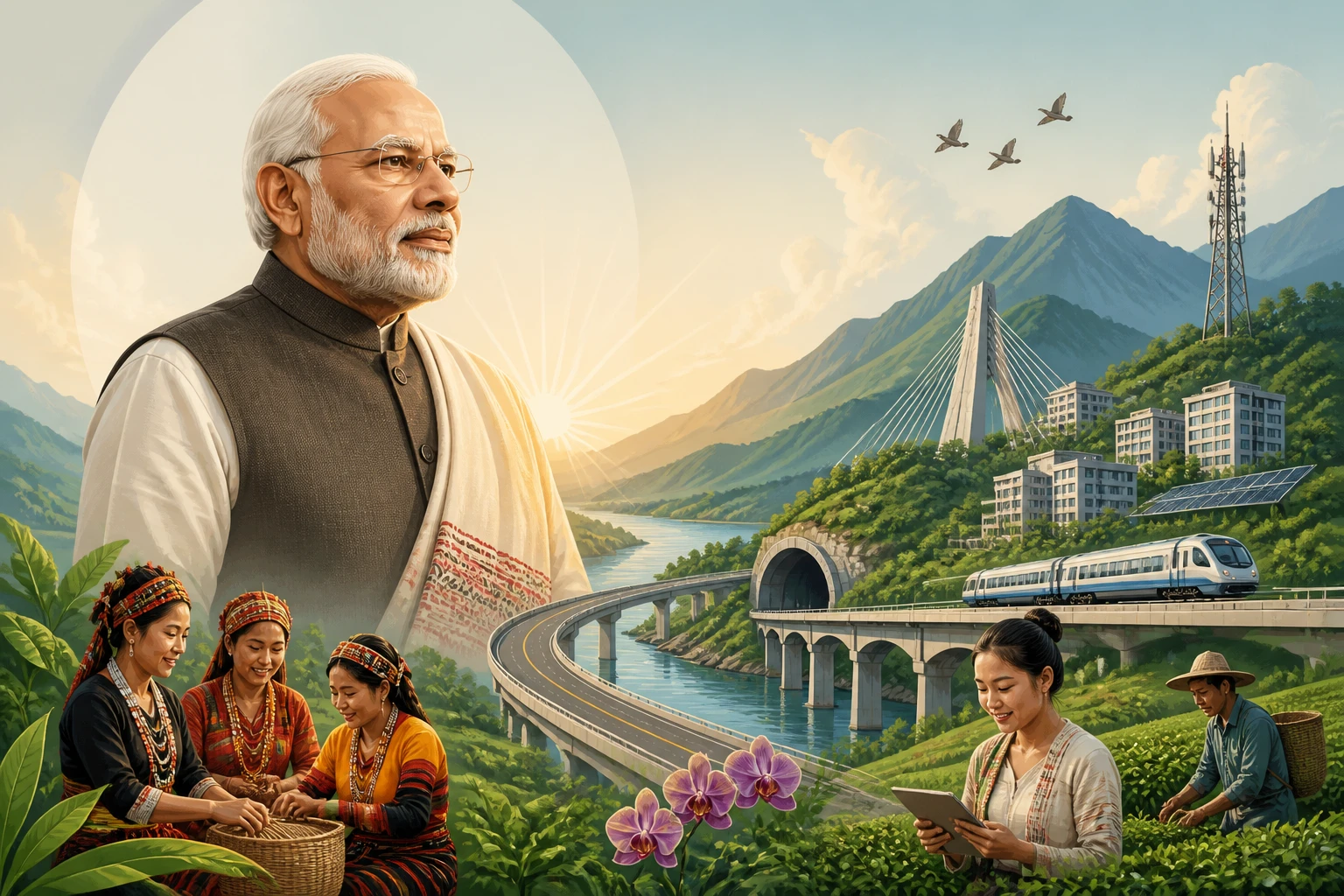
Picture this: You're scrolling through news about India's development, and you see the same old stories about metros getting shinier infrastructure while remote regions wait their turn. But here's where PM Modi's recent Northeast tour breaks that pattern. Between September 13-15, 2025, the Prime Minister didn't just visit five states—he unleashed a ₹9,000 crore development tsunami across Mizoram, Manipur, Assam, West Bengal, and Bihar. The star of this show? Mizoram's Aizawl, where foundation stones weren't just ceremonially laid—they marked the beginning of a transformative infrastructure revolution.
Here's What's Happening
PM Modi's three-day blitz tour wasn't your typical political visit filled with speeches and photo-ops. In Aizawl alone, he laid foundation stones and inaugurated development projects worth over ₹9,000 crore, spanning railways, roadways, energy, and sports infrastructure. This isn't pocket change—it's roughly equivalent to Mizoram's entire annual state budget multiplied several times over.
The projects cover critical connectivity gaps that have historically isolated the Northeast from India's economic mainstream. We're talking about railway extensions that will finally connect remote areas to major commercial hubs, road networks that will slash travel times by hours, energy projects that promise uninterrupted power supply, and sports facilities that could nurture the next generation of Northeast athletes on national and international stages.
Let's Break This Down
To understand the magnitude of this development push, imagine the Northeast as a brilliant student who's been sitting in the back of India's economic classroom for decades. Despite having immense potential—rich natural resources, strategic location near Southeast Asian markets, and a young demographic—the region has been constrained by infrastructure deficits.
The ₹9,000 crore investment is like giving this student front-row seats and the best learning tools. Railway connectivity, for instance, has been the Northeast's Achilles heel. While states like Gujarat and Maharashtra have extensive rail networks, Mizoram and its neighbors have remained largely cut off from India's freight and passenger rail ecosystem.
Consider the ripple effects: better roads mean farmers can get their produce to markets faster, reducing post-harvest losses that currently eat into their profits. Enhanced energy infrastructure means local entrepreneurs can start manufacturing units without worrying about power cuts. Sports facilities could transform the region into a training hub, capitalizing on the natural athletic prowess we've seen from Northeast athletes in boxing, weightlifting, and football.
The timing isn't coincidental either. With India positioning itself as a gateway to Southeast Asia through its Act East Policy, the Northeast's strategic location becomes invaluable. These infrastructure investments are essentially preparing the region to become India's launchpad for deeper economic integration with ASEAN countries.
For young professionals, this represents something significant: career opportunities in regions previously considered remote postings are about to become attractive propositions.
The Bigger Picture
This development push reflects a broader strategic shift in how India views its peripheral regions. Historically, economic growth concentrated around western and southern states, creating stark regional imbalances. The Northeast, despite comprising 8% of India's landmass, contributes less than 3% to the country's GDP.
From New Delhi's perspective, this investment serves multiple objectives. Politically, it demonstrates commitment to inclusive development. Economically, it unlocks untapped potential in a resource-rich region. Strategically, it strengthens India's position in its extended neighborhood, particularly with China increasing its influence in the region.
For local communities, particularly the youth, this means access to opportunities that were previously available only in major metros. The sports infrastructure alone could be transformative—Northeast India has produced disproportionately high numbers of national and international athletes relative to its population.
However, critics argue that execution remains the real challenge. Previous infrastructure announcements in the region have sometimes fallen short of promised timelines and quality standards.
What's Next?
The success of this ₹9,000 crore gamble will be measured not in ribbon-cutting ceremonies but in changed lives and economic indicators over the next 3-5 years. Key metrics to watch include freight movement through new rail corridors, tourism numbers as connectivity improves, and most importantly, youth migration patterns—will young Northeasterners stay home for opportunities instead of moving to metros?
For India's growth story, this represents a crucial test of whether infrastructure-led development can truly be inclusive. If successful, the Northeast model could be replicated in other peripheral regions, potentially reshaping India's economic geography. The region's proximity to Southeast Asian markets means these investments could eventually pay dividends far beyond domestic benefits, positioning India as a more effective bridge between South and Southeast Asia.