

Overview
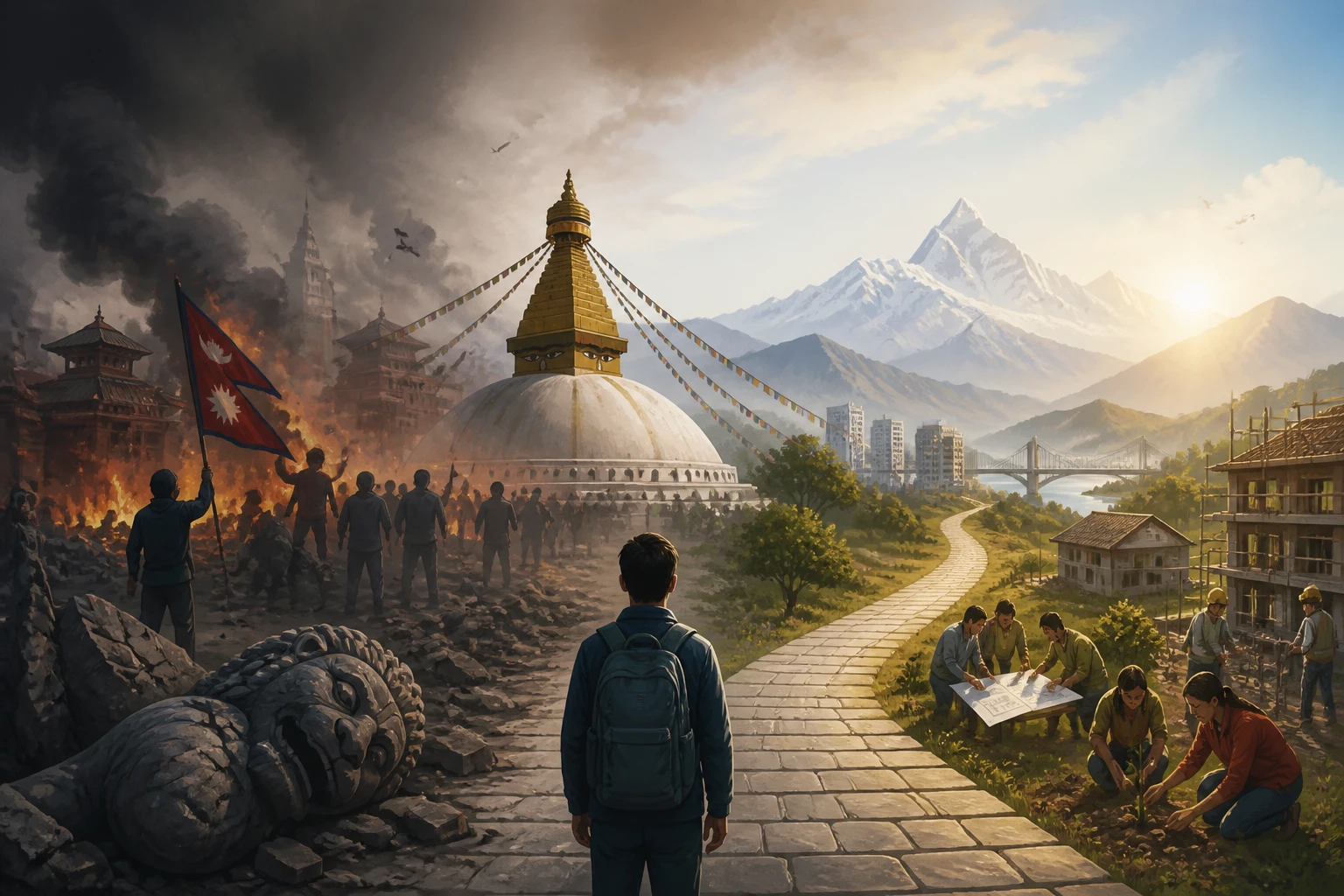
Picture this: On September 8, 2025, what started as routine Gen Z protests in Kathmandu transformed into a political earthquake that brought down Nepal's government within 24 hours. Prime Minister K.P. Sharma Oli, a veteran politician who had weathered numerous political storms, found himself resigning the very next day after police crackdowns backfired spectacularly. The speed caught everyone off guard—including the protesters themselves, who suddenly found themselves holding the keys to a kingdom they weren't quite ready to inherit.
Here's What's Happening
The protests began like many others—young Nepalis demanding better opportunities, transparent governance, and an end to the political musical chairs that has plagued their country for decades. But when police deployed excessive force against peaceful demonstrators, something unprecedented happened. Instead of dispersing, the crowds swelled exponentially, with videos of police brutality going viral across social media platforms.
By evening, over 50,000 protesters had gathered in Kathmandu's streets, according to local media estimates. The government's heavy-handed response transformed a manageable demonstration into a nationwide movement. Within hours, similar protests erupted in Pokhara, Chitwan, and Biratnagar, creating a domino effect that the Oli administration couldn't contain.
Let's Break This Down
Think of it like a pressure cooker that's been building steam for years. Nepal's youth unemployment rate stands at 19.2%, nearly double the regional average. For a generation that grew up watching their parents navigate endless political instability—Nepal has had 13 different governments in the last 16 years—this was the final straw.
The protesters weren't just angry about immediate issues. They represented a demographic shift that politicians failed to recognize. Over 65% of Nepal's population is under 35, yet the country's leadership remains dominated by septuagenarians like Oli, who at 73, seemed increasingly disconnected from ground realities.
What made September 8 different was the digital amplification. Unlike previous protests that relied on traditional media, Gen Z protesters used TikTok, Instagram, and Twitter to organize and broadcast their message. When police tried to disperse crowds using batons and tear gas, dozens of livestreams captured the violence in real-time, creating an instant feedback loop of outrage.
The economic backdrop made things worse. Nepal's GDP growth has stagnated at 2.1% for the past two years, while inflation hit 7.8% in August 2025. For young graduates struggling to find jobs paying above NPR 25,000 per month (roughly $190), the government's tone-deaf response to their grievances felt like a betrayal.
The Bigger Picture
Oli's resignation created an immediate power vacuum, but it also exposed deeper structural problems. The Nepali Congress and CPN-UML parties that have dominated politics for decades suddenly found themselves scrambling to respond to a movement that operated outside traditional political frameworks.
For India, Nepal's political instability presents both challenges and opportunities. Bilateral trade worth $8 billion annually could face disruptions, while the 1,751-kilometer open border means political unrest in Nepal directly affects security in Indian states like Uttar Pradesh, Bihar, and West Bengal.
China, which has invested heavily in Nepal through the Belt and Road Initiative, watches nervously as political uncertainty threatens infrastructure projects worth over $2.4 billion. The protests' anti-establishment tone could complicate Beijing's carefully cultivated relationships with Nepal's political elite.
What's Next?
The immediate question is whether Nepal's traditional political parties can adapt to this new reality or if the country will see the emergence of genuinely new political movements. President Ram Chandra Poudel has called for consultations to form a new government, but the old playbook of coalition politics might not work anymore.
For the Gen Z protesters, success brings unexpected responsibility. They've proven they can bring down governments, but governing requires different skills entirely. The challenge now is translating street power into sustainable political change—something that requires the very institutional expertise they've been protesting against.