

Overview
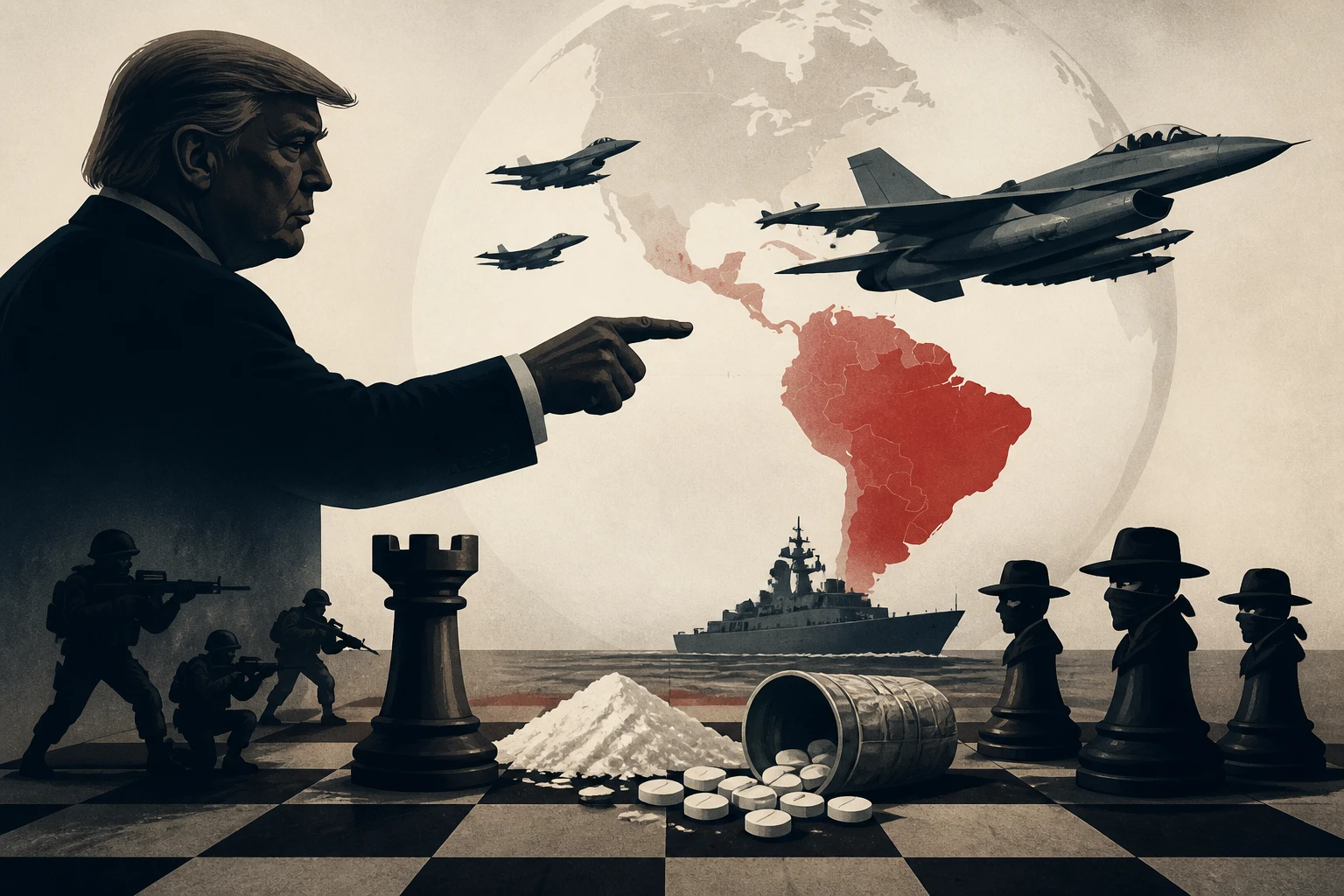
Imagine your neighbor's house has become a drug den, and instead of calling local police, you decide to send in a SWAT team yourself. That's essentially what's happening as the Trump administration shifts from traditional diplomacy to direct military action against Latin American drug cartels. Secretary of State Marco Rubio's recent declaration that the U.S. is "at war" with cartels, followed by a deadly strike on a Venezuelan boat, signals a dramatic escalation in anti-drug operations. This isn't just about stopping cocaine shipments anymore—it's about redefining how America projects power across its southern borders. For working professionals, this shift could reshape everything from supply chain security to international business operations across Latin America.
The Problem
Drug cartels generate an estimated $13 billion annually from U.S. operations alone, making them more profitable than many Fortune 500 companies. Traditional law enforcement approaches have failed spectacularly—despite spending over $1 trillion on the "War on Drugs" since 1971, drug availability has increased while prices have plummeted. The recent Venezuelan boat strike represents a fundamental policy pivot: instead of working through local governments, the U.S. is now conducting unilateral military operations on foreign soil.
This escalation stems from cartel evolution. Today's organizations operate like multinational corporations, controlling entire supply chains from coca farms in Colombia to fentanyl distribution networks in American suburbs. They've corrupted government officials, outgunned local police forces, and established parallel governance structures across multiple countries. When traditional diplomacy fails against opponents with annual revenues exceeding $100 billion globally, military intervention becomes increasingly attractive to policymakers.
Analysis
This militarization creates three critical implications for regional stability and global business. Economically, direct military action could disrupt legitimate trade flows worth $678 billion annually between the U.S. and Latin America. Supply chains for everything from coffee to automotive parts could face increased scrutiny, delays, and security costs as military operations expand.
Legally, these strikes operate in a gray zone of international law. Unlike terrorism, drug trafficking doesn't automatically justify military intervention in sovereign nations. The Venezuelan government has already condemned the boat strike as "state terrorism," potentially escalating into broader diplomatic conflicts. Other Latin American nations now face a choice: cooperate with U.S. military operations or risk being targeted themselves.
Strategically, this approach mirrors failed interventions in Afghanistan and Iraq, where military solutions to complex socio-economic problems created more instability. Cartels adapt quickly—eliminate one trafficking route, and three new ones emerge. The balloon effect has plagued drug interdiction for decades: squeeze trafficking in one area, and it simply moves elsewhere. Military strikes might temporarily disrupt operations, but they don't address underlying demand drivers or the economic desperation that fuels cartel recruitment in impoverished communities.
Real-World Examples
Mérida Initiative, launched in 2008, provides a cautionary tale. Despite $3.2 billion in U.S. aid and training for Mexican security forces, cartel violence actually increased, with over 300,000 deaths recorded since 2006. Military-style operations often backfire, as seen when Mexican forces killed cartel leader Arturo Beltrán Leyva in 2009, fragmenting his organization into multiple smaller, more violent groups.
Conversely, Colombia's success against cartels required decades-long comprehensive approaches combining military pressure, economic development, and institutional strengthening. The Plan Colombia model cost over $10 billion and took 15 years to show meaningful results. Even then, cocaine production has recently surged again, demonstrating the temporary nature of purely enforcement-based victories.
Private sector impacts are already emerging. Shipping companies operating in Caribbean waters now face increased insurance costs and route modifications. Energy companies with operations in Venezuela worry about escalating tensions affecting their investments. Agricultural exporters from Latin America report increased border inspection delays as security measures intensify.
The Challenge
The fundamental problem with militarizing anti-cartel operations is that drug trafficking is ultimately an economic phenomenon driven by massive U.S. demand and Latin American poverty. Military strikes can eliminate individual leaders or destroy specific facilities, but they can't address the underlying market forces that make drug trafficking so profitable.
Cartels possess several advantages over traditional military opponents: they operate across multiple jurisdictions, blend seamlessly with civilian populations, and can rebuild operations rapidly using existing infrastructure. Unlike conventional armies, they don't hold territory or maintain visible command structures that military force can effectively target.
Future Implications
This militarization trend will likely accelerate under the current administration, with potential expansion into cyber warfare against cartel financial networks and increased deployment of special operations forces across Latin America. Business leaders should prepare for heightened regional instability, increased compliance requirements, and potential supply chain disruptions.
The precedent being set extends beyond drugs. If military action becomes the default response to transnational organized crime, it could normalize unilateral interventions against everything from human trafficking to cybercrime networks. International law frameworks may need fundamental revision to address these evolving security challenges.
Regional governments face mounting pressure to either align with U.S. military operations or develop their own comprehensive responses to cartel influence. Countries like Costa Rica and Panama are already strengthening their security partnerships with Washington to avoid being targeted as "non-cooperative" states.
Looking Ahead
The critical question isn't whether military force can damage cartel operations—it can. The question is whether such damage creates lasting security improvements or simply reshuffles the criminal landscape while destabilizing entire regions. As this "war" escalates, working professionals across industries must consider: when does solving one problem create ten new ones?