

Overview
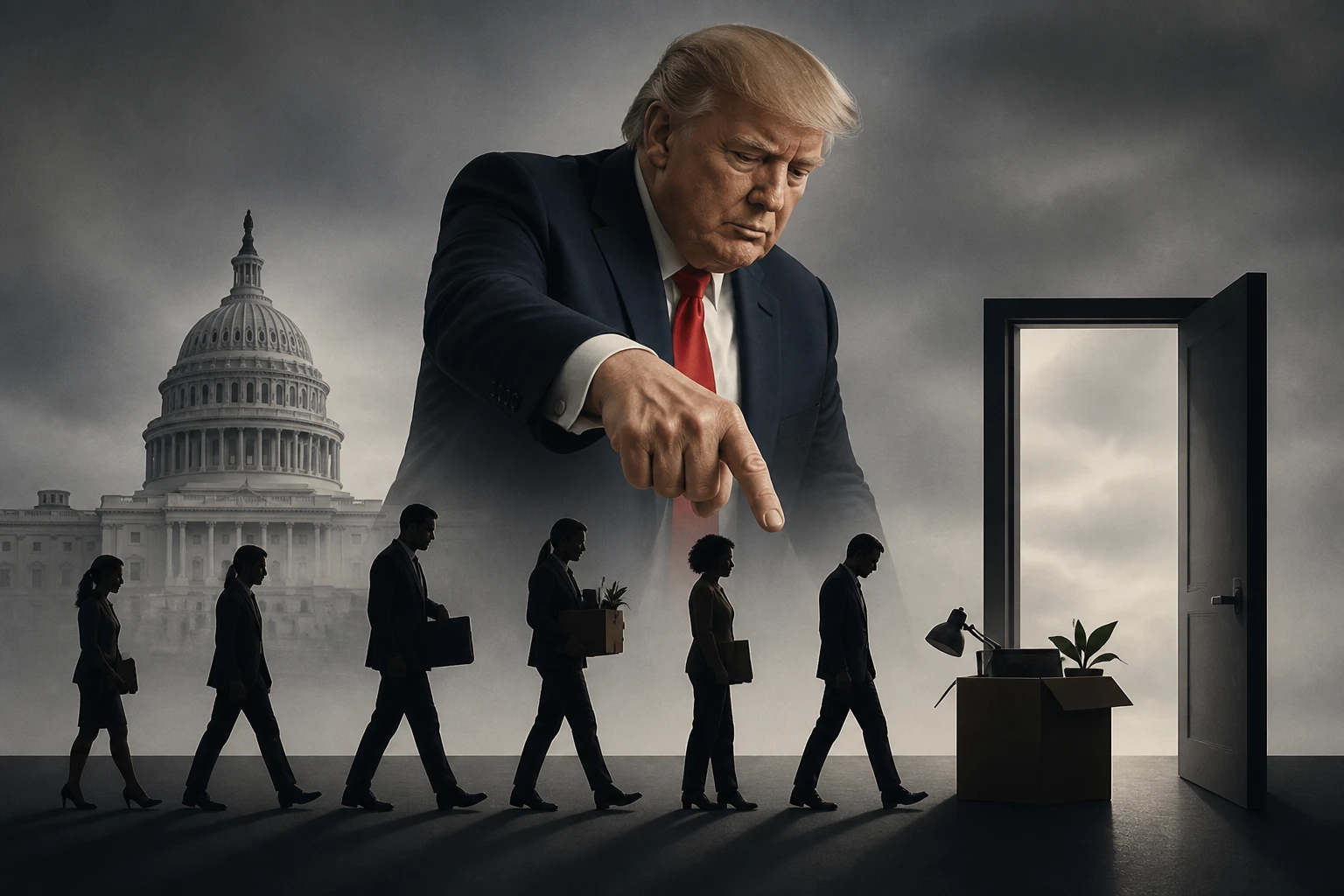
Imagine being told on a Wednesday night that you might not have a job come Tuesday. That's exactly what thousands of federal employees across America are facing right now. The White House's Office of Management and Budget (OMB) has just sent a chilling memo to federal agencies, ordering them to prepare mass layoff plans as Congress scrambles to avoid a government shutdown. With just days left before the October 1st deadline, the stakes couldn't be higher for both the government machinery and the 2.2 million federal workers who keep America running.
Here's What's Happening
The memo that landed in agency inboxes Wednesday night wasn't your typical bureaucratic paperwork. It was essentially a warning shot. The OMB instructed federal agencies to prepare reduction-in-force notices – the government's euphemistic term for layoffs – targeting employees in programs that rely on discretionary funding set to expire on October 1st.
Think of it like this: imagine your company's budget expires, and instead of automatically renewing it, the board of directors is locked in a heated argument about spending priorities. That's essentially what's happening in Congress right now. Without a new funding bill, entire government operations could grind to a halt, forcing agencies to identify which employees are "essential" and which ones will be sent home without pay.
Let's Break This Down
To understand the gravity of this situation, let's talk numbers. The federal government employs approximately 2.2 million civilian workers, not counting military personnel. During the last major shutdown in 2018-2019, which lasted 35 days, about 800,000 federal employees were either furloughed or worked without pay. The economic impact was staggering – the Congressional Budget Office estimated it cost the economy $11 billion, with $3 billion never recovered.
But here's where it gets interesting. Not all government employees are created equal during a shutdown. The memo specifically targets those in programs with "discretionary funding" – think of it as the difference between your rent (essential) and your Netflix subscription (discretionary). Essential services like Social Security payments, Medicare, and national security operations typically continue, while agencies like the Environmental Protection Agency, National Parks Service, and parts of the Department of Education face significant cuts.
The ripple effects extend far beyond government offices. Small businesses that contract with federal agencies, from IT support companies to cafeteria services, suddenly find themselves without clients. Local economies around major federal installations – places like Washington D.C., Norfolk, Virginia, and Colorado Springs – feel the immediate pinch as thousands of workers stop spending money on everything from lunch to car repairs.
What makes this situation particularly complex is the timing. We're not just talking about a temporary inconvenience. The memo's reference to "reduction-in-force notices" suggests something more permanent than typical shutdown furloughs. It's like the difference between asking employees to take unpaid leave versus actually laying them off.
The Bigger Picture
From Congress's perspective, this is high-stakes political poker. Republicans and Democrats are locked in disagreements over spending levels, policy riders, and debt ceiling issues. Each side believes the other will blink first when faced with the political fallout of a shutdown.
But for federal employees, this isn't about politics – it's about mortgage payments, school fees, and basic survival. Sarah Chen, a hypothetical EPA scientist with two kids, doesn't care about legislative maneuvering when she's trying to figure out how to pay for groceries if her paycheck disappears.
The international community is watching too. A prolonged shutdown affects everything from passport processing to international trade negotiations, potentially damaging America's reputation as a reliable partner. Financial markets, while somewhat accustomed to these political theatrics, still react nervously to shutdown threats, with the S&P 500 historically experiencing increased volatility during shutdown periods.
What's Next?
As Tuesday's deadline approaches, three scenarios emerge. Congress could pass a continuing resolution to keep the government funded temporarily, they could reach a comprehensive spending agreement, or they could fail to act and trigger the shutdown. The OMB memo suggests the administration is preparing for the worst-case scenario.
For federal employees, the next few days will be spent updating resumes, reviewing emergency savings, and hoping their jobs fall into the "essential" category. For the broader economy, a shutdown could complicate the Federal Reserve's monetary policy decisions and impact Q4 economic growth projections.
The real lesson here? In Washington's political chess game, it's often the pawns – the everyday federal workers – who get sacrificed first.