

Overview
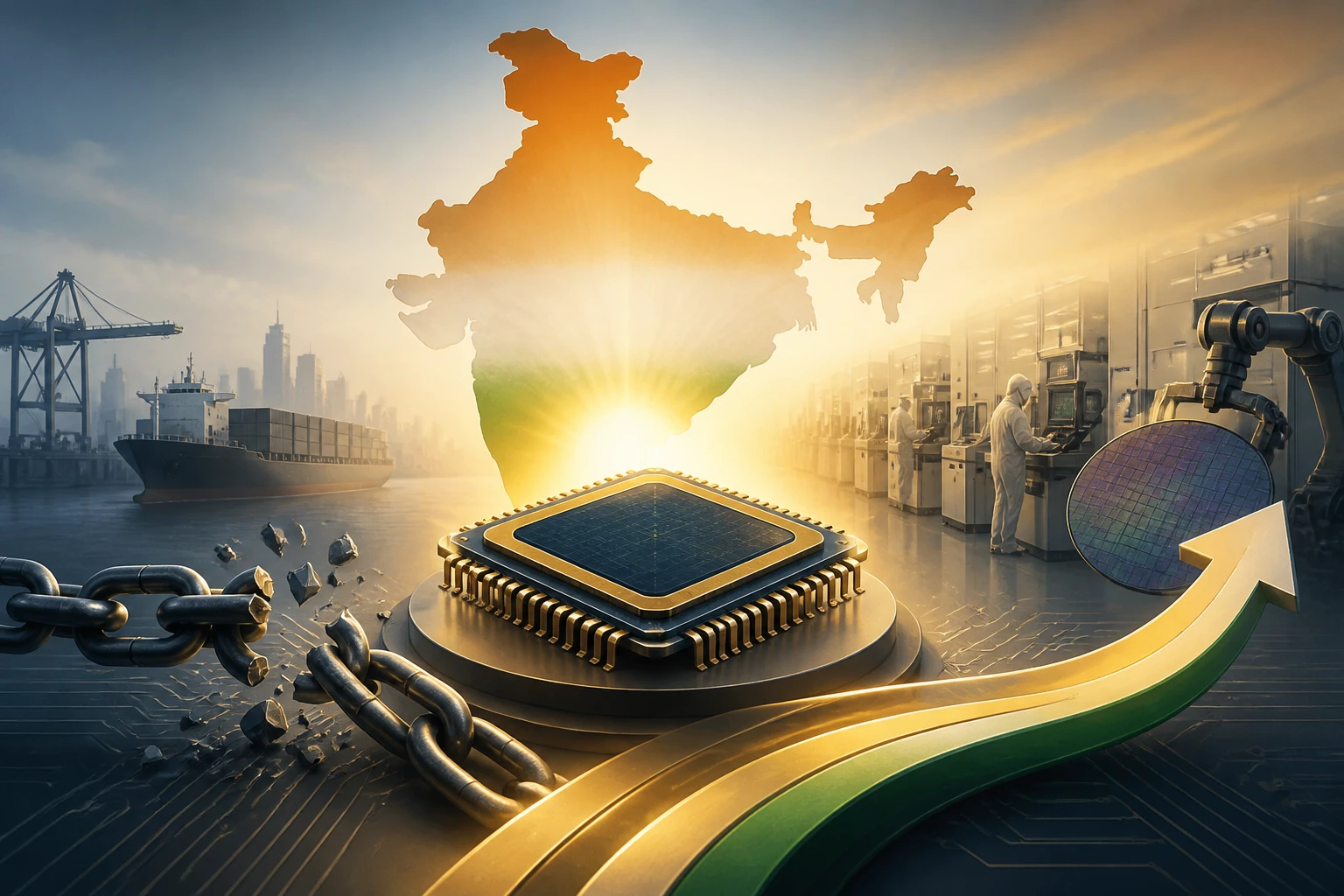
Imagine if your smartphone suddenly stopped working because a factory halfway across the world decided to halt production. Sound far-fetched? It's closer to reality than you think. India imports over 95% of its semiconductors, making the country dangerously dependent on foreign suppliers for everything from smartphones to defense equipment. At Semicon India 2025, Prime Minister Modi unveiled the Vikram chip - India's first indigenously designed 32-bit processor - marking a pivotal moment in the nation's quest for semiconductor self-reliance. Think of it like learning to cook instead of ordering takeout every day. Sure, it's harder initially, but you gain control, save money, and develop a crucial life skill that serves you forever.
The Problem
The semiconductor shortage during COVID-19 exposed India's Achilles heel. When global supply chains froze, Indian manufacturing took a ₹7 lakh crore hit as everything from cars to washing machines couldn't be produced without these tiny but critical components. Currently, India's semiconductor market is worth $27 billion and growing at 10.1% annually, yet the country produces virtually none of its chips domestically.
Here's the scary part: China controls 60% of global semiconductor manufacturing capacity, while Taiwan dominates advanced chip production. Any geopolitical tension in these regions could cripple India's tech ecosystem overnight. The Russia-Ukraine conflict further highlighted how semiconductor dependencies can become weapons of economic warfare. For a nation aspiring to become a $5 trillion economy by 2027, this dependency isn't just inconvenient - it's a strategic vulnerability that threatens national security and economic sovereignty.
Analysis
The Vikram chip represents more than technological achievement; it's India's declaration of semiconductor independence. Named after the Indian Space Research Organisation's lunar lander, the 32-bit processor symbolizes India's capability to design complex semiconductors indigenously. This development carries three critical implications.
Economically, domestic chip production could save India billions in import costs while creating high-value manufacturing jobs. The government's ₹76,000 crore semiconductor mission aims to establish India as a global chip hub, potentially capturing 10% of global semiconductor demand by 2030.
Strategically, indigenous chips reduce dependency on potentially hostile nations and ensure supply chain security for critical sectors like defense and telecommunications. The Vikram chip specifically targets applications requiring trusted computing environments - think military communications, banking systems, and critical infrastructure.
Technologically, this breakthrough demonstrates India's growing capabilities in chip design and fabrication. While the 32-bit Vikram isn't cutting-edge compared to modern smartphone processors, it's a crucial stepping stone. Like learning arithmetic before calculus, mastering 32-bit architecture provides the foundation for developing more advanced processors. The chip's "Designed & Made in India, Trusted by the World" tagline signals India's ambition to become not just self-sufficient but a trusted global supplier in an increasingly fragmented semiconductor landscape.
Real-World Examples
Taiwan Semiconductor Manufacturing Company (TSMC) exemplifies how semiconductor leadership translates to geopolitical power. Despite Taiwan's small size, TSMC's dominance in advanced chip manufacturing makes it strategically invaluable to both the US and China. India seeks similar positioning through initiatives like the Vikram chip.
China's semiconductor journey offers valuable lessons. Despite investing $150 billion in domestic chip production over the past decade, China still imports 70% of its semiconductors. However, companies like Semiconductor Manufacturing International Corporation (SMIC) have made significant progress, showing that sustained investment and government support can build indigenous capabilities.
Closer to home, Indian companies are already making strides. Tata Electronics is establishing India's first major semiconductor fab in Gujarat, while Micron Technology plans a $2.75 billion assembly and test facility in the same state. These investments, combined with the Vikram chip's debut, signal a broader ecosystem emerging around semiconductor manufacturing in India.
The Challenge
Building semiconductor capabilities isn't like assembling smartphones. It requires cutting-edge fabrication facilities costing $10-20 billion each, highly specialized talent, and decades of accumulated know-how. The global chip shortage has intensified competition for equipment and expertise, making India's journey more expensive and complex. Additionally, export controls from countries like the US and Netherlands on semiconductor equipment add regulatory hurdles to India's ambitions.
Future Implications
The Vikram chip debut signals India's serious commitment to semiconductor sovereignty, but it's just the beginning. Success will require sustained investment in research and development, talent development, and international partnerships. The India Semiconductor Mission targets establishing 10-15 semiconductor fabs by 2030, potentially creating 1 million direct jobs and positioning India as a trusted alternative to China in global supply chains.
For working professionals, this shift creates opportunities in high-tech manufacturing, chip design, and related services. Cities like Bangalore, Hyderabad, and Ahmedabad are emerging as semiconductor hubs, offering lucrative careers for engineers, technicians, and business professionals. The ripple effects will boost India's entire technology ecosystem, from startups to established IT giants.
Looking Ahead
India's semiconductor journey mirrors its space program - starting modestly but with grand ambitions. The Vikram chip proves India can design complex semiconductors, but can it scale manufacturing and compete globally? The answer will determine whether India emerges as a semiconductor superpower or remains dependent on others for these critical components that power the modern world.