

Overview
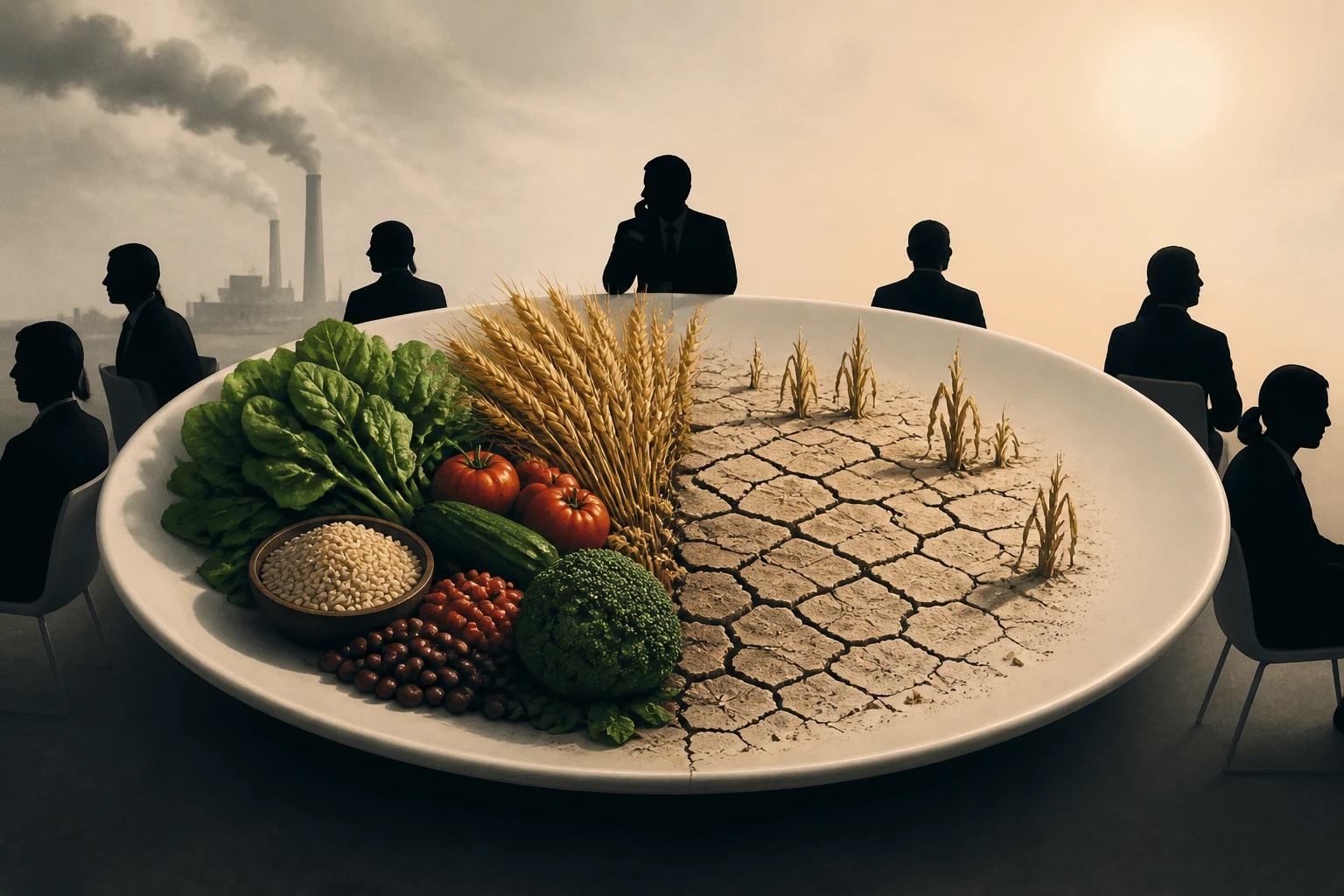
Imagine walking into your local grocery store and finding empty shelves where bread used to be, or seeing rice prices doubled overnight. This isn't a dystopian scenario—it's reality for millions of people worldwide right now. While headlines focus on inflation and stock markets, a deeper crisis is unfolding that affects everything from your morning coffee to global political stability. 735 million people are currently facing acute hunger, according to the UN's latest report, yet this unprecedented food crisis remains largely invisible to those not directly affected. Think of the global food system like a massive Jenga tower—when key pieces get removed simultaneously, the entire structure becomes dangerously unstable. That's exactly what's happening today, and the implications stretch far beyond empty plates.
The Problem
The numbers tell a stark story: global food prices have increased by over 75% since 2020, with wheat prices alone surging 69% following Russia's invasion of Ukraine. But this isn't just about one conflict or even one cause. We're witnessing a perfect storm of interconnected disruptions that have destabilized the world's food supply chains simultaneously.
Climate change has triggered extreme weather events across major agricultural regions—from floods in Pakistan affecting 33 million people to droughts in East Africa destroying crops for four consecutive seasons. Meanwhile, the Ukraine-Russia conflict has disrupted supplies from a region that produces 30% of global wheat exports and critical fertilizer components. Add supply chain bottlenecks, energy price spikes, and restrictive trade policies, and you get a crisis that's pushing entire nations toward social unrest and economic collapse.
Analysis
From an economic perspective, this crisis is driving inflation rates to multi-decade highs globally. Food inflation in developing countries has reached 18% on average, forcing families to spend up to 70% of their income on basic nutrition. This creates a vicious cycle: higher food costs reduce spending on other goods, slowing economic growth and reducing employment opportunities.
Policy implications are equally severe. Governments are implementing contradictory measures that often worsen the global situation. When India banned wheat exports to protect domestic supplies, it sent shockwaves through dependent nations. Similarly, Indonesia's palm oil export restrictions created cooking oil shortages across Africa and Asia.
The business impact extends beyond agriculture. Food companies are restructuring supply chains, manufacturers are reformulating products due to ingredient shortages, and retailers are managing unprecedented inventory challenges. Unilever recently warned that some product lines may become permanently unavailable in certain markets.
Geopolitically, this crisis is reshaping alliances and trade relationships. Countries are prioritizing food security over free trade principles, leading to a more fragmented global food system. The African Union has accelerated plans for continental food self-sufficiency, while European nations are reconsidering agricultural policies that prioritized environmental goals over production capacity.
Real-World Examples
Sri Lanka provides a devastating case study of how food crises can topple governments. The country's economic collapse, partly triggered by fertilizer import bans that reduced crop yields by 50%, led to mass protests and presidential resignation. Food shortages became the catalyst for broader social upheaval.
In Egypt, which imports 85% of its wheat, the government has spent billions subsidizing bread prices to prevent civil unrest. President Sisi recently stated that food security has become more critical than traditional security concerns, leading to massive agricultural investment programs.
Cargill and Archer Daniels Midland, two agricultural giants, have reported record profits while expanding into alternative protein sources and vertical farming technologies. These companies are essentially betting that traditional agriculture alone cannot meet future demand.
Meanwhile, tech companies are entering the food security space. Microsoft has partnered with agricultural organizations to develop AI-powered crop monitoring systems, while Google is mapping global food insecurity in real-time to help humanitarian organizations respond more effectively.
The Challenge
Solving this crisis isn't simply about producing more food. The world actually produces enough calories to feed everyone—the problem lies in distribution, access, and affordability. Approximately 30% of all food produced is lost or wasted along supply chains, yet building better infrastructure requires massive investments that developing nations cannot afford.
Moreover, solutions often conflict with each other. Increasing agricultural production might worsen climate change, while transitioning to sustainable farming could temporarily reduce yields during a period when more food is urgently needed.
Future Implications
This crisis is fundamentally reshaping how we think about food security, trade relationships, and national sovereignty. Countries are increasingly viewing food production as a matter of national security, similar to energy independence. We're likely to see more regionalized food systems, strategic grain reserves, and agricultural protectionism.
For working professionals, expect continued food price volatility to influence everything from restaurant costs to salary negotiations. Companies will increasingly factor food security into their ESG strategies and supply chain planning. Immigration patterns will also shift as climate-induced food shortages drive population movements from vulnerable regions.
The crisis is accelerating innovation in alternative proteins, vertical farming, and precision agriculture, creating new investment opportunities while making traditional agricultural practices more valuable than ever.
Looking Ahead
As we face this hidden crisis, the question isn't whether food systems will adapt—they must. The real question is whether this adaptation will be planned and equitable, or chaotic and destabilizing. The choices made today about agricultural investment, trade policies, and climate action will determine whether future food crises become manageable challenges or civilization-threatening disasters.
What role will your industry play in ensuring food security for the next generation?