

Overview
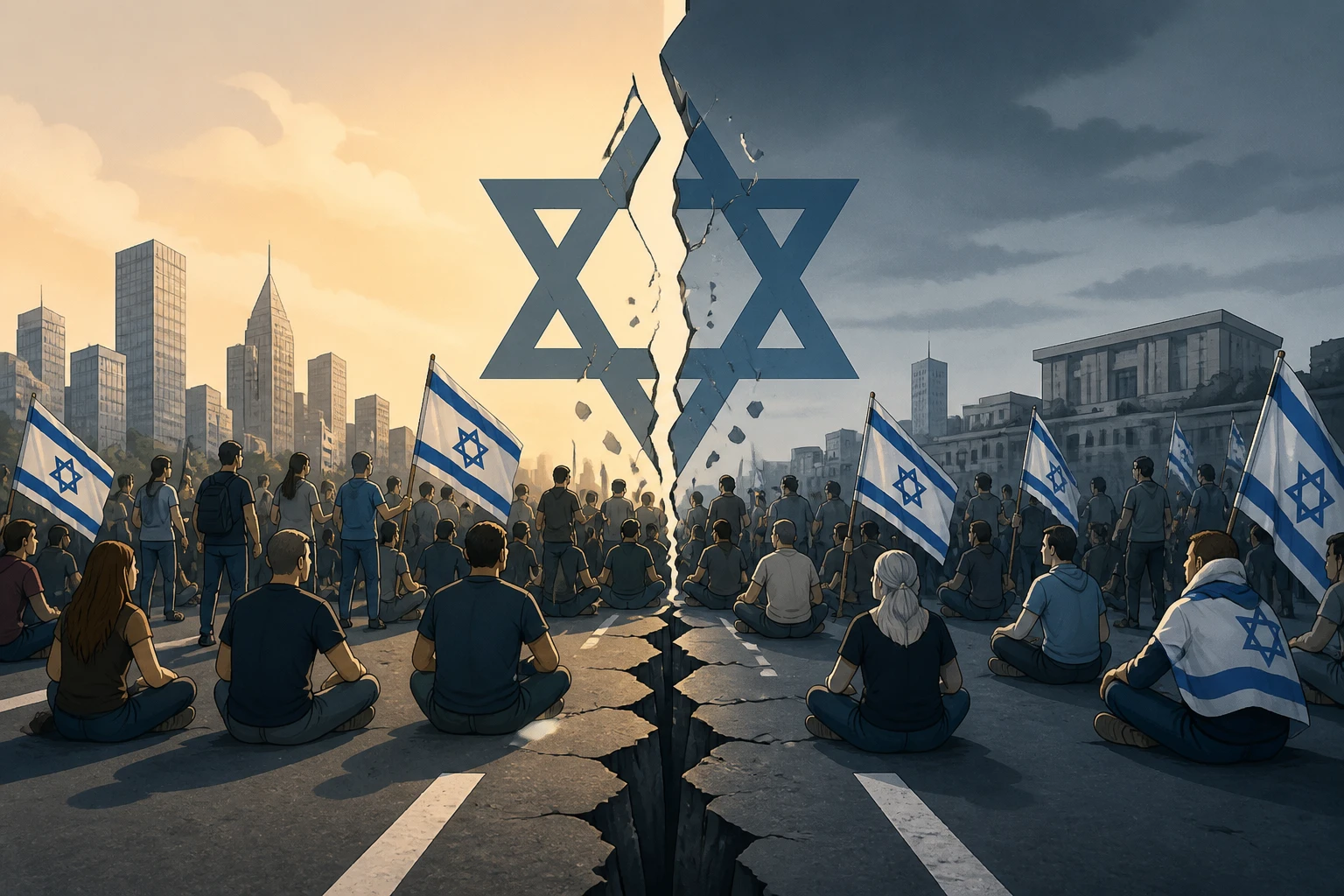
Imagine your company's CEO announcing a major strategy that could either save the business or bankrupt it entirely—but employees have no voice in the decision despite bearing all the risks. That's essentially what 350,000 Israelis felt when they flooded Tel Aviv's streets in one of the largest domestic protests in the country's history. This wasn't just another political rally; it was a "Day of Disruption" that saw thousands blocking major highways, shutting down businesses, and essentially grinding the nation's economic engine to a halt. The message was crystal clear: ordinary citizens are demanding their government accept a ceasefire deal to end the prolonged warfare that's tearing apart both Palestinian and Israeli societies—and their economy.
The Problem
The numbers tell a stark story. Since the conflict escalated, Israel's economy has contracted by 2.3% in recent quarters, with tourism—a $7 billion annual industry—virtually collapsing. Think of it like a family spending their entire savings on a legal battle while their house falls apart around them. The protesters aren't just anti-war activists; they're business owners, tech workers, reservists, and families whose lives have been upended by months of uncertainty and economic instability.
The "Day of Disruption" represented something unprecedented: a coordinated civil disobedience campaign that saw protesters simultaneously blocking major arteries including the Ayalon Highway and roads leading to Ben Gurion Airport. This wasn't spontaneous anger—it was organized frustration from citizens who feel their government is prioritizing military objectives over national economic survival and human welfare.
Analysis
From an economic perspective, prolonged warfare creates what economists call a "conflict trap"—where military spending crowds out productive investment, skilled workers are tied up in reserves, and international business confidence evaporates. Israel's tech sector, which generates 18% of GDP and 50% of exports, has seen $1.8 billion in investment delays since the conflict intensified.
The policy implications are equally complex. The protesters are essentially demanding their government choose economic stability and civilian welfare over continued military operations. This creates a political paradox: how do you balance national security concerns with domestic economic pressure when both are framed as existential issues?
The business impact extends globally. International companies with Israeli operations face operational disruptions, supply chain uncertainties, and reputational risks. The Tel Aviv Stock Exchange has experienced significant volatility, with defense stocks rising while consumer and tech stocks plummet—a clear indicator of an economy shifting from growth mode to survival mode.
What makes this particularly significant is the demographic composition of protesters. These aren't fringe activists but mainstream professionals, reservists who've served in the conflict, and business leaders who typically support strong security policies. When your core economic contributors are blocking roads, it signals a fundamental breakdown in the social contract between government and governed.
Real-World Examples
High-tech companies like Wix and Monday.com have reported significant operational challenges, with employees called up for reserve duty and international clients expressing concerns about service continuity. One Tel Aviv startup founder interviewed by Reuters described losing three major client deals worth $2.3 million because investors questioned long-term stability.
The Israeli Manufacturers Association reported that 67% of member companies have experienced production disruptions, with many relocating operations to minimize risk. This mirrors what happened during prolonged conflicts in other regions—businesses don't wait for resolution; they adapt or relocate.
Tourism industry data shows hotel occupancy rates in Tel Aviv dropping from 85% to 12% compared to the same period last year. Restaurant owners in the protest areas reported that even before the road blockages, revenue had fallen by 60-70% as both domestic and international visitors stayed away.
The protesters themselves represent a cross-section of Israeli society, including high-tech workers, small business owners, and military reservists—the very people whose economic activity and military service typically form the backbone of Israeli society.
The Challenge
The complexity here lies in balancing immediate security concerns with long-term economic viability. Governments can't simply ignore security threats, but they also can't indefinitely sustain policies that hollow out their economic base. The protesters are essentially forcing a conversation about opportunity costs—what Israel is giving up economically and socially to pursue current military objectives.
This creates a policy dilemma with no easy solutions: compromise too quickly and risk security, but maintain current policies and risk economic collapse and social fragmentation.
Future Implications
This domestic pressure campaign signals a broader shift in how democracies handle prolonged conflicts. When economic consequences become severe enough, domestic constituencies begin pushing back regardless of security rationales. We're seeing similar dynamics in other countries where military spending and conflict involvement create economic trade-offs.
For international businesses and investors, this highlights the importance of political risk assessment beyond traditional security metrics. Social cohesion and economic sustainability are increasingly critical factors in investment decisions.
The protest also demonstrates how civil society can effectively pressure governments through economic disruption rather than just political appeals. The road blockages weren't just symbolic—they imposed real economic costs that amplified the protesters' political message.
Looking Ahead
The question isn't whether 350,000 protesters can immediately change government policy—it's whether they represent a sustainable domestic coalition capable of constraining government options long-term. In democracies, economic pressure from core constituencies often proves more powerful than external diplomatic pressure. The real test will be whether this domestic opposition can maintain momentum and translate street protests into lasting political change that balances security needs with economic reality.