

Overview
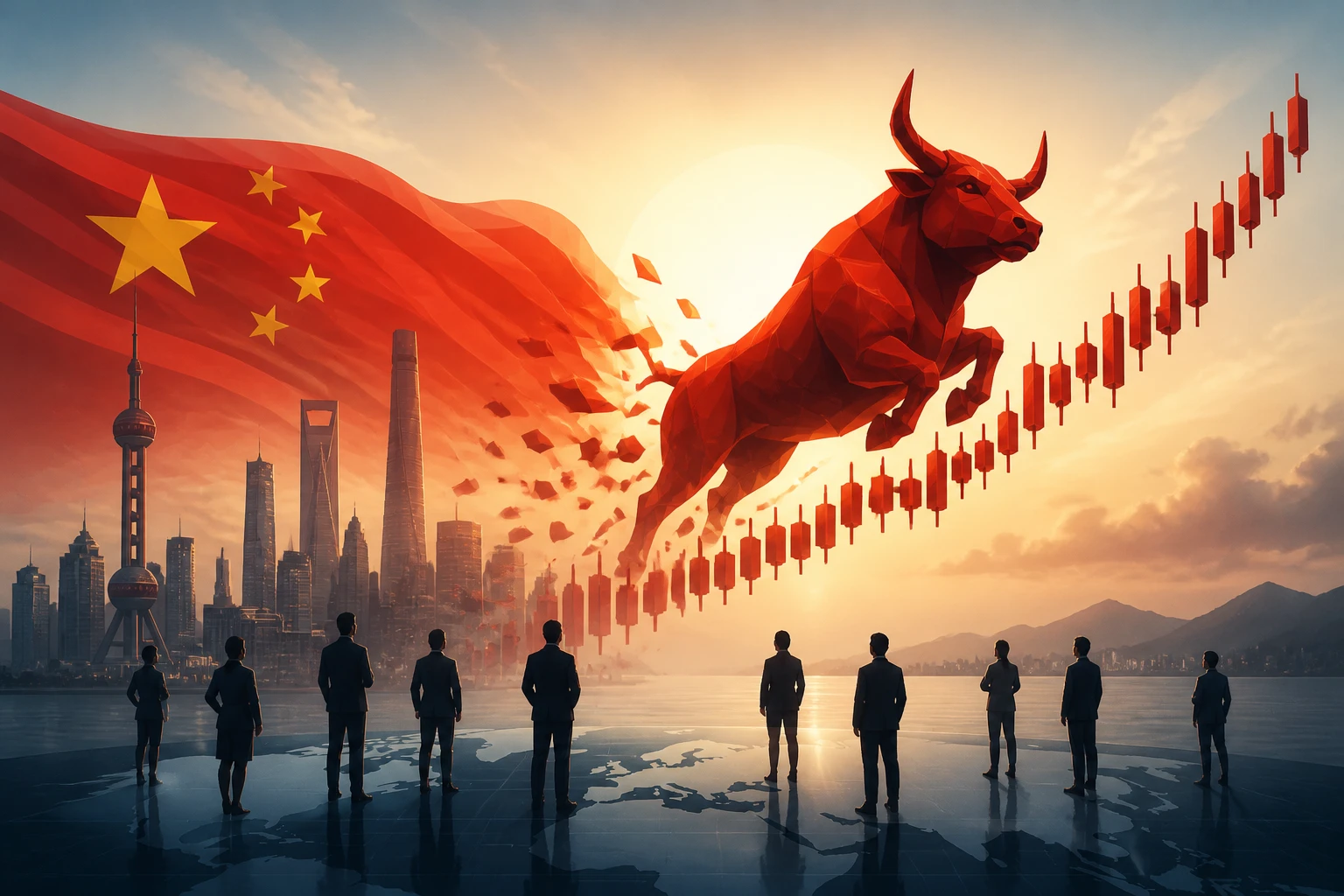
Imagine your neighbor suddenly starts throwing lavish parties every weekend after months of quiet evenings. You'd probably wonder what changed, right? That's essentially what's happening with China's stock market right now. After years of underwhelming performance, Chinese equities have surged over 25% in recent weeks, catching global investors off guard. But here's the thing – this isn't just about one country's financial markets having a good run. This surge is sending ripples through global supply chains, currency markets, and investment portfolios worldwide. For working professionals managing retirement accounts, career decisions, or business strategies, understanding why China's market matters has never been more critical. The implications stretch far beyond Shanghai and Shenzhen, potentially reshaping how we think about global economic power dynamics.
The Problem
China's stock market has been the underperformer of major economies for years. While the S&P 500 gained 76% over the past five years, China's CSI 300 index actually declined. This created a narrative that China was uninvestable – a story that suddenly looks questionable. The recent surge stems from aggressive stimulus measures, including $140 billion in liquidity injections and promises of more support for the property sector. But here's where it gets complicated: this isn't happening in isolation. The Federal Reserve's signals about potential rate cuts, combined with evolving US-China trade dynamics, have created a perfect storm of capital reallocation. Global funds that had written off Chinese assets are suddenly scrambling to reposition. The problem isn't just missing out on gains – it's that this shift could signal a fundamental rebalancing of global economic influence that many Western investors and businesses aren't prepared for.
Analysis
Think of global markets like a giant seesaw. For years, money has heavily favored US assets, keeping that side down. Now, China's stimulus and policy shifts are adding weight to the other side, and the fulcrum is starting to move. This rebalancing has three critical implications. Economically, China's stimulus could boost global commodity demand – we're already seeing copper prices jump 8% as investors bet on infrastructure spending. This benefits commodity exporters like Australia and Brazil while potentially reigniting inflation concerns in developed markets. From a policy perspective, China's coordinated response demonstrates the government's commitment to achieving its 5% GDP growth target, signaling that Beijing won't let economic slowdown derail long-term strategic goals. For businesses, this creates both opportunities and challenges. Companies with China exposure might see earnings upgrades, while those competing with Chinese manufacturers could face renewed competitive pressure. The currency implications are equally significant – a stronger Chinese yuan makes US exports more competitive but increases import costs for American consumers. This interconnectedness means that China's market surge isn't just about Chinese companies; it's reshaping global trade flows, investment patterns, and economic relationships in ways that will persist long after the initial euphoria fades.
Real-World Examples
Alibaba and Tencent have gained over 30% in just three weeks, but the impact extends beyond Chinese tech giants. Apple, which generates roughly 20% of revenue from China, has seen its stock respond positively to improved Chinese consumer sentiment. Meanwhile, Tesla's Shanghai Gigafactory – the company's most productive facility – stands to benefit from both domestic demand recovery and potential supply chain improvements. The ripple effects are visible in unexpected places: Rio Tinto and BHP Billiton have rallied on expectations of increased steel demand, while luxury brands like LVMH are pricing in higher Chinese consumer spending. Perhaps most telling is the currency market response. The yuan has strengthened to its highest level against the dollar in months, prompting Goldman Sachs to upgrade Chinese equities to "overweight" for the first time since 2021. Even Warren Buffett's Berkshire Hathaway, despite reducing its China exposure recently, still holds significant positions that benefit from this surge, demonstrating how interconnected global portfolios have become.
The Challenge
Here's why this isn't straightforward: China's market surge comes with built-in contradictions that make predicting sustainability nearly impossible. The stimulus measures driving gains also increase debt levels in an economy already grappling with a property crisis. Local government debt exceeds $9 trillion, and pumping more liquidity into the system might temporarily boost markets while worsening long-term structural problems. Additionally, US-China tensions around technology transfers and trade policies haven't disappeared – they're just temporarily overshadowed by market euphoria. Regulatory unpredictability remains a constant threat, as evidenced by previous crackdowns on tech companies that wiped out hundreds of billions in market value virtually overnight.
Future Implications
For working professionals, this shift demands strategic thinking about career and investment decisions. If China sustains this recovery, global supply chains might stabilize, potentially easing inflation pressures that have squeezed household budgets. However, it also means increased competition for resources and talent as Chinese companies regain confidence for international expansion. Portfolio diversification becomes more complex when traditional "safe haven" assets like US treasuries face pressure from capital flowing toward higher-growth markets. The technology sector faces particular complexity – while Chinese tech stocks rally, ongoing restrictions on semiconductor exports and AI technology sharing create parallel but potentially divergent tech ecosystems. This bifurcation could create both opportunities for specialists who understand both markets and risks for companies dependent on integrated global tech supply chains. The dollar's role as the dominant reserve currency might also face subtle but persistent challenges as more international trade gets denominated in yuan.
Looking Ahead
The question isn't whether China's surge will continue – it's whether global investors and professionals are prepared for a world where Chinese markets matter as much as they should given the country's economic size. China represents 18% of global GDP but only 3% of most international equity indices. If this rebalancing represents the beginning of that gap closing, we're witnessing a historic shift in global capital allocation that will reshape careers, investment strategies, and business opportunities for the next decade.