

Overview
While the world searches for solutions to climate change and sustainable energy, India's Defence Research and Development Organisation (DRDO) has quietly begun an extraordinary experiment in Gujarat's Kutch desert. They're growing seaweed in one of the world's most arid regions, using underground saline water that was previously considered worthless. This isn't just another agricultural experiment—it's potentially the foundation of India's next major economic transformation. With 350,000 hectares of salt desert across the country, DRDO's breakthrough could turn barren wasteland into green gold worth billions.
Here's What's Happening
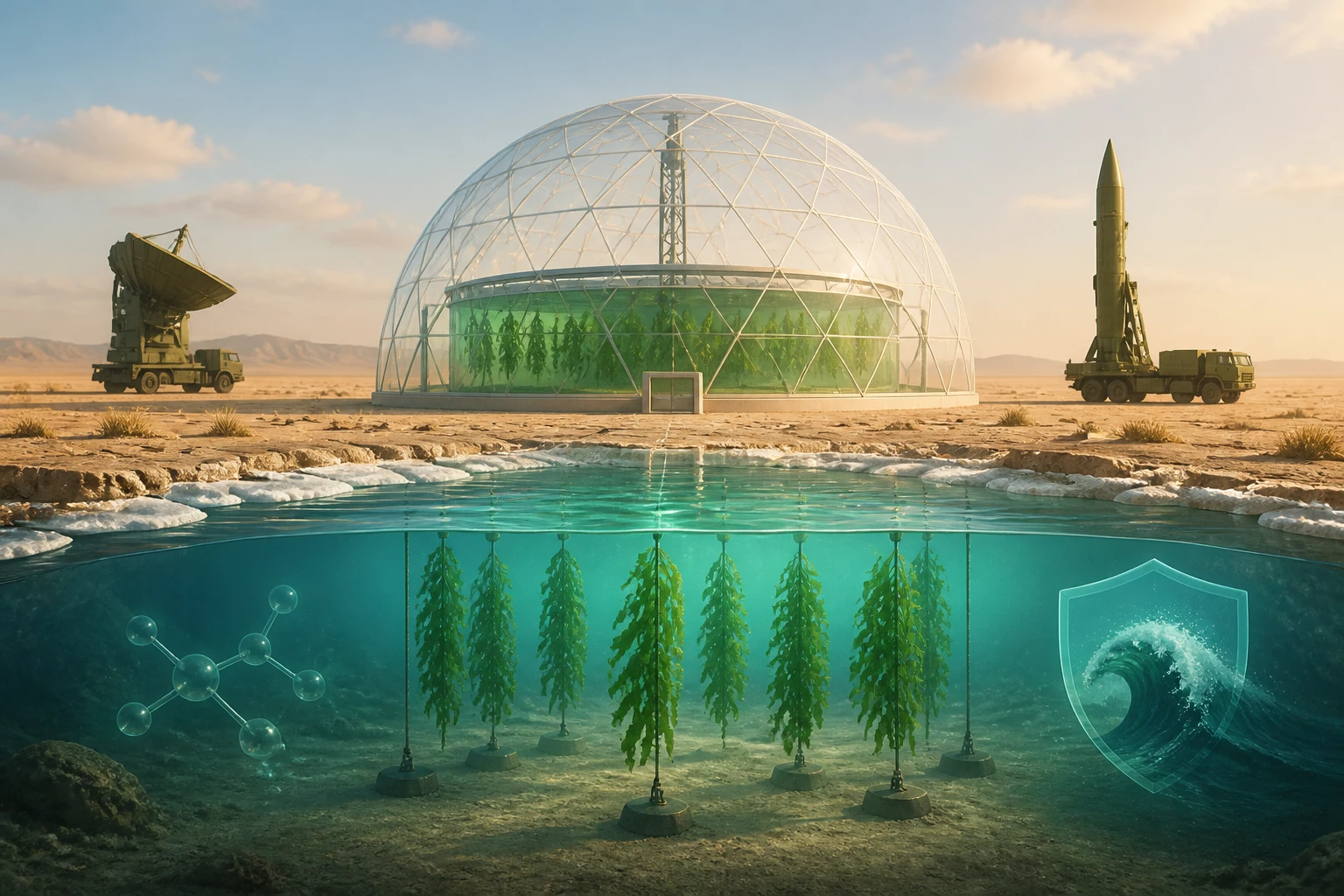
DRDO scientists have successfully cultivated seaweed in Kutch's salt desert using innovative hydroponic systems powered by underground saline water. The results are remarkable: 40 tons per hectare yield with an estimated value of ₹8 lakhs per hectare. Unlike traditional crops that require fresh water—a precious commodity in desert regions—this seaweed thrives on the very salt water that makes these lands unsuitable for conventional agriculture.
The project represents a fundamental shift in how we view "unusable" land. These salt deserts, scattered across Rajasthan, Gujarat, and other states, were previously written off as agricultural wastelands. Now, they're emerging as potential goldmines for sustainable biofuel production and carbon sequestration.
Let's Break This Down
The science behind this breakthrough is fascinating. Seaweed absorbs CO2 faster than Amazon rainforest trees—making it a powerful weapon against climate change. Think of it as nature's most efficient carbon vacuum cleaner, but one that also produces valuable byproducts.
Here's where it gets economically interesting. The harvested seaweed can be processed into biofuel, biodegradable plastics, and various industrial chemicals. With global oil prices fluctuating and environmental regulations tightening, countries are desperately seeking alternatives to petroleum-based products. Seaweed-derived biofuel could be that alternative.
The numbers tell a compelling story. If even 10% of India's salt desert area were converted to seaweed farming, we're looking at 35,000 hectares producing approximately 1.4 million tons of seaweed annually. At current market rates, this translates to potential revenue of ₹2,800 crores per year—from land that currently generates zero economic value.
But the environmental impact might be even more significant. This seaweed farming could sequester millions of tons of carbon dioxide while producing clean fuel. It's like solving two critical problems—climate change and energy security—with one innovative solution.
The technology isn't particularly complex either. The hydroponic systems use solar power to pump saline groundwater, creating controlled environments where seaweed can flourish despite the harsh desert conditions. Local communities can be trained to manage these systems, creating employment opportunities in regions with limited economic prospects.
The Bigger Picture
This development comes at a crucial time for India's energy and environmental strategy. With commitments to achieve net-zero emissions by 2070, the country needs breakthrough technologies that can scale rapidly. Seaweed farming in salt deserts offers exactly that—a scalable, profitable solution that addresses multiple challenges simultaneously.
For entrepreneurs and investors, this represents an emerging blue ocean opportunity. The infrastructure required is relatively modest compared to traditional industries, and the raw materials (salt water and desert land) are abundant and cheap.
International markets are also taking notice. Countries like Norway and South Korea have invested heavily in seaweed cultivation for similar purposes. India's advantage lies in its vast unused salt desert areas and abundant sunshine—perfect conditions for large-scale seaweed farming operations.
What's Next?
DRDO's Kutch experiment is still in pilot phase, but success could trigger rapid expansion across India's salt deserts. The next few years will likely see private companies partnering with research institutions to commercialize this technology.
The implications extend beyond energy. As plastic pollution becomes a global crisis, seaweed-based biodegradable alternatives could position India as a leader in sustainable materials manufacturing. We might be witnessing the early stages of an entirely new agricultural sector—one that transforms worthless desert into productive, profitable land while helping save the planet. The next oil boom might just be growing in places where nothing was supposed to grow at all.