

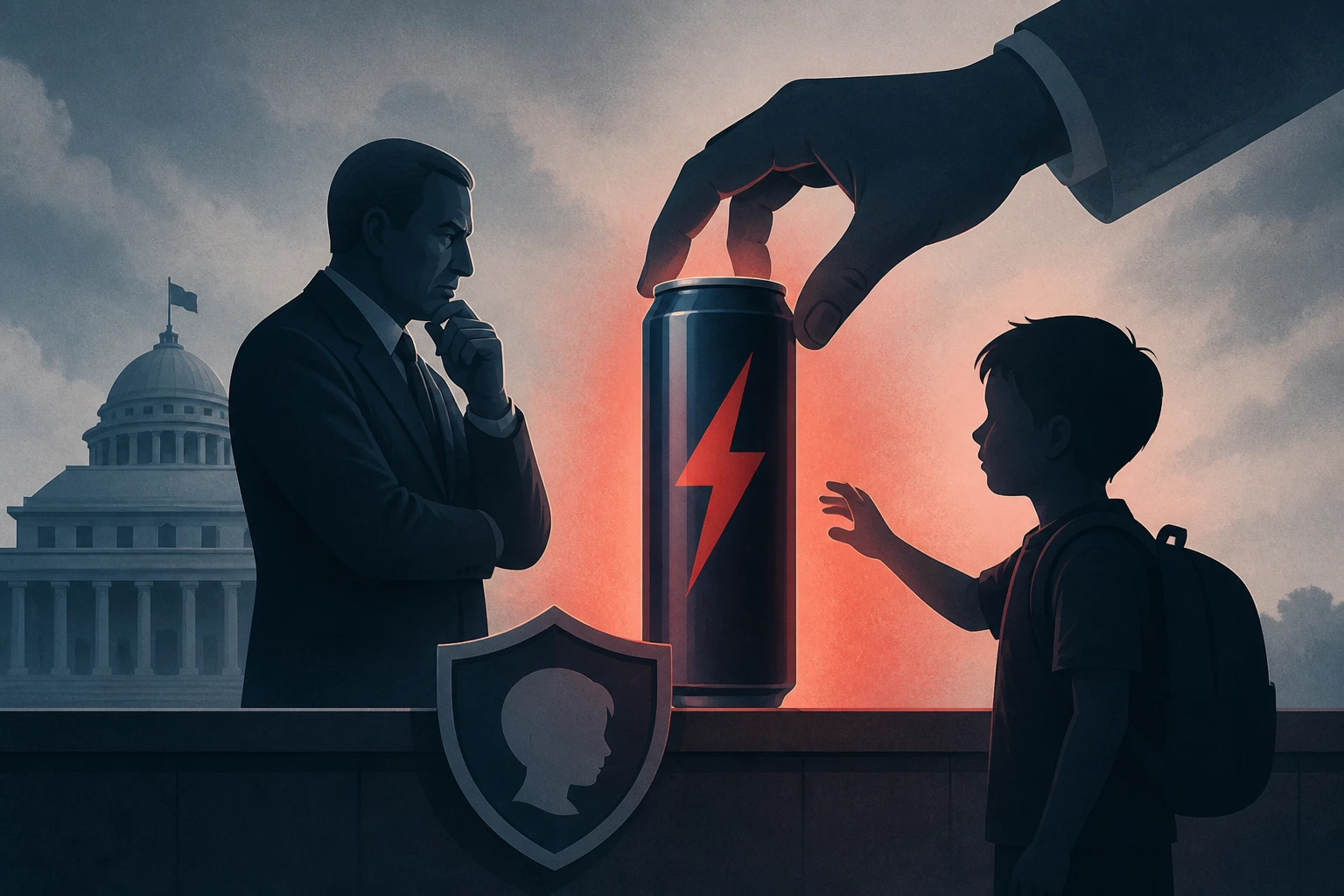
On 3 July 2026, Maharashtra's Food and Drug Administration Minister Narhari Zirwal stood up in the state legislature and announced something that, for many parents, was long overdue: the Maharashtra government banned the sale of high-caffeine energy drinks within a 500-metre radius of schools across the state. The trigger was pointed. The bottles themselves carry a warning stating that the drink is not suitable for children and pregnant women — yet it was being freely sold right outside school premises.
That contradiction — legal product, illegal sale location — sits at the heart of a global conversation about who is responsible when a child reaches for a can of something dangerous.
What the Drink Actually Does to a Child's Body
Energy drinks are not simply caffeinated sodas. They are sweetened beverages containing high amounts of caffeine and other stimulants such as taurine, guarana, and glucuronolactone. For a developing body, that combination is particularly risky. Clinical trials have found that compared to a placebo, energy drink consumption raised systolic blood pressure by up to 5.23 mmHg and diastolic blood pressure by up to 3.29 mmHg in healthy children and teenagers, with a higher prevalence of elevated blood pressure observed after consumption.
The caffeine problem is also one of dose. The recommended daily caffeine limit for adolescents aged 12–18 is under 100 mg — yet a single energy drink can contain 100–200 mg per serving. Sleep is essential for teens, and caffeine disrupts sleep patterns. There is also the risk of physical dependence on energy drinks for children and teens. Perhaps most concerning: children may be more likely than adults to develop an addiction, or may develop dependence at lower doses or frequencies of caffeine use.
Adults Are Not Off the Hook Either
The assumption that energy drinks are harmless for grown-ups needs revisiting. Research has shown that energy drinks can disrupt normal heart function, with consumers experiencing elevated blood pressure and abnormal electrical activity in the heart for hours afterward — changes that may raise the risk of serious, potentially life-threatening arrhythmias. Case reports have also linked heavy energy drink use, especially when combined with alcohol or intense physical exertion, to episodes of cardiac arrest. If you have a genetic heart condition that predisposes you to sudden cardiac death, an energy drink may not be harmless. People with underlying genetic heart disease or adults with coronary artery disease or weaker heart pumps are especially vulnerable.
A Regulation Map That's Growing Fast
Maharashtra is not acting in isolation. Countries such as Poland, Latvia, Lithuania, and Hungary have already stopped selling energy drinks to minors, while the UK has announced its intention to introduce a similar ban. Poland, under its Public Health Act from 1 January 2024, prohibits the sale of beverages containing caffeine or taurine to individuals under 18, extending the ban to schools and vending machines.
India's regulatory framework has a gap to close. Authorities have clarified that while "energy drinks" are not separately defined under the Food Safety and Standards Act, 2006, they are regulated as non-alcoholic caffeinated beverages under existing food safety regulations. The Maharashtra move works within that framework — and schools have been asked to conduct awareness programmes to educate students about the health risks associated with energy drink consumption.
A proximity ban is a start. But enforcement — inspecting every kirana near every school gate — is the harder problem. The can is cheap, the warning is tiny, and adolescents are an extremely profitable market. Until regulation catches up with that arithmetic, the gate stays open.
Sources
- FDA Launches Crackdown On Energy Drinks Like Sting, Gutkha Within 500-Mtr Radius Of Schools Across Maharashtra
- Energy Drinks: Effects on Blood Pressure and Heart Rate in Children and Teenagers. A Randomized Trial
- For teens, energy drinks may have harmful side effects | UCLA Health
- Are Energy Drinks Bad for My Kid? | Cedars-Sinai
- Are energy drinks bad for you? - Harvard Health
- Mayo Clinic Q and A: Are energy drinks bad for your health? - Mayo Clinic News Network
- Will the EU ban energy drink sales to children?
- Patterns of Energy Drink Use, Risk Perception, and Regulatory Attitudes in the Adult Polish Population: Results of a Cross-Sectional Survey
- No More Energy Drinks Around Schools in Maharashtra: What’s Behind the Ban?
- Maharashtra bans sale of energy drinks within a 500-m radius of schools | India News - Business Standard