

Overview
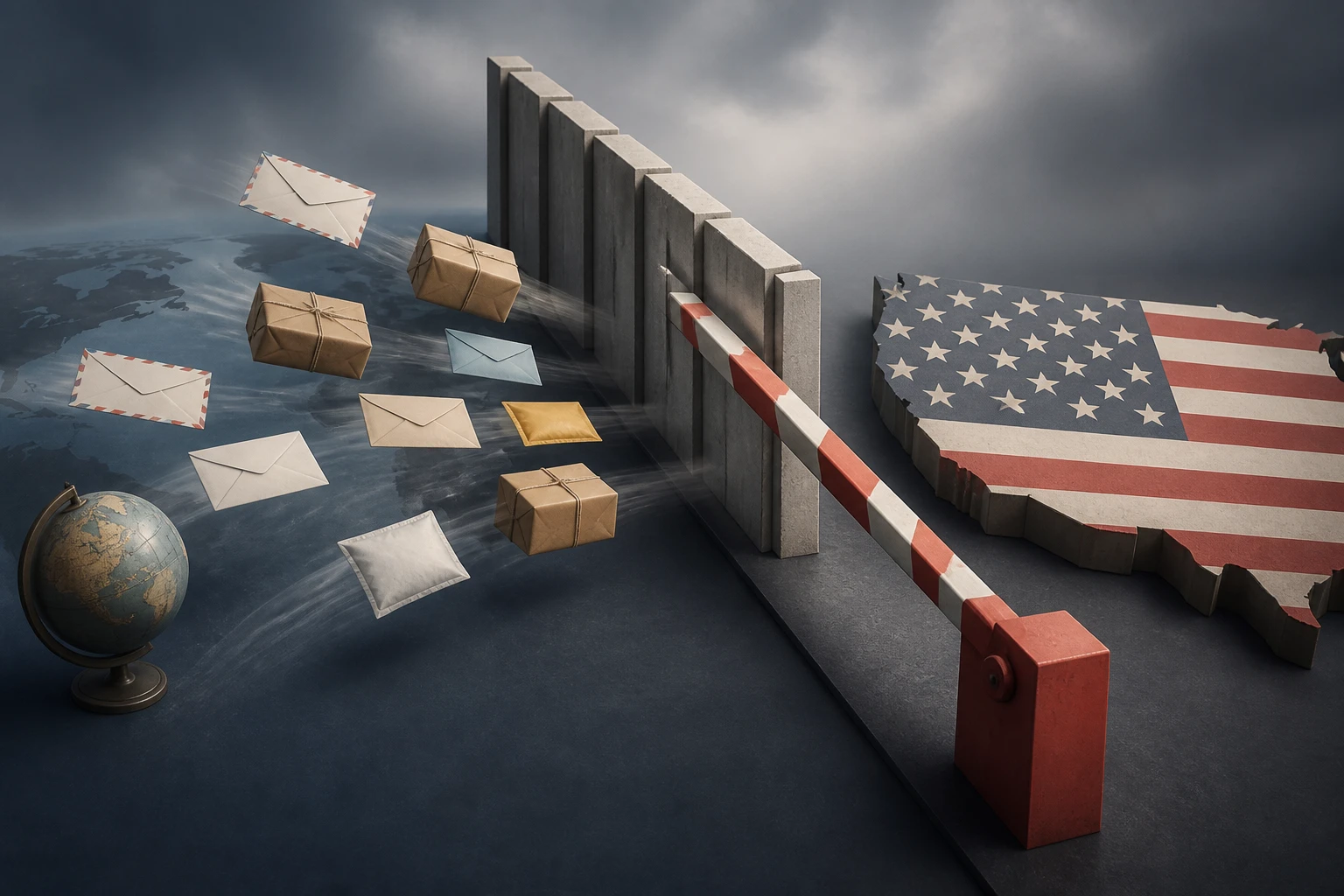
Picture this: You're a small business owner who relies on European suppliers for your handcrafted jewelry business. Every month, 400 packages arrive from artisans in Germany, Italy, and France. Then suddenly, your postal service calls with devastating news – all international mail to America has stopped. This isn't a hypothetical scenario. It's happening right now across multiple European postal services as Trump's aggressive tariff policies create unprecedented chaos at U.S. customs facilities. What started as trade negotiations has spiraled into a logistics nightmare affecting millions of packages, thousands of businesses, and countless consumers who depend on international mail for everything from birthday gifts to business supplies.
The Problem
European postal services, including Deutsche Post, Poste Italiane, and Swiss Post, have suspended shipments to the United States citing "customs processing delays and regulatory uncertainty." The root cause? Trump's universal tariff policy has overwhelmed U.S. customs facilities with new documentation requirements, extended processing times, and unpredictable duty calculations. Think of customs like a highway toll booth. Before, most small packages zipped through in seconds. Now, each package requires a 15-minute inspection and complex paperwork. The result? A massive traffic jam that's brought international mail to a standstill. Over 2.3 million packages are currently stuck in European warehouses, while U.S. customs facilities report 400% longer processing times than just six months ago.
Analysis
This crisis reveals three critical dimensions of modern trade disruption. Economically, small businesses face immediate cash flow problems as inventory shipments halt. Unlike large corporations with diverse logistics networks, small importers depend heavily on postal services for cost-effective international shipping. A jewelry retailer importing $50,000 monthly from European suppliers now faces complete supply chain breakdown.
Policy-wise, the tariff implementation exposed a fundamental flaw: customs infrastructure wasn't scaled for universal tariff processing. The U.S. Customs and Border Protection handles approximately 40 million international packages annually, but new tariff rules require individual assessment of items previously exempt. This represents a 10x increase in processing complexity.
From a business perspective, this creates a two-tier system. Amazon and FedEx maintain operations through private customs clearance facilities and dedicated staff, while small businesses using standard postal services face complete disruption. E-commerce giants can absorb higher logistics costs, but small importers cannot. This effectively consolidates market power among large players who can navigate regulatory complexity, potentially eliminating thousands of small competitors who built businesses around accessible international shipping.
Real-World Examples
Maria Santos, owner of Santos Ceramics in Portland, imports handmade pottery from Portuguese artisans. Her business model depended on €2,000 monthly shipments via standard postal services. "We've had zero deliveries for six weeks," Santos explains. "Large competitors using private logistics are still receiving inventory, but postal service suspension killed our supply chain."
Etsy reports that 18% of its sellers rely on European suppliers, with most using postal services for shipments under $200. The platform has seen a 32% drop in new European supplier onboarding since suspensions began. Meanwhile, Wayfair and other large retailers maintain European inventory flow through private customs brokers and dedicated shipping channels.
Klaus Weber from Deutsche Post stated: "We cannot guarantee delivery times or final costs to customers due to unpredictable U.S. customs processing. Suspending service protects both our operational integrity and customer relationships." Similar statements from PostNord and An Post indicate this isn't an isolated decision but a coordinated response to systemic U.S. customs dysfunction.
The Challenge
Resolving this crisis isn't simple because it requires simultaneous fixes across multiple systems. U.S. customs needs both technological upgrades and staffing increases to handle new tariff requirements. European postal services need cost predictability and processing time guarantees before resuming services. However, tariff policy remains politically driven, making technical solutions dependent on policy stability. It's like trying to fix a highway while cars are still driving on it – the infrastructure repair requires stopping normal operations, but stopping operations creates economic damage that makes repair funding politically difficult.
Future Implications
This mail suspension could permanently reshape international e-commerce. Small businesses may increasingly rely on consolidation services and freight forwarders, raising their operational costs by an estimated 25-40%. Consumers will likely see higher prices and reduced product variety as small international sellers exit the U.S. market.
The crisis also accelerates supply chain regionalization. Businesses are exploring nearshoring options, sourcing from Canada and Mexico instead of Europe. Medium-term implications include strengthened logistics partnerships between European and North American private carriers, potentially bypassing postal services entirely. This represents a fundamental shift from accessible, democratized international trade toward a system requiring significant capital investment to participate effectively.
Looking Ahead
Will international mail disruption become the new normal, or can diplomatic solutions restore global connectivity? The answer depends not just on policy adjustments, but on whether we're witnessing a temporary crisis or permanent fracturing of international commerce infrastructure. For working professionals, the question becomes: How do we build resilient businesses in an increasingly fragmented global economy?