

Overview
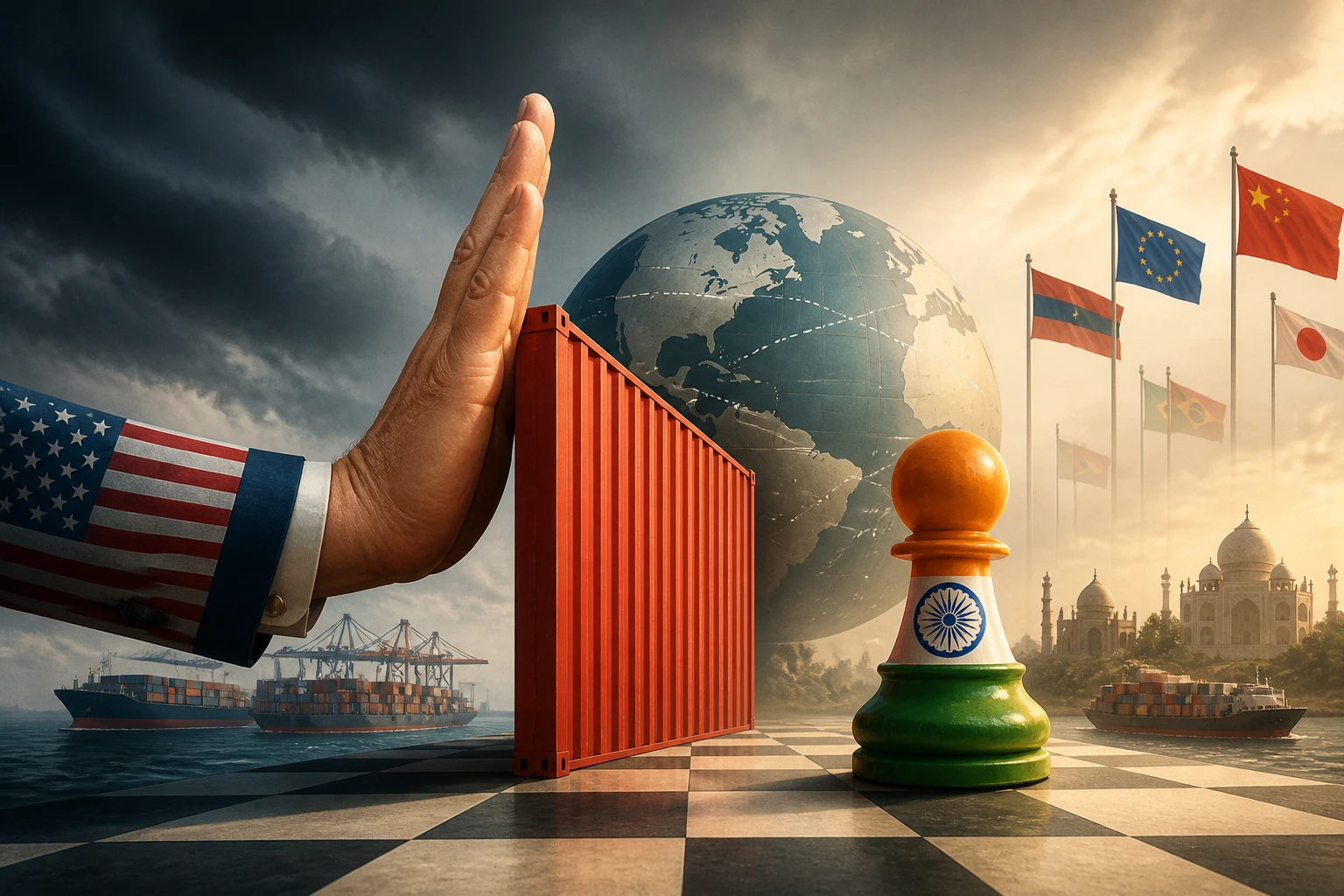
Imagine you're running a mid-sized manufacturing company that's been importing $2 million worth of steel components from India every quarter. You wake up Monday morning to find that your costs just increased by 50% overnight. Welcome to the reality facing thousands of businesses after Trump's latest executive order imposing massive tariffs on Indian imports, allegedly in response to India's continued purchase of Russian oil.
This isn't just another trade spat making headlines. We're witnessing a seismic shift that's forcing companies to scramble for alternative suppliers, disrupting supply chains built over decades, and potentially triggering a trade war that could reshape how Asia-Pacific commerce operates. The ripple effects are already being felt from Silicon Valley tech firms to Midwest pharmaceutical companies, and this is just day one.
The Problem
Here's what's happening in simple terms: Think of global trade like a massive Jenga tower where each block represents a trade relationship. Trump just yanked out a pretty significant block by imposing 50% tariffs on Indian imports, and now everyone's watching to see if the tower stays standing.
The trigger? India's continued energy relationship with Russia, importing approximately $13 billion worth of Russian oil in 2023 alone. The U.S. administration views this as undermining sanctions against Russia, prompting what trade experts are calling the most aggressive tariff move since the U.S.-China trade war of 2018-2020.
But here's the catch: India supplies 40% of America's generic pharmaceuticals and is a crucial partner in the semiconductor supply chain. We're essentially taxing ourselves on products we desperately need, creating an economic puzzle with no easy solutions.
Analysis
The economic implications are staggering across multiple dimensions. From a macroeconomic perspective, this move could increase inflation by an estimated 0.3-0.5% according to Peterson Institute calculations, hitting American consumers where it hurts most.
Business-wise, companies are facing three immediate challenges: finding alternative suppliers (often at higher costs), managing inventory disruptions, and potentially passing costs to consumers. Pharmaceutical companies are particularly vulnerable, as India produces 60% of the world's vaccines and a significant portion of active pharmaceutical ingredients.
From a geopolitical standpoint, this creates a fascinating dynamic. India, caught between its traditional partnership with Russia and growing ties with the U.S., now faces pressure to choose sides. The move could push India closer to BRICS alternatives and away from U.S.-led trade frameworks.
The timing is crucial: this happens as global supply chains are still recovering from pandemic disruptions and the ongoing Red Sea shipping crisis. Companies that diversified their supply chains post-COVID might weather this better, while those heavily dependent on Indian imports face immediate operational challenges.
Currency markets are already reacting, with the Indian Rupee dropping 2.3% against the dollar in early trading.
Real-World Examples
Generic pharmaceutical giant Teva immediately announced it's exploring manufacturing alternatives, potentially shifting production to Ireland and Israel facilities. However, this transition could take 18-24 months and significantly increase production costs.
Tesla and other EV manufacturers face disruption in their battery component supply chains, as India supplies critical lithium processing materials. Elon Musk reportedly held emergency meetings with supply chain heads to assess impact and alternatives.
Walmart and Target are scrambling to secure textile and apparel supplies, as India represents nearly 30% of their non-Chinese textile imports. Industry insiders suggest we could see 10-15% price increases on clothing and home goods by Q2.
Infosys and TCS, India's IT giants, are reassessing their U.S. operations strategies. While services aren't directly affected, the overall trade relationship deterioration creates uncertainty for the $200 billion India-U.S. IT services trade.
Small and medium enterprises are hit hardest, lacking the resources for quick supplier diversification that large corporations possess.
The Challenge
Why can't we just flip a switch and find new suppliers? Supply chain economics don't work that way. India has spent decades building specialized manufacturing capabilities, skilled workforce, and quality certifications that can't be replicated overnight.
Regulatory compliance adds another layer of complexity. Pharmaceutical manufacturers must undergo FDA re-approval processes for new facilities, potentially taking years. The interconnected nature of global supply chains means disrupting one major supplier affects multiple downstream industries simultaneously.
Future Implications
This tariff move signals a fundamental shift toward economic nationalism over global efficiency. We're potentially witnessing the beginning of trade bloc realignment, where countries choose economic partners based on geopolitical alignment rather than pure economic logic.
India's response will be crucial. If they retaliate with their own tariffs or pivot toward alternative markets like the EU and Southeast Asia, we could see a permanent restructuring of trade relationships. The U.S. pharmaceutical industry might face long-term supply vulnerabilities, potentially compromising the strategic advantage of low-cost generic drugs.
Innovation and investment patterns are already shifting, with companies prioritizing supply chain resilience over cost efficiency. This could accelerate nearshoring trends and domestic manufacturing initiatives, but at significantly higher costs.
Looking Ahead
The next 90 days will be critical as businesses and governments adapt to this new reality. Will we see India modify its Russia policy to preserve U.S. trade relationships, or will this accelerate the formation of alternative trading blocs?
The real question isn't whether global trade will adapt—it always does. The question is: at what cost, and who pays the price? As working professionals, we're all stakeholders in this unfolding economic experiment.