

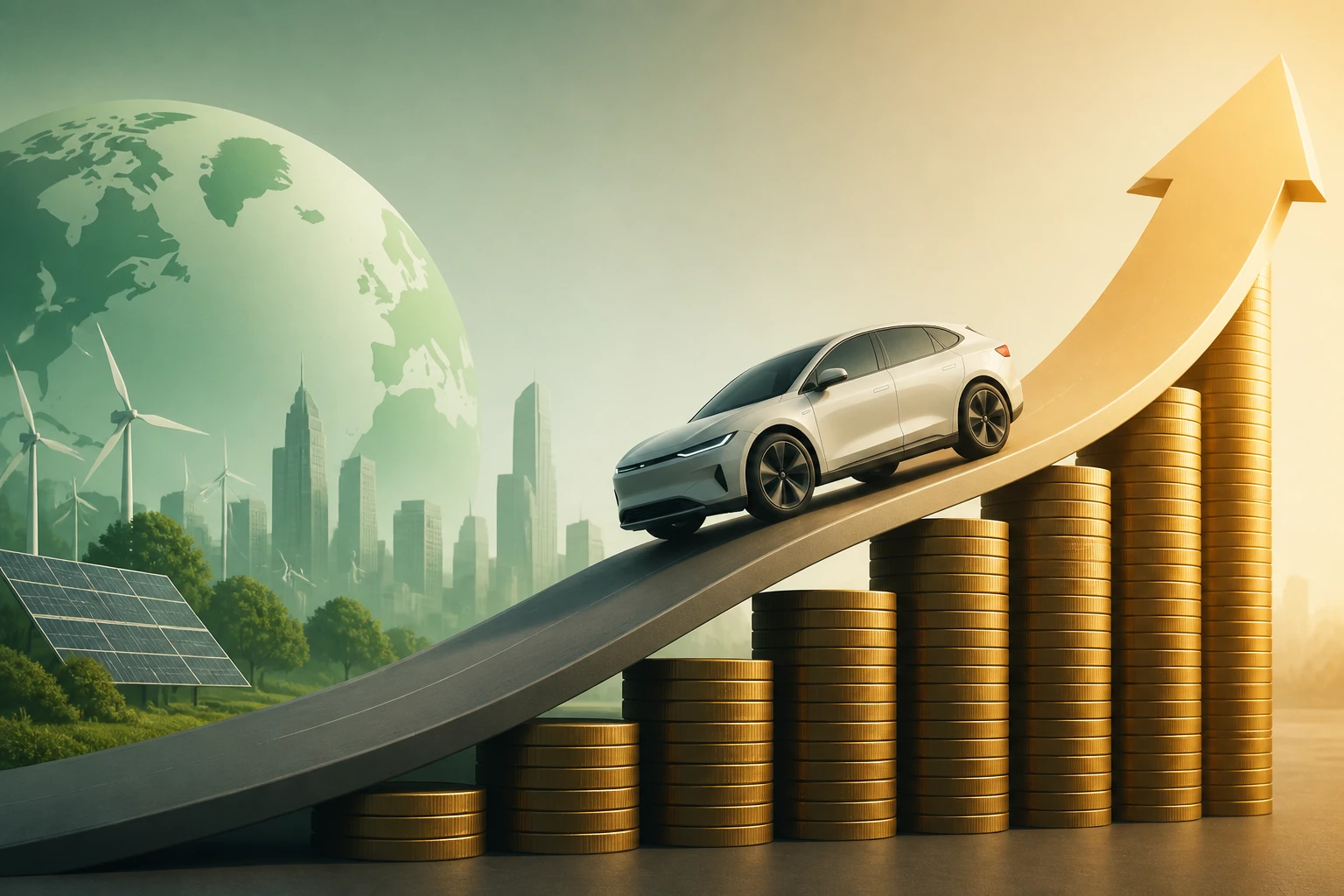
Copper hit a record $14,858 a tonne before settling back to around $14,240 in the same week. For most people, that is just a commodity-desk number. For anyone buying an electric vehicle or a new air conditioner in India, it is the early signal of a bill arriving at their door.
The Metal the Energy Transition Cannot Live Without
Every electric vehicle contains far more copper than the petrol car it replaces. A typical ICE passenger car uses 20–25 kg of copper, while some electric cars use 80–85 kg; for two-wheelers, the gap runs from about 2.5–3 kg to 8–10 kg. That gap is not a design choice — it is physics. Motors, battery packs, charging systems and wiring harnesses all demand the metal. Ajinkya Firodia, Managing Director of Kinetic Engineering, has noted that higher copper prices are another hurdle for EV economics precisely because EVs require more copper than internal combustion engine vehicles.
The cruel irony is that the very forces driving the green transition — solar farms, EV fleets, data centres powering AI models that optimise renewable grids — are also the forces bidding copper's price to historic levels. Strong buying from AI data centres and electric vehicle producers has tied up global copper output months in advance.
When the Price Spike Lands in Your Home
Indian consumers are already seeing early signals. The copper-related cost increase could translate to ₹3,300–4,300 for a 1.5-tonne split air conditioner and ₹1,300–1,800 for a double-door refrigerator. EV makers and appliance manufacturers are signalling price rises. Uday Narang, chairman of Omega Seiki Mobility, has pointed out that every rupee matters in commercial EVs because buyers focus on total cost of ownership. When a key input jumps this sharply, that calculus shifts — and the affordability argument that was supposed to accelerate EV adoption gets harder to make.
The Aluminium Escape Hatch — and Its Limits
The industries driving copper demand are also the ones now trying to escape it. Solar module makers and data centres are shifting some components from copper to aluminium. Automakers are following suit: Ferrari and BMW have joined Tesla and several Chinese EV makers in using aluminium for select electrical systems. Consultancy Zhuochuang estimates that by 2030, between 25% and 30% of industrial components currently made from copper, by metal volume, could be replaced by aluminium across the power, automotive, and home appliance sectors.
But substitution is not a clean fix. Aluminium is less electrically conductive than copper, requiring larger cables to transmit the same amount of electricity. Among consumers, appliance makers risk a perception of lower quality, since many have long associated "100% copper" condensers with performance and durability.
The green transition was always going to need enormous quantities of copper. What was underestimated is the speed at which every sector — EVs, solar, AI infrastructure — would arrive at the copper window at the same time. Until mines catch up or substitutes mature, consumers are caught in the middle: paying a premium for the cleaner future they were promised.
Sources
- Copper price surge accelerates costs across Indian electronics, EVs, and appliances - Quest Review Center
- Why EVs, home appliances might soon become costlier in India
- Indian Appliance Makers Swap Copper for Aluminium to Defend Shrinking Margins | Electronics — RetailNews Asia
- Ferrari and BMW join Tesla in shift from copper to aluminum wiring
- Automakers Shift to Aluminum Wiring as Copper Prices Rise