

Overview
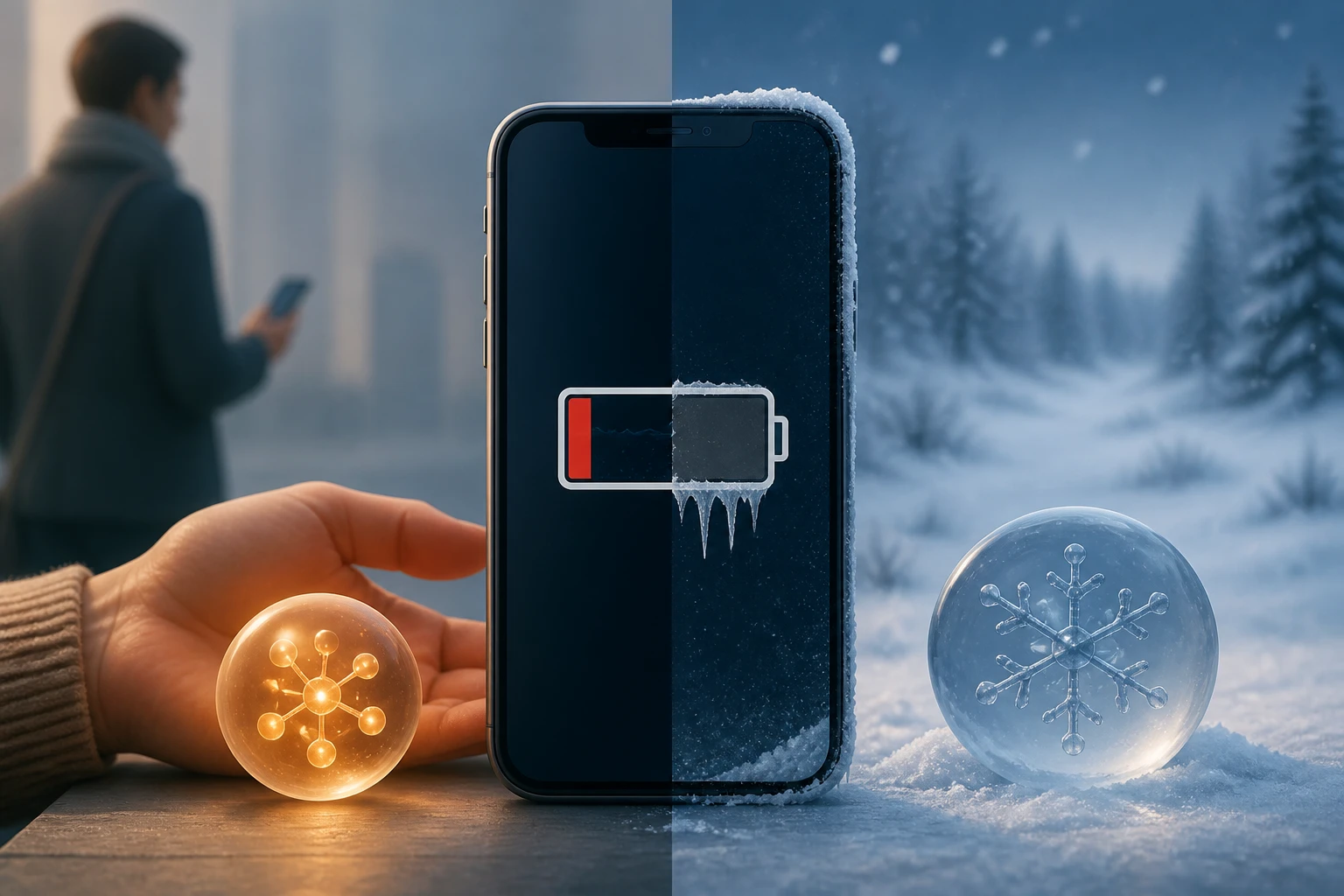
Picture this: You're rushing to catch the morning train on a freezing Delhi winter day. Your phone shows 80% battery when you leave home, but by the time you reach office two hours later, it's barely clinging to 30%. Sound familiar? You're not alone – millions of smartphone users across North India face this winter nightmare every year. But here's the thing: your phone isn't broken, and it's not a manufacturing defect. It's pure chemistry in action.
Think of your smartphone battery like a sleepy child on a cold morning – everything just moves slower when it's freezing. The lithium-ion battery powering your device follows the same principle. As temperatures drop, the chemical reactions that generate electricity literally slow down, causing your battery to drain faster and perform poorly. With India's smartphone user base exceeding 750 million and North India experiencing severe cold waves annually, understanding this phenomenon becomes crucial for anyone who can't afford to be disconnected.
The Problem
When winter hits, smartphone batteries can lose up to 40% of their capacity at temperatures around 0°C (32°F). This isn't just an inconvenience – it's a productivity killer for working professionals who depend on their devices for everything from navigation to critical business calls.
The root cause lies in electrochemical kinetics – a fancy term for how fast chemical reactions happen inside your battery. Inside every lithium-ion battery, tiny lithium ions need to move between two electrodes (positive and negative terminals) to generate electricity. Cold weather makes these ions sluggish, like honey becoming thick in winter.
But here's where it gets interesting: the battery isn't actually losing charge permanently. It's more like the energy is temporarily locked away, inaccessible until temperatures rise again. This explains why your phone might suddenly jump from 5% to 25% when you bring it back indoors.
For India's massive workforce – from IT professionals in Gurgaon to delivery executives in Punjab – this translates to real economic impact during the crucial winter months when productivity demands are highest.
Analysis
The economic implications of winter battery drain extend far beyond personal inconvenience. Consider the gig economy workers – Uber drivers, food delivery partners, and field sales executives – who depend entirely on smartphone battery life for their livelihoods. A Zomato delivery executive losing phone battery mid-delivery doesn't just face customer complaints; they risk income loss and platform penalties.
From a business continuity perspective, companies are recognizing this as a legitimate operational challenge. Goldman Sachs research indicates that extreme weather conditions, including cold snaps affecting device performance, cost businesses approximately $1.2 billion annually in lost productivity across Asia-Pacific regions.
The policy angle reveals interesting gaps. While Bureau of Indian Standards (BIS) mandates rigorous testing for smartphones sold in India, temperature performance standards primarily focus on extreme heat – understandable given India's tropical climate – but largely overlook cold weather performance that affects northern regions.
Insurance companies are beginning to factor weather-related device failures into their calculations. Bajaj Allianz reported a 15% spike in smartphone insurance claims during winter months in North India, primarily attributed to battery-related issues and subsequent device damage from frequent charging cycles.
The supply chain impact creates ripple effects. Battery manufacturers like Samsung SDI and CATL are investing heavily in cold-weather battery technology, but implementation remains expensive and slow.
Real-World Examples
Apple publicly acknowledged this issue in 2017, admitting they deliberately slowed down older iPhones with degraded batteries to prevent unexpected shutdowns in cold weather. The backlash led to $500 million in settlements, but also sparked industry-wide awareness about temperature-dependent battery performance.
Tesla's approach offers interesting insights for smartphone manufacturers. Their vehicles use battery thermal management systems – essentially heating elements that warm batteries in cold weather. Some premium smartphones now incorporate similar technology. Samsung's Galaxy S23 series includes adaptive thermal management that attempts to maintain optimal battery temperature.
In India, Micromax conducted extensive testing in Ladakh's sub-zero conditions before launching their IN series. They discovered that phones needed specialized firmware optimization to maintain performance at high altitudes and low temperatures – leading to their "Made for India" positioning.
OnePlus partnered with IIT Delhi to study battery performance across India's diverse climate zones. Their research revealed that North Indian users required 20% more charging cycles during winter months compared to South Indian users, directly impacting battery longevity and replacement costs.
The Challenge
Solving the cold weather battery problem isn't simply about better batteries – it's about balancing multiple competing priorities. Improved cold-weather performance often means increased device thickness, higher costs, and sometimes reduced overall battery life in normal conditions.
Regulatory complexity adds another layer. Different countries have varying standards for battery performance, making it challenging for global manufacturers to optimize for specific regional needs. The European Union's new battery regulations mandate detailed temperature performance disclosures, but India's BIS standards remain focused primarily on safety rather than performance metrics.
Future Implications
The race for cold-weather battery supremacy is intensifying as climate change brings more extreme weather patterns. Solid-state batteries, currently in development by companies like QuantumScape and Toyota, promise better temperature stability but remain 3-5 years away from mass market adoption.
Artificial intelligence is emerging as an unexpected solution. Google's Pixel phones now use AI-driven battery optimization that learns user patterns and pre-adjusts power management based on weather forecasts. This could represent a paradigm shift from hardware-focused to software-focused solutions.
The 5G rollout complicates matters further. 5G modems consume significantly more power and generate more heat, creating new challenges for temperature management. Early 5G adoption data from cold-weather regions shows battery drain rates 25% higher than anticipated.
For emerging markets like India, this presents both challenge and opportunity – the chance to leapfrog traditional solutions with innovative approaches tailored to local climate conditions.
Looking Ahead
As we stand at the intersection of increasing smartphone dependence and climate unpredictability, one question emerges: Will we adapt our technology to weather, or will we adapt our behavior to technology's limitations?
The answer will likely determine not just how we use our phones, but how we structure work, transportation, and daily life in an increasingly connected world. The smartphone in your pocket isn't just a device – it's a weather-dependent lifeline that might need a winter coat.