Overview
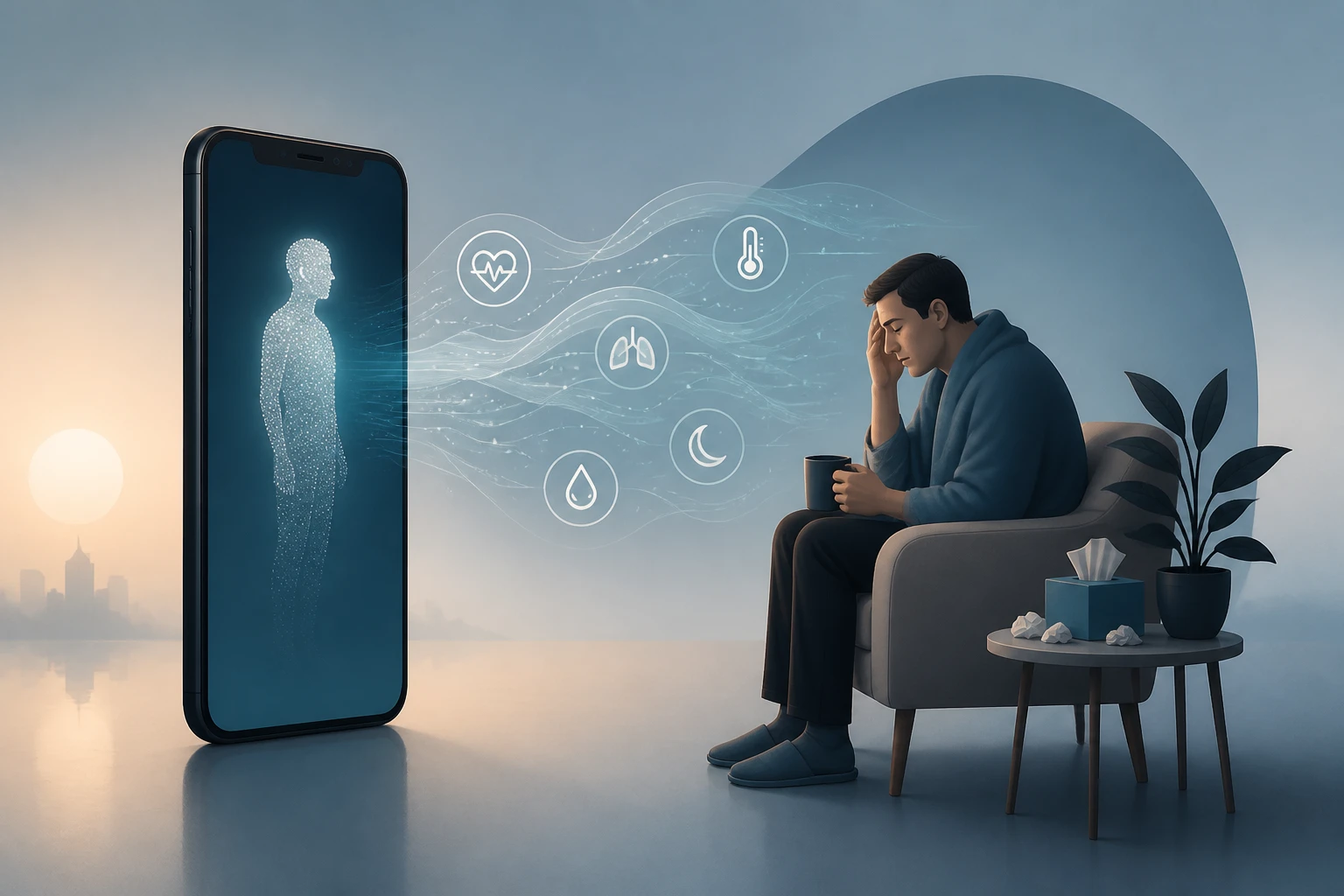
Picture this: You're scrolling through your phone at 2 AM, feeling perfectly fine, when a notification pops up suggesting you "take it easy tomorrow" or reminding you to check your temperature. Sound like science fiction? It's not. Your smartphone has been quietly collecting thousands of data points about your health every single day—from how fast you walk to how often you unlock your screen. Digital health monitoring has evolved beyond fitness trackers and heart rate monitors. Today's smartphones use passive sensing technology to detect subtle changes in your behavior patterns that could indicate illness days before you feel the first symptom. Think of it like having a friend who notices you're walking slower or typing differently before you realize something's off. This isn't just convenient—it's revolutionary.
The Problem
Traditional healthcare operates on a reactive model: you feel sick, then seek treatment. But what if we could flip this script entirely? The problem with waiting until symptoms appear is that many diseases progress silently, and early intervention often means better outcomes and lower costs. Your smartphone generates over 2.5 quintillion bytes of data daily through sensors you probably don't even know exist—accelerometers, gyroscopes, microphones, and touchscreen pressure sensors. These devices are essentially walking medical laboratories that never sleep. The challenge isn't collecting this data; it's interpreting it meaningfully. When your phone notices you're walking 15% slower than usual, checking your phone less frequently, or your voice sounds different during calls, these could be early indicators of everything from depression to Parkinson's disease. The real problem? We're sitting on this goldmine of health insights without fully utilizing its potential.
Analysis
The implications of predictive health monitoring extend far beyond personal wellness—they're reshaping entire industries. From an economic perspective, early disease detection could save the US healthcare system an estimated $100 billion annually by preventing costly emergency interventions and hospitalizations. Insurance companies are already exploring partnerships with tech firms to offer premium discounts for users who share health data, similar to how safe driving apps reduce car insurance costs.
From a business standpoint, this represents a massive opportunity. Apple's Health app alone processes data from over 1 billion users, while Google's health initiatives are valued at over $6 billion. Companies aren't just selling phones anymore; they're positioning themselves as comprehensive health platforms.
The policy implications are equally significant. Governments worldwide are grappling with aging populations and rising healthcare costs. Singapore's Smart Nation initiative already uses anonymized smartphone data to predict and prevent disease outbreaks. Meanwhile, the EU's Digital Health Strategy aims to make health data as portable and useful as financial data.
However, this shift raises critical questions about data ownership and privacy. When your phone knows you're developing diabetes before your doctor does, who owns that information? How do we prevent discrimination while maximizing health benefits? These aren't just technical challenges—they're fundamental questions about the future of healthcare delivery.
Real-World Examples
Pfizer has partnered with IBM to develop apps that monitor Parkinson's patients through smartphone sensors, tracking tremors and gait changes with 93% accuracy compared to clinical assessments. Patients simply carry their phones normally, and the app provides doctors with continuous monitoring data rather than brief clinic snapshots.
Ellipsis Health uses voice analysis to detect mental health changes, claiming their AI can identify depression and anxiety from 30-second speech samples with 80% accuracy. Their technology analyzes speech patterns, pauses, and emotional tone—subtle changes humans might miss.
In a groundbreaking study, Stanford University researchers used smartphone data from 60,000 participants to predict flu outbreaks up to two weeks before traditional surveillance methods. They tracked changes in sleep patterns, activity levels, and heart rate variability—all collected passively through smartphones and wearables.
Microsoft's AI for Health initiative has shown that smartphone typing patterns can indicate early signs of multiple sclerosis, as the disease affects fine motor control in measurable ways. Patients experiencing flare-ups showed distinct changes in typing speed, pressure, and accuracy weeks before clinical symptoms appeared.
The Challenge
The path from data collection to actionable health insights isn't straightforward. Regulatory approval for health-monitoring apps involves navigating complex FDA requirements, especially when making medical claims. Unlike traditional medical devices tested in controlled environments, smartphones collect data in chaotic real-world conditions—pocket placement affects sensors, different phone models vary in accuracy, and user behavior patterns differ significantly.
Data quality remains a major hurdle. False positives could cause unnecessary anxiety and healthcare costs, while false negatives might delay critical treatment. The challenge is developing algorithms sophisticated enough to distinguish between "I'm getting sick" and "I'm having a stressful week at work"—both might show similar behavioral patterns.
Privacy concerns create additional complexity. Users want health insights without surrendering personal privacy, but effective algorithms require vast datasets. Balancing individual privacy with collective health benefits requires solutions we're still developing.
Future Implications
We're approaching a paradigm shift where healthcare becomes continuous rather than episodic. Imagine receiving a gentle notification to schedule a preventive checkup because your phone detected subtle changes consistent with early cardiovascular issues, or getting personalized medication timing recommendations based on your sleep and activity patterns.
The economic transformation will be substantial. Traditional healthcare systems built around treating illness will need to adapt to preventing it. This shift could democratize healthcare access—your smartphone doesn't care about your insurance status or geographic location when monitoring your health.
Workplace implications are equally significant. Employers might offer "health-conscious" phone plans that provide early illness detection, reducing sick days and healthcare costs. However, this raises questions about workplace surveillance and employee privacy rights.
The integration with other technologies promises even greater capabilities. When combined with smart home sensors, wearable devices, and eventually implantable monitors, smartphones become the central hub of a comprehensive health ecosystem that knows more about your body than you do.
Looking ahead, we might see personalized medicine reaching unprecedented levels, where treatment recommendations are based not just on symptoms but on continuous behavioral and physiological monitoring data.
Looking Ahead
The question isn't whether smartphones will revolutionize healthcare—they already are. The real question is whether we'll develop the regulatory frameworks, privacy protections, and ethical guidelines necessary to harness this power responsibly. As these technologies become more sophisticated, we face a fundamental choice: embrace a future where our devices help us live healthier lives, or resist these changes due to privacy concerns. What kind of relationship do you want with your smartphone—digital assistant or digital doctor?