

Overview
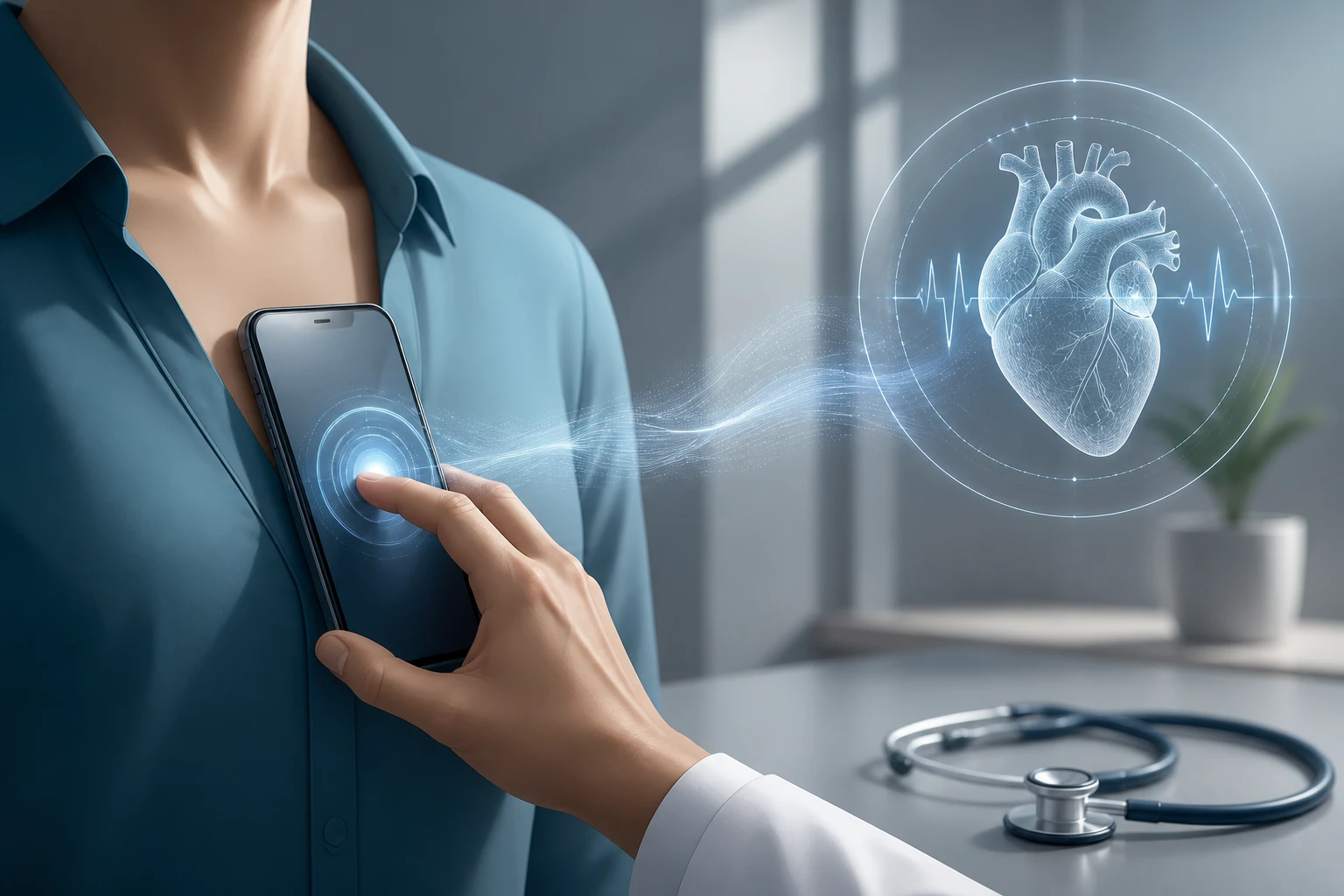
Picture this: You're at home at 2 AM, feeling chest pains and shortness of breath. Instead of panicking or rushing to an expensive emergency room, you simply open an app on your smartphone, place it on your chest, and within minutes receive a preliminary diagnosis that helps you decide your next move. This isn't science fiction anymore—it's happening right now across India and the world.
AI-powered health apps are transforming smartphones into sophisticated medical diagnostic tools, capable of detecting everything from heart murmurs to respiratory infections using just your phone's camera, microphone, and sensors. For young working professionals juggling tight budgets and demanding schedules, this technology promises to make healthcare as accessible as ordering food online. But as with any revolutionary change, it comes with both remarkable opportunities and significant questions about accuracy, regulation, and our readiness to trust machines with our most precious asset—our health.
The Problem
India faces a staggering healthcare crisis that hits young professionals particularly hard. The country has just 0.65 doctors per 1,000 people—far below the WHO's recommended ratio of 1:1,000. For working professionals aged 20-40, this translates into long waiting times, expensive consultations, and often delaying medical care until problems become serious.
Think of it like this: if healthcare were a restaurant, India would have one waiter serving 1,500 customers. The result? Over 600 million Indians lack access to adequate healthcare, particularly in tier-2 and tier-3 cities where many young professionals are building their careers.
The economic burden is equally crushing. A single diagnostic test can cost anywhere from ₹500 to ₹5,000, and that's before you even see a doctor. For someone earning ₹30,000-50,000 per month, routine health monitoring becomes a luxury rather than a necessity. Traditional diagnostic methods require expensive equipment, trained technicians, and infrastructure that simply doesn't exist in many parts of the country where young professionals work and live.
Analysis
The smartphone revolution is creating an unprecedented opportunity to democratize healthcare. Consider the economic implications: AI diagnostic apps can potentially reduce the cost of basic health screening from thousands of rupees to mere hundreds, while delivering results in minutes rather than days.
From a business perspective, this represents a massive market opportunity. India's digital health market is projected to reach $50 billion by 2025, with AI diagnostics forming a significant chunk. For young professionals, this means access to healthcare tools that previous generations could never imagine—continuous health monitoring, early disease detection, and personalized health insights, all from a device that's already in their pocket.
However, the policy implications are complex. Unlike Western markets, India's regulatory framework for digital health is still evolving. The government's recent Digital Health Mission aims to create a unified health ecosystem, but questions remain about data privacy, diagnostic accuracy standards, and liability issues.
The social impact could be transformative. In rural areas where young professionals often work, these technologies could bridge the urban-rural healthcare divide. But there's also the risk of creating a two-tiered system where smartphone-savvy users get better healthcare access than others. The accuracy question is crucial—while AI can detect patterns humans might miss, false positives or negatives could lead to unnecessary anxiety or dangerous complacency.
Real-World Examples
Niramai Health Analytix, a Bangalore-based startup, has developed an AI-powered breast cancer screening solution using thermal imaging and smartphone cameras. Their technology achieves 87% accuracy compared to traditional mammography's 70%, and costs significantly less. Young women professionals, who often skip regular screenings due to cost and inconvenience, can now get checked regularly.
SigTuple is revolutionizing diagnostic pathology with AI that can analyze blood tests, urine samples, and other diagnostic images through smartphone-compatible devices. Their technology is already deployed in over 500 healthcare facilities across India, helping young professionals in smaller cities access the same quality diagnostics available in metro hospitals.
Internationally, Eko Health has created smartphone attachments that turn phones into clinical-grade stethoscopes, capable of detecting heart murmurs and arrhythmias with 95% accuracy. Meanwhile, apps like Ada Health use symptom-checking algorithms trained on millions of medical cases to provide preliminary diagnoses.
Google's AI can now detect diabetic retinopathy through smartphone photos with accuracy matching specialist ophthalmologists. For young professionals with diabetes—a growing concern in India's urban workforce—this means regular eye screenings without expensive specialist visits.
The Challenge
The path isn't straightforward. Regulatory approval for AI medical devices involves complex clinical trials and safety validations that can take years. Unlike consumer apps, medical diagnostic tools must meet strict accuracy and safety standards before deployment.
Data privacy concerns are particularly acute in healthcare. Your medical data is infinitely more sensitive than your shopping preferences, yet many health apps lack robust security measures. The liability question looms large: who's responsible when an AI misdiagnoses a condition—the app developer, the phone manufacturer, or the healthcare provider?
Future Implications
For young working professionals, this technology could fundamentally change healthcare from a reactive service to a proactive partnership. Imagine continuous monitoring that alerts you to potential health issues before symptoms appear, or personalized health recommendations based on your lifestyle, work patterns, and genetic predispositions.
The economic implications extend beyond individual savings. Companies might integrate these technologies into employee wellness programs, potentially reducing healthcare insurance costs and sick leave. Startups and established tech companies are racing to capture this market, potentially creating thousands of high-skilled jobs in the health-tech sector.
However, success will depend on building trust through transparent algorithms, robust clinical validation, and clear regulatory frameworks. The technology also needs to account for India's diverse population—AI trained primarily on Western datasets might not work accurately for Indian patients.
Looking Ahead
The convergence of AI, smartphones, and healthcare represents one of the most significant technological shifts of our generation. For young professionals, the question isn't whether this technology will transform healthcare, but how quickly they'll adapt to a world where their phone becomes their first healthcare provider.
The real challenge lies in balancing innovation with safety, accessibility with accuracy, and technology with human judgment. Are we ready to trust our smartphones with our health, or will we always need that human touch in healthcare?