

Overview
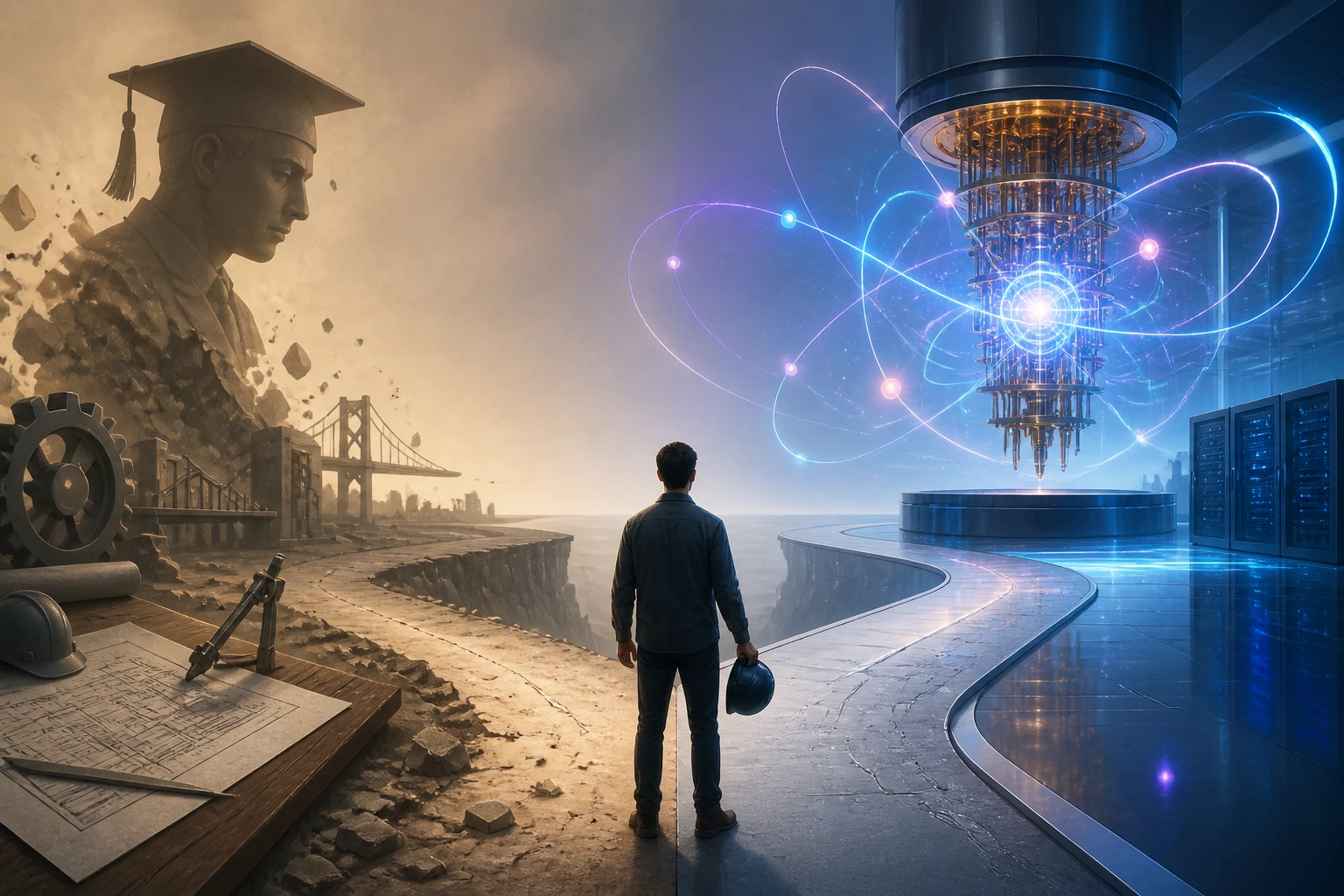
Picture this: You're a 32-year-old mechanical engineer, finally comfortable in your career. You've mastered CAD software, understand finite element analysis, and can optimize designs that would have taken your predecessors months to calculate. Then your colleague mentions that Google's quantum computer just solved a problem in 200 seconds that would take classical computers 10,000 years. Suddenly, you're wondering if your hard-earned engineering degree might become as relevant as a typewriter repair certification.
This isn't just tech anxiety—it's a legitimate concern rippling through engineering communities worldwide. Quantum computing promises to revolutionize how we approach complex calculations, simulations, and optimizations that form the backbone of modern engineering. But does this mean your engineering expertise has an expiration date of 2030? The answer is more nuanced than the headline suggests, and understanding it could determine whether you're prepared for the next decade or blindsided by it.
The Problem Defined
Quantum computing operates on fundamentally different principles than the computers engineers use today. Think of classical computers like a library where you must read every book one by one to find information. Quantum computers, however, can read multiple books simultaneously, exploring countless possibilities at once through quantum superposition and entanglement.
This capability directly impacts engineering's computational challenges. Traditional engineering relies heavily on iterative calculations—running thousands of simulations to optimize a bridge design, testing millions of material combinations for aerospace applications, or modeling complex fluid dynamics. These processes often take weeks or months, even with powerful classical computers.
IBM reports that quantum computers could eventually tackle optimization problems 1,000 times faster than classical systems for specific applications. McKinsey estimates the quantum computing market will reach $850 billion by 2040, with engineering applications representing a significant portion.
The concern isn't unfounded. Engineering disciplines most vulnerable include structural optimization, materials science, chemical process engineering, and aerodynamics—fields where complex mathematical modeling dominates daily work. When quantum computers can instantly solve what currently requires specialized engineering knowledge and weeks of computation, the value proposition of traditional engineering skills faces scrutiny.
However, the timeline matters crucially. Current quantum computers are "noisy intermediate-scale quantum" (NISQ) devices—powerful but limited, requiring extreme cooling and prone to errors. The quantum computers capable of replacing engineering workflows don't exist yet, and their development faces significant technical hurdles that make 2030 an ambitious target for widespread disruption.
Analysis
The quantum computing revolution presents three distinct implications for engineering professionals, each operating on different timelines and requiring different responses.
From an economic perspective, quantum computing creates both threats and opportunities. Consulting firm Roland Berger projects that 60% of current engineering simulation work could eventually be automated or dramatically accelerated by quantum systems. This suggests significant job displacement—but not necessarily job elimination. Instead, it points toward skill evolution. Engineers who understand quantum computing applications will become more valuable, while those who resist adaptation may find themselves marginalized.
The policy landscape complicates this transition. Governments worldwide recognize quantum computing's strategic importance, with the U.S. investing $1.2 billion in quantum research through the National Quantum Initiative, while China reportedly spends $25 billion annually. This governmental focus accelerates development but also creates regulatory uncertainty around quantum applications in engineering, particularly in sensitive sectors like defense and infrastructure.
Business implications reveal the real timeline. Companies need engineers who can bridge quantum capabilities with practical applications. This creates new roles: quantum application engineers, hybrid system designers, and quantum-classical interface specialists. Rather than replacing traditional engineers, quantum computing demands engineers who understand both domains.
The skills shift resembles the CAD revolution of the 1980s. Hand-drafted blueprints didn't eliminate mechanical engineers—they eliminated mechanical engineers who couldn't adapt to CAD systems. Similarly, quantum computing won't obsolete engineering degrees but will obsolete engineers who don't evolve their skill sets.
Industry-specific impacts vary dramatically. Chemical engineers working on molecular modeling face more immediate disruption than civil engineers designing buildings. Aerospace engineers optimizing complex systems will see quantum applications sooner than environmental engineers managing water treatment systems. Understanding your discipline's quantum timeline determines your preparation urgency.
Real-World Examples
Volkswagen demonstrates quantum computing's current engineering applications. Their partnership with Google uses quantum computers to optimize traffic flow and improve battery chemistry for electric vehicles. Importantly, this doesn't replace their engineers—it enhances their capabilities, allowing them to explore solutions previously computationally impossible.
Boeing takes a different approach, investing in quantum research for materials discovery and aerodynamic optimization. Their quantum computing team includes traditional aerospace engineers who've learned quantum principles, not quantum physicists trying to understand aviation. This hybrid approach suggests the future belongs to engineers who expand their toolkit rather than quantum specialists replacing engineers.
Biogen, the pharmaceutical company, uses quantum-inspired algorithms for drug discovery—work traditionally done by chemical engineers. However, their quantum projects require more engineering expertise, not less. Engineers must understand molecular interactions, regulatory requirements, and manufacturing constraints that quantum computers can't inherently comprehend.
Dr. Stefan Woerner, a quantum computing researcher at IBM, notes that "quantum computers are tools that enhance human expertise rather than replace it." His team consistently emphasizes that quantum applications require deep domain knowledge—exactly what experienced engineers provide.
These examples reveal a pattern: quantum computing amplifies engineering capabilities rather than replacing them. Companies need engineers who understand both their technical domains and quantum possibilities, creating premium career opportunities for those who invest in learning.
The Challenge
The path from current quantum computers to engineering job displacement faces several formidable obstacles that make 2030 predictions premature.
Technical challenges remain substantial. Current quantum computers require temperatures colder than outer space and are incredibly error-prone. IBM's most advanced quantum computer achieves only 99.5% gate fidelity, meaning complex engineering calculations accumulate significant errors. Reaching the reliability standards engineering applications demand requires breakthrough advances in quantum error correction—technology that remains largely theoretical.
Integration complexity presents another hurdle. Engineering workflows involve dozens of software systems, regulatory databases, manufacturing constraints, and real-world testing requirements. Quantum computers excel at specific computational tasks but can't replace the integrated problem-solving approach engineering requires. Building quantum-classical hybrid systems that maintain engineering workflow integrity represents a massive systems integration challenge.
Skills development creates a chicken-and-egg problem. Universities struggle to teach quantum engineering applications because practical quantum computers remain inaccessible to most institutions. Meanwhile, working engineers lack time for quantum education while managing current responsibilities. This skills gap slows quantum adoption and extends the timeline for engineering disruption.
Economic realities also matter. Even if quantum computers achieve engineering-relevant capabilities by 2030, their cost and complexity will limit initial adoption to large corporations and specialized applications. Smaller engineering firms and routine engineering work will continue relying on classical computers for years afterward.
Future Implications
Rather than making engineering degrees obsolete, quantum computing is more likely to stratify the engineering profession. Engineers who understand quantum applications will command premium salaries and work on cutting-edge projects. Those who don't will find themselves handling increasingly routine work as quantum-enhanced engineers tackle complex challenges.
Educational institutions must adapt quickly. Engineering curricula need quantum computing fundamentals, not as replacement content but as additional competency areas. Schools that integrate quantum concepts early will produce more valuable graduates. MIT and Stanford already offer quantum engineering courses, suggesting the direction forward.
Professional development becomes crucial for working engineers. Rather than learning quantum physics, engineers need quantum literacy—understanding what quantum computers can and cannot do, how to formulate engineering problems for quantum systems, and how to interpret quantum-enhanced results. This represents continuous learning rather than career reinvention.
The timeline matters less than the trend. Whether quantum computing significantly impacts engineering by 2030, 2035, or 2040, the direction is clear. Engineers who start learning now position themselves advantageously, while those who wait may find themselves scrambling to catch up when quantum applications mature.
Geographic implications also emerge. Regions investing heavily in quantum research—California's Silicon Valley, Boston's tech corridor, China's quantum initiatives—will likely see quantum engineering applications first, creating location-based career advantages.
Looking Ahead
Your engineering degree won't become obsolete by 2030, but your approach to engineering might. The real question isn't whether quantum computing will replace engineers—it's whether you'll be the engineer using quantum tools to solve previously impossible problems, or the one watching from the sidelines. The choice, and the timeline to make it, remains yours.