

Overview
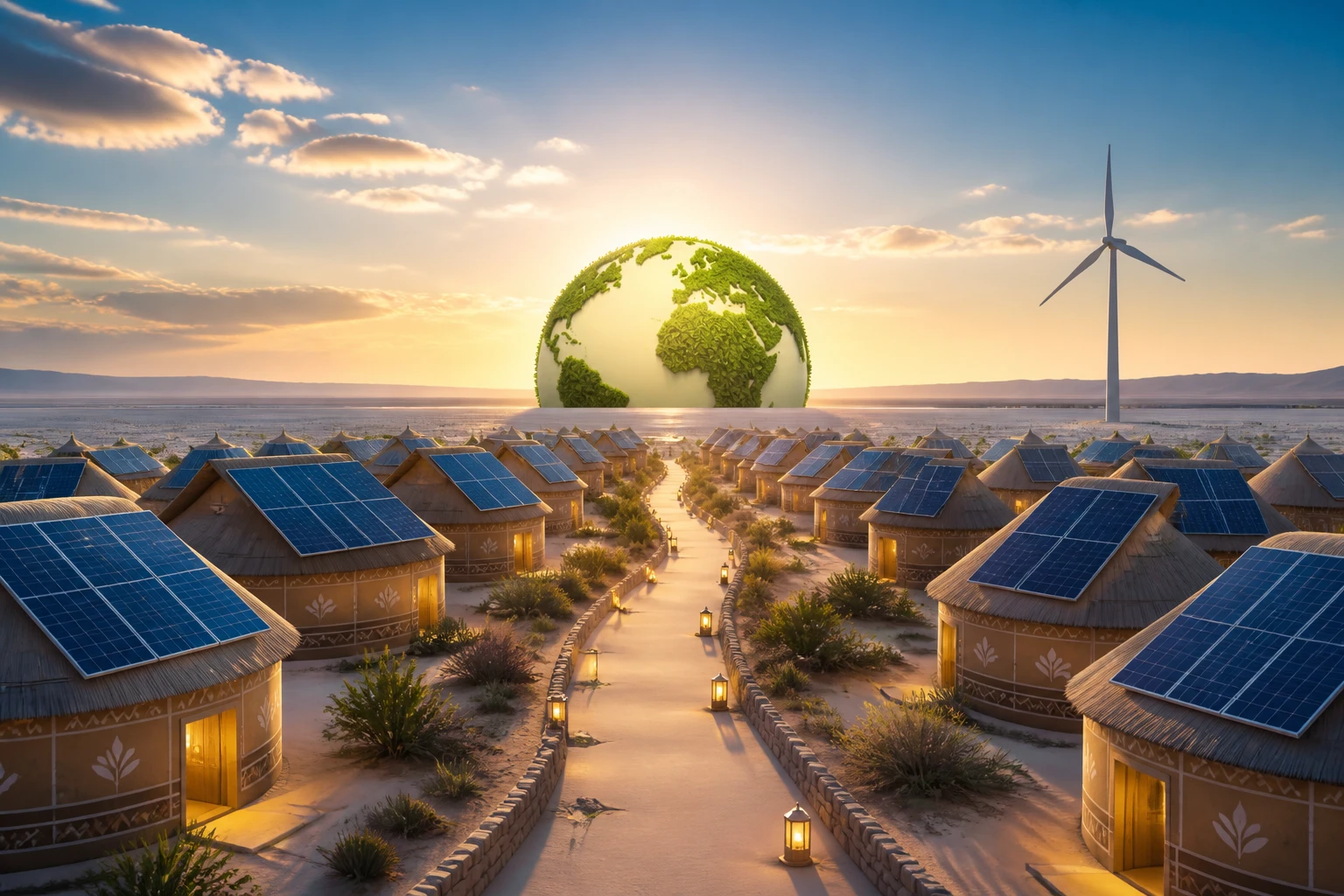
Picture this: a small village in the middle of Gujarat's desert landscape where every single bulb, fan, and electrical appliance runs entirely on solar power. Sound like a futuristic dream? Well, Dhordo village in Kutch district has just turned this into reality. This remote settlement, home to barely 2,500 people, has achieved something that entire metropolitan cities are still struggling with – becoming 100% solar-powered. What makes this even more remarkable is that Dhordo was already making headlines as the United Nations World Tourism Organisation's 'Best Tourism Village' for 2023, and now it's adding another feather to its cap as a sustainability pioneer.
Here's What's Happening
Dhordo has officially transitioned to complete solar dependency, making it one of India's first fully solar-powered villages. The transformation involved installing solar panels across 850 households and all community infrastructure, generating enough clean energy to meet the village's entire electricity demand.
This isn't just about replacing traditional power sources – it's a comprehensive energy ecosystem. The village now operates 24/7 on renewable energy, with excess power being stored in advanced battery systems and surplus energy being fed back into the state grid. The project, implemented with support from both Gujarat government initiatives and private partnerships, represents an investment of approximately ₹12 crores. What's particularly impressive is that this transition happened alongside Dhordo's tourism boom, where the village hosts thousands of visitors during the annual Rann Utsav festival.
Let's Break This Down
The numbers tell a compelling story. Dhordo's solar infrastructure generates 2.5 MW of clean energy daily, which is actually 20% more than the village's current consumption. To put this in perspective, that's equivalent to preventing 1,800 tons of CO2 emissions annually – the same impact as planting 75,000 trees every year.
But here's where it gets interesting: the economic model is surprisingly robust. Village households that previously spent an average of ₹800-1,200 monthly on electricity bills are now paying a fixed ₹350 monthly maintenance fee for unlimited solar power usage. Think of it like switching from pay-per-use mobile plans to unlimited data – except you're also helping save the planet.
The transformation wasn't without challenges. Sandstorms in the Kutch region posed a significant threat to solar panel efficiency, requiring specialized dust-resistant coating technology. Local Banni pastoralists initially worried about land usage conflicts, but the project cleverly integrated agro-voltaic systems – essentially allowing farming and grazing to continue beneath elevated solar panels.
The tourism angle adds another fascinating dimension. During peak Rann Utsav season, Dhordo's population swells to over 15,000 daily visitors. The solar infrastructure was designed to handle these surge demands, making it possibly the world's first tourism destination with dedicated renewable energy scaling.
The Bigger Picture
Dhordo's success represents more than just one village going green – it's a replicable model for India's 6.5 lakh villages. The Ministry of New and Renewable Energy is already studying Dhordo's framework for the national Solar Village Scheme, which aims to solarize 25,000 villages by 2030.
From a business perspective, this creates interesting opportunities for young professionals in renewable energy consulting, rural development, and sustainable tourism. Companies like Tata Power and Adani Green Energy are watching these micro-grid models closely, as they represent the future of distributed energy systems.
International observers are equally intrigued. European Union sustainability experts have visited Dhordo to understand how developing nations can leapfrog traditional energy infrastructure. For India's global positioning, Dhordo becomes a powerful case study in climate leadership at the upcoming COP29 discussions.
The village also demonstrates how heritage tourism and environmental sustainability aren't conflicting goals – they can be mutually reinforcing when planned intelligently.
What's Next?
Dhordo's success is already inspiring neighboring villages to explore similar transitions. Gujarat's government plans to replicate this model across 50 villages in the state by 2025, with potential for scaling nationwide.
For young Indians entering the workforce, this represents a massive green economy opportunity. The renewable energy sector is projected to create 1 crore jobs by 2030, with village-level projects like Dhordo driving significant demand for skilled professionals.
The bigger question isn't whether more villages will follow Dhordo's path – it's how quickly we can scale this model. As energy costs continue rising and climate concerns intensify, Dhordo might just be showing us the blueprint for India's energy-independent future, one village at a time.