

Overview
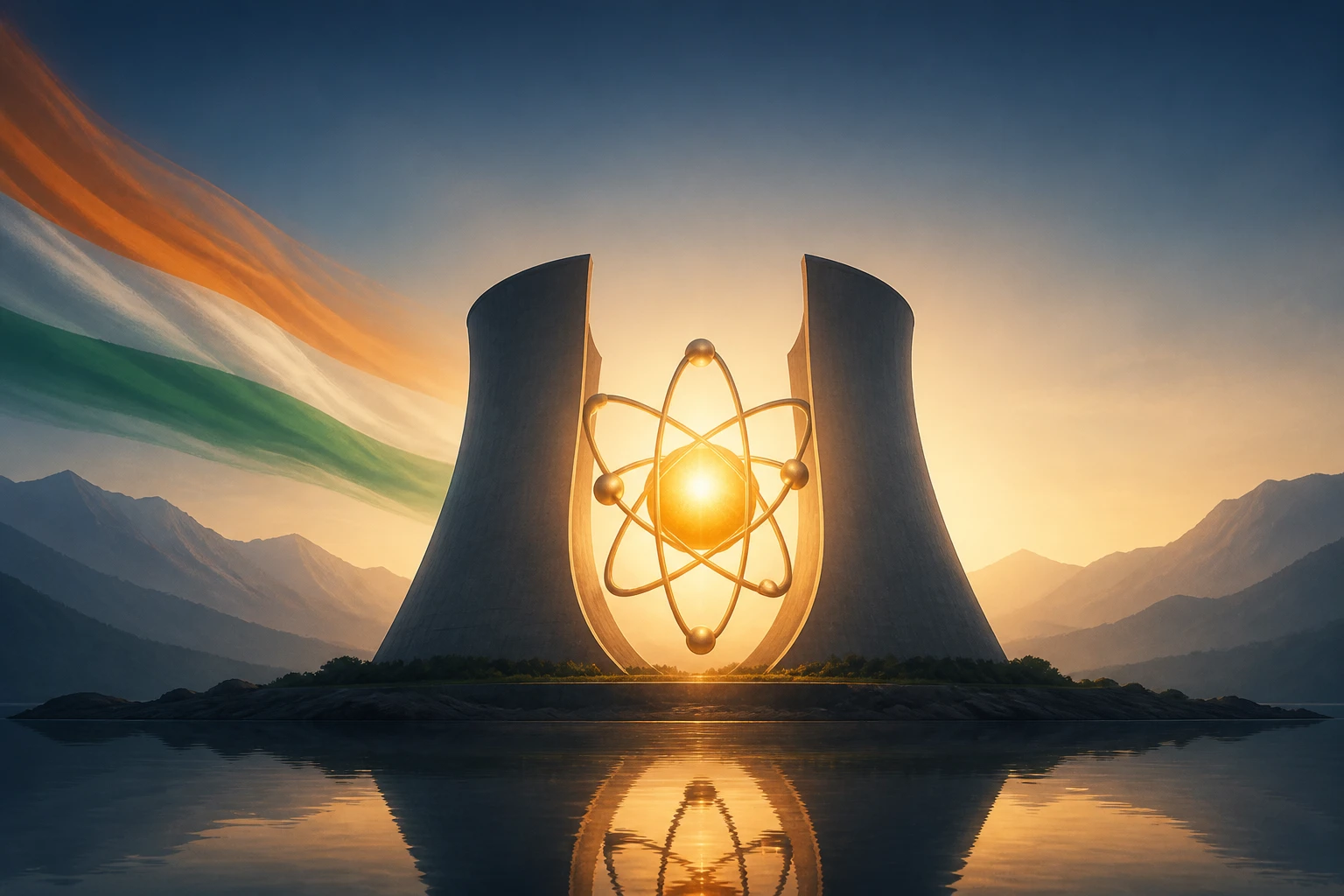
India just achieved something it's been working toward for over four decades. In April 2026, the Nuclear Power Corporation of India Limited (NPCIL) successfully brought its 500 MWe Prototype Fast Breeder Reactor (PFBR) to first criticality at Kalpakkam, Tamil Nadu. This isn't just another power plant going online—it's a reactor that can actually create more nuclear fuel than it consumes. Think of it as a perpetual motion machine for energy, except this one actually works. For a country that imports 85% of its crude oil and has limited uranium reserves, this breakthrough could fundamentally reshape India's energy independence story.
Here's What's Happening
The PFBR achieving criticality means the nuclear chain reaction is now self-sustaining and controllable. But here's what makes this special: unlike conventional reactors that use uranium-235 (which makes up less than 1% of natural uranium), fast breeder reactors can use uranium-238—the abundant stuff that usually gets discarded.
The reactor works by converting uranium-238 into plutonium-239, which then becomes fuel. In the process, it produces more fissile material than it started with. NPCIL estimates that while India's known uranium reserves would last only 40-50 years with conventional reactors, fast breeder technology could extend this to over 2,500 years. The plant will initially operate at 40% capacity for testing before ramping up to full commercial operation.
Let's Break This Down
To understand why this matters, imagine you have a small pile of rice that could magically grow into a larger pile while you're eating from it. That's essentially what a fast breeder reactor does with nuclear fuel.
India's nuclear journey has three distinct phases. Phase 1 uses natural uranium in pressurized heavy water reactors—we currently have 22 operational reactors generating about 7,000 MWe. Phase 2, which just began, involves fast breeder reactors that convert thorium into uranium-233. Phase 3 will use thorium-uranium fuel cycles exclusively. India holds roughly 25% of the world's thorium reserves, making this particularly strategic.
The economics are compelling too. While renewable energy dominates headlines with plummeting costs—solar tariffs in India have dropped to around ₹2.5 per unit—nuclear provides something solar can't: consistent baseload power regardless of weather conditions. The PFBR is designed to operate at over 85% capacity factor compared to solar's typical 20-25% in India.
Construction began in 2004 with an initial budget of ₹3,492 crores, though final costs reached approximately ₹6,000 crores. The delays were largely due to the complex engineering challenges—fast breeder reactors operate at much higher temperatures and use liquid sodium as coolant instead of water, making them technically demanding but more efficient.
The Bigger Picture
For India's energy security, this represents a potential game-changer. Currently, nuclear power contributes just 3% to India's electricity mix, compared to 70% from coal. The government aims to increase nuclear capacity to 22,480 MWe by 2031, and fast breeder technology could accelerate this timeline significantly.
From an environmental perspective, this comes at a crucial time. While India pushes aggressively on renewables—targeting 500 GW of non-fossil capacity by 2030—the intermittency challenge remains unsolved at scale. Battery storage costs are falling but remain expensive for long-duration storage. Nuclear provides clean, reliable baseload power that complements renewables rather than competing with them.
International observers are watching closely. China and Russia have their own fast breeder programs, while countries like Japan have faced setbacks. India's success could position it as a leader in advanced nuclear technology, potentially opening export opportunities for reactor technology and fuel services.
What's Next?
The PFBR will undergo extensive testing over the next 12-18 months before reaching full commercial operation. NPCIL is already planning two more 600 MWe fast breeder reactors at the same site, with construction expected to begin by 2027.
For India's energy future, this breakthrough offers a third path alongside renewables and fossil fuels. While solar and wind will likely dominate capacity additions in the coming decade, fast breeder reactors could provide the clean, reliable baseload power that makes a fully decarbonized grid possible. The real test will be whether India can scale this technology quickly and cost-effectively enough to make a meaningful dent in its energy mix before 2040.