

Overview
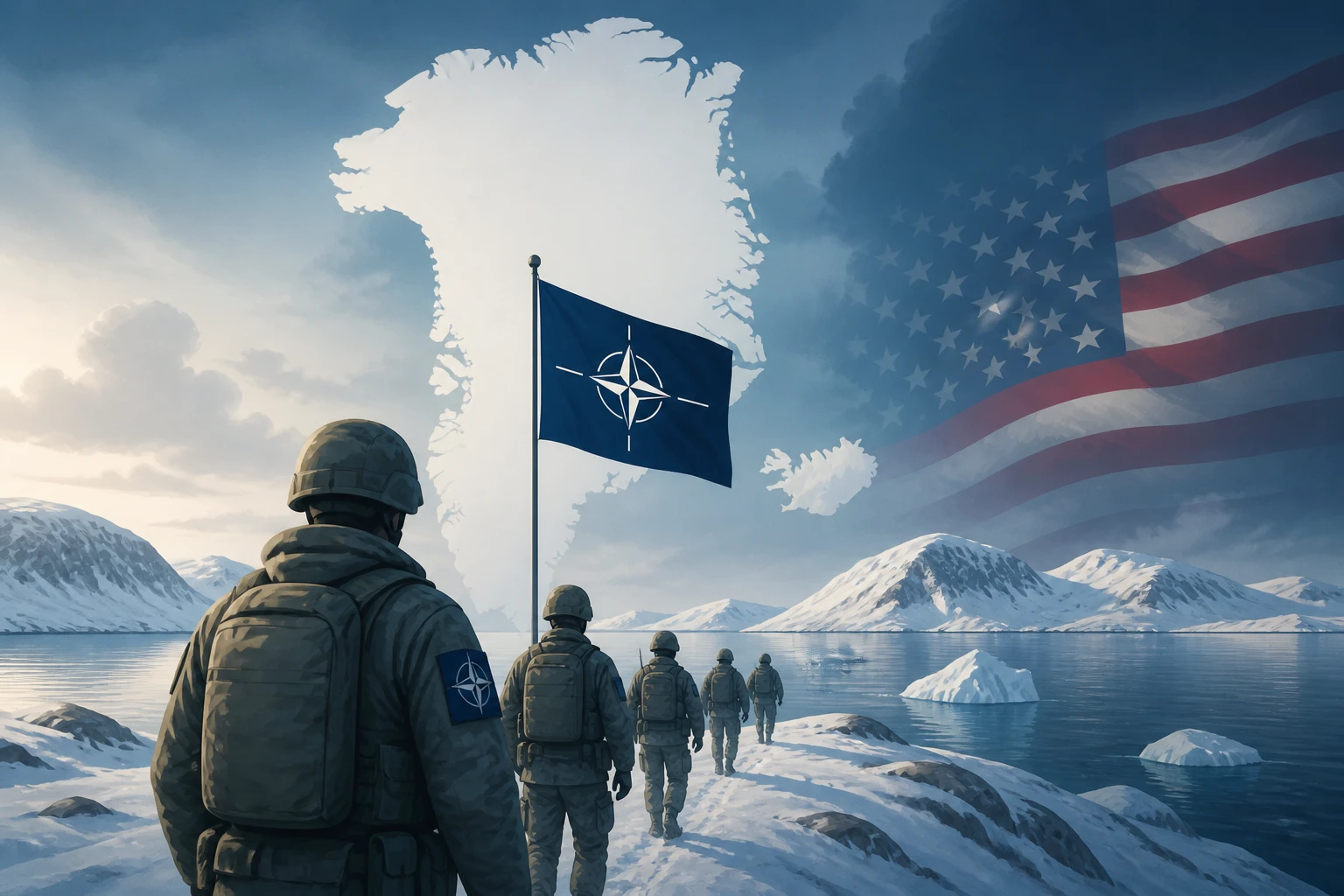
Denmark's autonomous territory of Greenland has become the unexpected center of a growing diplomatic crisis as President Trump renews his push for US acquisition of the Arctic island. What started as controversial statements has now escalated into military posturing, with Germany, Sweden, and Norway deploying troops to Greenland this week. Denmark's Foreign Minister has declared a "fundamental disagreement" with the US position following tense discussions with Vice President Vance. This Arctic standoff represents more than territorial ambition—it's reshaping NATO unity and Arctic geopolitics in ways that could impact global trade routes worth $1 trillion annually.
Here's What's Happening
The situation escalated rapidly over the past week. Germany joined Sweden and Norway in placing military personnel in Greenland, marking an unprecedented show of European solidarity with Denmark. These deployments come as Trump has refused to rule out using military force to acquire the territory, despite Greenland's population of 56,000 people consistently opposing any transfer of sovereignty.
Denmark's Foreign Minister Lars Løkke Rasmussen emerged from meetings with Vice President Vance stating there was a "fundamental disagreement" between the two nations. The Danish government has made clear that Greenland is not for sale, echoing the position taken during Trump's first presidency when he initially floated the acquisition idea. Greenland's Prime Minister has also reiterated the territory's commitment to pursuing independence from Denmark rather than joining the United States.
Let's Break This Down
Think of this like a neighborhood dispute that's spiraled into a block-wide confrontation. Trump's interest in Greenland isn't purely whimsical—the territory holds 25% of the world's rare earth minerals and sits along crucial Arctic shipping routes that could become increasingly valuable as climate change opens new passages.
The strategic importance is immense. Greenland hosts Thule Air Base, one of the US's most northern military installations, which has operated since 1943 under agreements with Denmark. The base provides early warning systems and supports satellite operations crucial for North American defense. However, Trump's approach has fractured traditional NATO cooperation in ways that benefits like China and Russia.
The economic stakes are staggering. Arctic shipping routes could reduce travel time between Asia and Europe by up to 40%, potentially saving the global economy billions in transportation costs. Greenland's mineral wealth includes deposits of lithium, cobalt, and other materials essential for renewable energy infrastructure. But here's the catch—most Greenlanders want independence, not a change of colonial masters.
European NATO members are viewing this as a test of alliance solidarity. By deploying troops, Germany, Sweden, and Norway are essentially creating a tripwire that would make any US military action extraordinarily complicated. It's diplomatic chess at the highest level.
The Bigger Picture
This crisis reveals fundamental tensions within NATO about sovereignty and alliance obligations. European members are increasingly assertive about protecting each other from external pressure—even when that pressure comes from their largest ally. Russia and China are watching carefully, as any fracture in NATO unity serves their strategic interests.
For working professionals, particularly those in international business, logistics, and energy sectors, this standoff highlights the growing importance of Arctic geopolitics. Companies with European operations may need to navigate new political realities if US-European relations deteriorate further over this issue.
The situation also demonstrates how climate change is reshaping global politics. As Arctic ice melts, previously inaccessible resources and shipping routes become flashpoints for international competition. India, with its growing Arctic Council observer status and expanding shipping interests, will likely need to navigate these new geopolitical currents carefully.
What's Next?
The immediate future depends largely on how far Trump is willing to push this issue and whether European unity holds. NATO's Article 5 mutual defense clause could theoretically apply if any military action were taken against Denmark, creating an unprecedented alliance crisis.
Watch for Greenland's own political evolution—the territory is moving toward independence, which could change the entire dynamic. China and Russia will likely attempt to exploit any US-European divisions, potentially offering Greenland alternative partnerships.
For global markets, Arctic shipping route development will accelerate regardless of this political drama, creating new opportunities and challenges for international trade that professionals across sectors should monitor closely.