

Overview
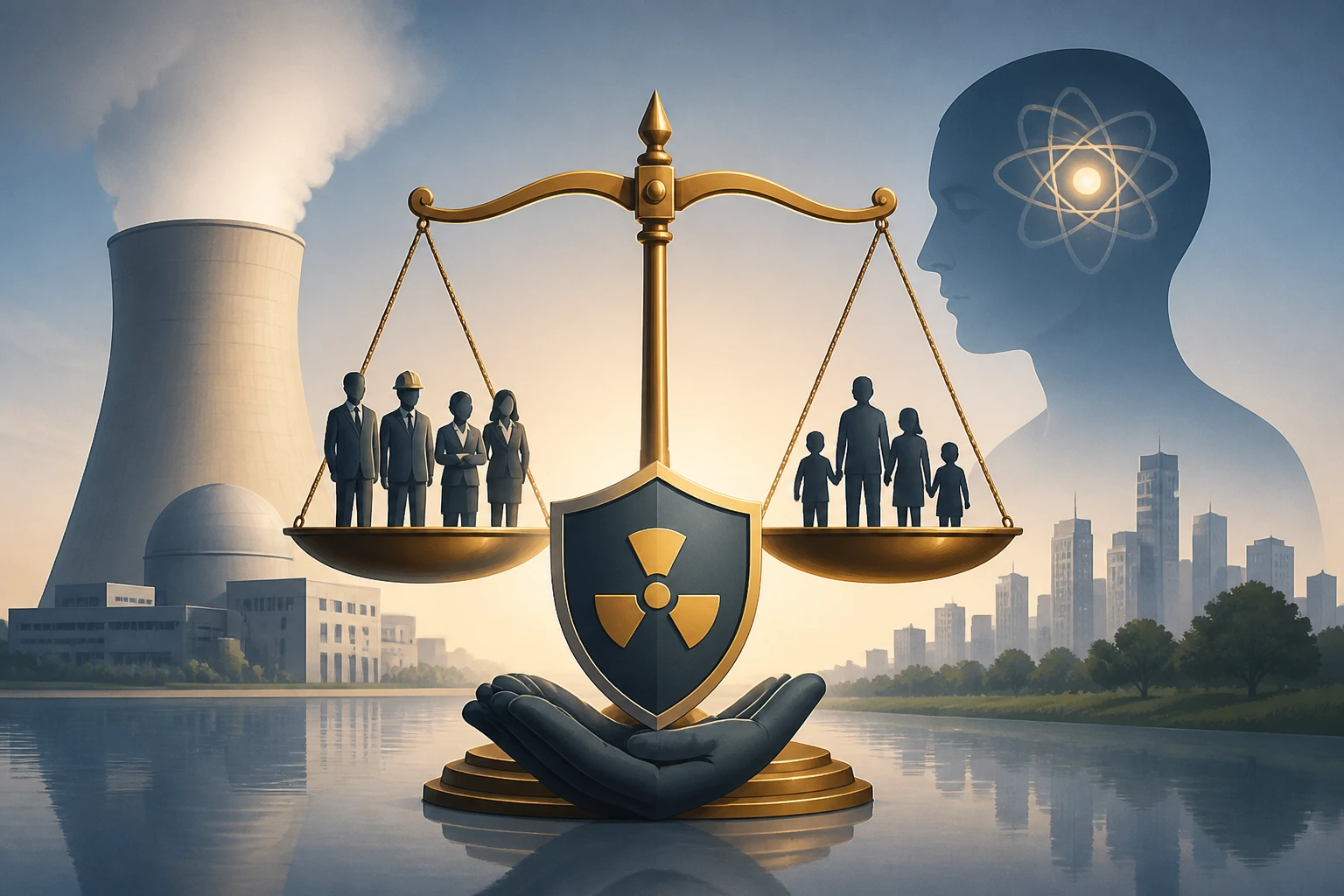
India's nuclear energy landscape just got a major overhaul. The Sustainable Harnessing and Advancement of Nuclear Energy for Transforming India (SHANTI) Act, 2025 has fundamentally restructured who pays when things go wrong at nuclear facilities. The new law completely shields equipment suppliers from liability while capping operator responsibility at ₹3,000 crores. This represents a dramatic shift from India's previous nuclear liability framework, which had been a contentious issue in international nuclear commerce for over a decade. The changes aim to attract foreign investment in India's nuclear sector, but they've also sparked debates about accountability and compensation adequacy.
Here's What's Happening
The SHANTI Act replaces India's Civil Liability for Nuclear Damage Act of 2010, which had created significant friction with international nuclear suppliers. Under the old law, suppliers could be held liable for accidents caused by defective equipment, creating what many called a "supplier liability" regime that deterred foreign companies.
The new framework operates on three key principles: complete supplier immunity, capped operator liability at ₹3,000 crores, and streamlined compensation mechanisms. Nuclear plant operators—primarily Nuclear Power Corporation of India Limited (NPCIL)—now bear sole responsibility for accidents, regardless of whether faulty equipment or human error caused the incident. Foreign suppliers like Westinghouse, Areva, and Rosatom can now participate in India's nuclear market without fearing massive liability exposure.
Let's Break This Down
Think of nuclear liability like car insurance, but with much higher stakes. Previously, if a nuclear accident occurred due to a faulty reactor component, both the plant operator and the equipment manufacturer could be held responsible—like holding both the driver and car manufacturer liable for an accident caused by brake failure.
The SHANTI Act changes this equation entirely. Now, only the plant operator faces liability, regardless of the accident's root cause. This shift addresses a major sticking point that had limited India's nuclear partnerships since 2010.
The ₹3,000 crore liability cap might sound substantial, but context matters. The Fukushima disaster in Japan has cost over $200 billion in cleanup and compensation. Even the 1979 Three Mile Island incident in the US resulted in costs exceeding $1 billion in today's terms. India's cap translates to roughly $360 million—potentially insufficient for major accidents affecting large populations.
The law establishes a two-tier compensation structure: the operator pays up to ₹3,000 crores, after which the government bears additional costs. This mirrors systems in countries like France and Japan, where state backing provides the ultimate safety net.
For India's nuclear ambitions, this represents a calculated trade-off. The country aims to increase nuclear power capacity from the current 7,000 MW to 22,480 MW by 2031. Achieving this requires significant foreign technology and investment, which the previous liability regime had effectively blocked.
The Bigger Picture
Different stakeholders view the SHANTI Act through vastly different lenses. International nuclear suppliers see it as removing a major barrier to Indian market entry. Companies that had been hesitant to engage with India's nuclear program can now participate without fearing unlimited liability exposure.
Environmental groups and nuclear safety advocates express concern about accountability dilution. They argue that removing supplier liability could reduce incentives for rigorous safety standards in equipment design and manufacturing. The ₹3,000 crore cap also raises questions about adequate victim compensation in densely populated areas surrounding many Indian nuclear facilities.
From an economic development perspective, the law aligns with India's broader push for foreign direct investment in critical infrastructure sectors. The government views this as essential for achieving its carbon neutrality goals by 2070, where nuclear power plays a crucial role alongside renewables.
Legal experts note that the Act brings India closer to international nuclear liability conventions, potentially facilitating smoother technology transfer agreements and joint ventures with nuclear-advanced nations.
What's Next?
The SHANTI Act's real test lies in implementation and market response. International suppliers will likely take time to assess the new framework before committing to major projects. Early indicators suggest increased interest from global nuclear companies, but actual investment flows will determine the law's success.
Future nuclear projects will serve as case studies for this liability model's effectiveness. The balance between attracting investment and ensuring adequate safety oversight will require careful monitoring. As India expands its nuclear footprint, the adequacy of the ₹3,000 crore cap may face scrutiny, potentially leading to future adjustments based on global nuclear cost trends and domestic compensation needs.