

AI Has Left the Building
For most of the past decade, artificial intelligence has lived inside screens. It answered your questions, wrote your emails, summarised your contracts. Useful, certainly — but fundamentally passive. It waited for you to talk to it.
That era may now be ending.
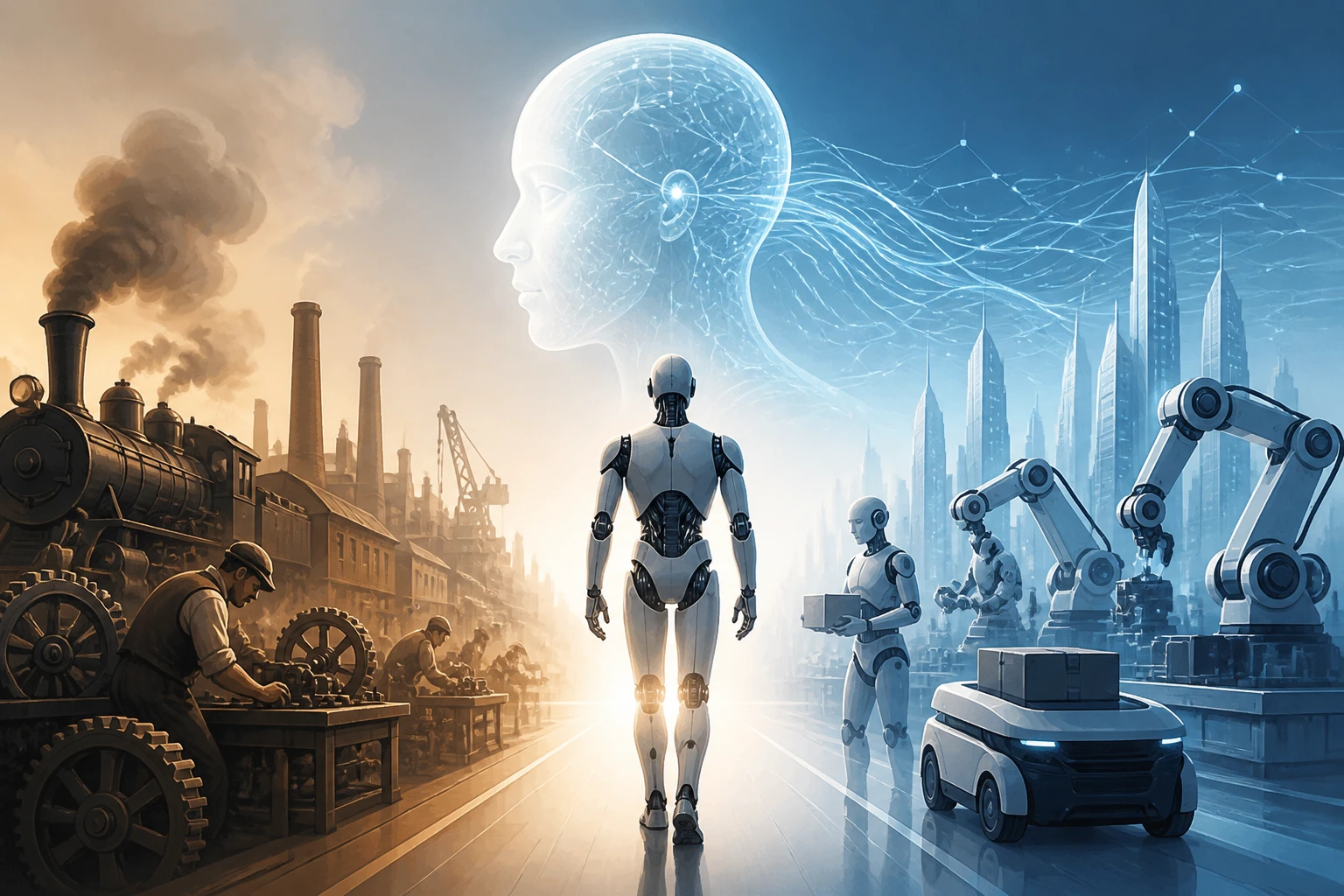
Embodied AI is rapidly moving from research environments into the physical world. Autonomous vehicles, mobile robots, warehouse systems, industrial machines, and assistive platforms are increasingly expected to perceive their surroundings, make decisions, and act safely alongside people. The shift sounds incremental. It isn't. When AI moves from generating text to operating a forklift, an operating theatre robot, or a self-driving truck on a highway, the consequences of failure change entirely.
This was the central argument at the SAE World Congress 2026, held in Detroit in April. The session, titled Embodied AI in Action, brought together experts from automotive, robotics, artificial intelligence, and safety engineering. The discussion highlighted the need to treat embodied AI as a systems challenge requiring engineering rigour, lifecycle governance, human-centred design, and evolving standards.
The Deployment Wall
Here is the uncomfortable truth the SAE panel kept returning to: the intelligence problem is largely solved. The deployment problem is not.
A consistent message emerged from panellists with very different backgrounds — embodied AI is advancing quickly, but successful deployment requires more than technical capability alone. It requires disciplined engineering, operational readiness, and public confidence.
One specific tension stood out. Panellists with AI and machine learning backgrounds stressed that model performance metrics alone are insufficient indicators of deployment readiness. A model may perform well in testing while still failing to generalise to rare scenarios, degraded sensors, novel environments, or unexpected user behaviour. This reinforces the need to evaluate complete system performance rather than isolated algorithm benchmarks.
Think of it this way: a chess engine that plays perfectly in a tournament but crashes when a player accidentally knocks over a piece is not ready for the real world. The real world always knocks over pieces.
From the automotive perspective, panellists noted that vehicles represent one of the most demanding environments for embodied AI. Roadways are open systems with constantly changing actors, weather conditions, and infrastructure. The same logic extends to factory floors, hospitals, and logistics warehouses — anywhere that embodied AI is being rapidly deployed.
Not a One-Time Launch
The SAE panel pushed back against a familiar tech-industry instinct: ship fast, patch later. Panellists consistently cautioned against viewing AI deployment as a one-time product release. Embodied AI systems require ongoing management across the lifecycle, including data updates, software changes, performance monitoring, maintenance, and incident response. Organisations should establish ownership for post-deployment oversight early in the programme rather than after launch.
This is a significant governance ask. Most organisations building with AI today are structured for software releases, not for managing physical systems that learn, adapt, and occasionally fail in ways their designers did not anticipate. The industry, regulatory bodies, and potential adopters are working to break down barriers that hinder deployment at scale. As organisations overcome these challenges, AI-enabled robots will likely transition from niche to mainstream adoption.
Why This Matters for India
India is not a bystander in this shift. The country's manufacturing ambitions under schemes like PLI, its growing automation needs in logistics and agriculture, and its expanding engineering talent base all position it directly in the path of this transition.
Embodied AI systems are increasingly being embedded in safety-critical domains such as urban transportation, manufacturing floors, hospitals, and domestic environments. For a country still building out regulatory frameworks for even conventional AI, the arrival of AI that drives, lifts, and operates independently in public spaces will demand governance structures that simply do not yet exist.
The panel reached broad agreement that long-term success will depend not only on advances in AI capability, but equally on safe and trustworthy deployment. For India's policymakers and engineers, that sentence is both a warning and an opening. The nations that figure out safe deployment — not just clever algorithms — will shape what this technology becomes.
The robots are leaving the lab. The harder work has just begun.