

Overview
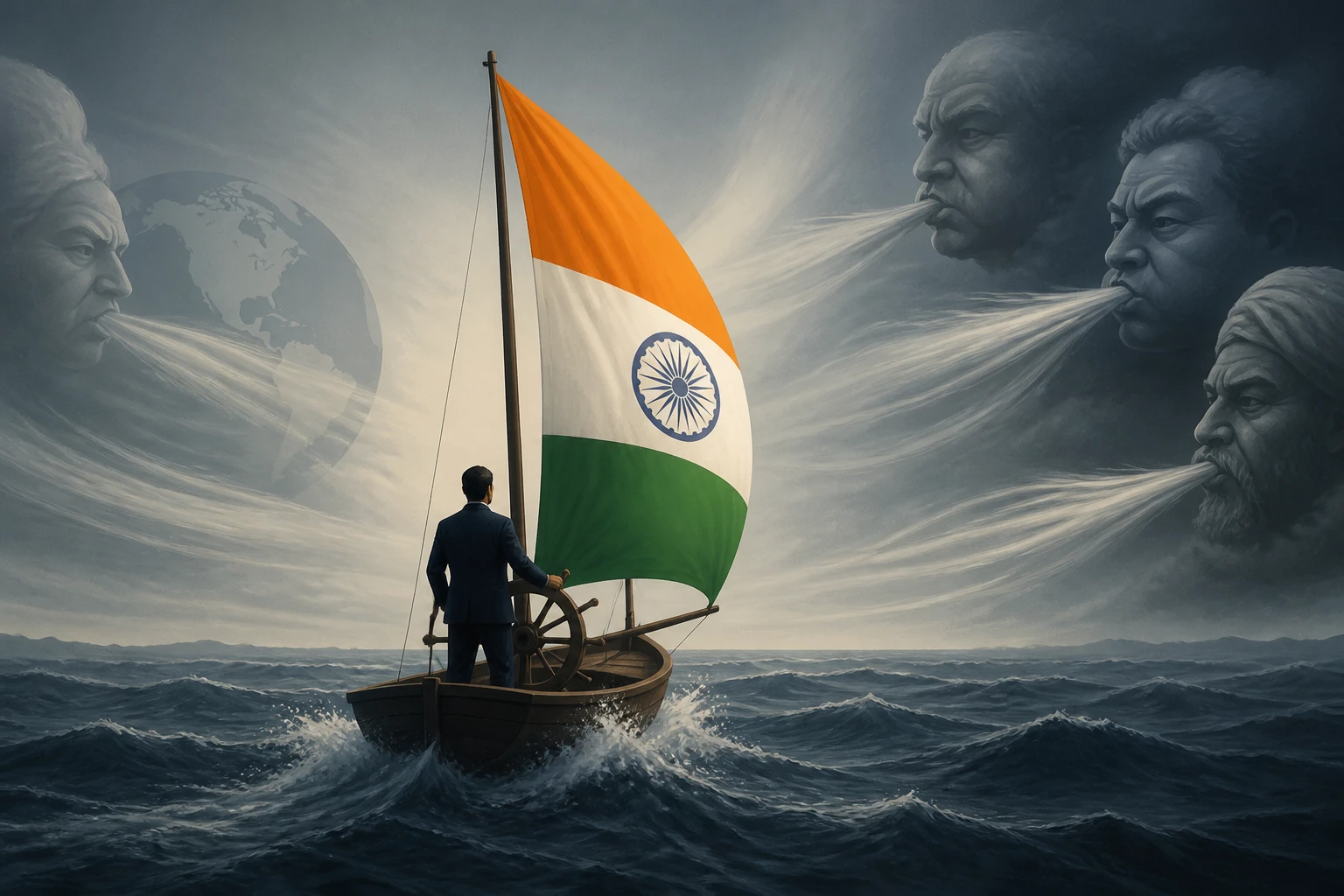
India's diplomatic calendar for 2026 looks increasingly complex as the country navigates a web of international challenges that seemed unthinkable just a few years ago. From Donald Trump's return to the White House promising aggressive trade policies to unprecedented turmoil in neighboring Bangladesh and Pakistan, India's foreign ministry is bracing for what could be its most testing year in recent memory. The $3.7 trillion economy that once seemed destined for smooth global integration now faces headwinds that could reshape its international relationships fundamentally.
Here's What's Happening
The diplomatic landscape shifted dramatically in 2025, catching even seasoned analysts off guard. Trump 2.0 has already signaled a tougher stance on trade, with proposed tariffs of 10-20% on all imports potentially hitting India's $78 billion export market to the US. Meanwhile, the H-1B visa program, which Indians secured 73% of approvals in 2024, faces renewed scrutiny.
Closer to home, Bangladesh's political upheaval following Sheikh Hasina's ouster has created a leadership vacuum, while Pakistan's economic crisis deepens with inflation hitting 29% in late 2025. These aren't isolated incidents but interconnected challenges that demand India's immediate attention while it simultaneously manages relationships with China, Russia, and European allies.
Let's Break This Down
Think of India's diplomatic position like managing a complex portfolio during market volatility – every move in one relationship affects the others.
The US-India relationship exemplifies this complexity. While strategic partnerships in defense and technology continue flourishing, economic friction is intensifying. Trump's "America First 2.0" agenda specifically targets countries with trade surpluses against the US. India's $35 billion trade surplus with America makes it a prime target. The proposed tariffs could impact key Indian exports including pharmaceuticals, textiles, and IT services.
Immigration adds another layer of complexity. With over 1.3 million Indians waiting in the US green card queue, any restrictions on H-1B visas or skilled worker programs directly affects India's most educated diaspora. The ripple effects reach Indian IT giants like TCS and Infosys, whose business models depend on seamless talent mobility.
The neighborhood presents equally daunting challenges. Bangladesh's interim government under Muhammad Yunus struggles with economic instability and rising extremism, potentially affecting the 4,000-kilometer border India shares with the country. Cross-border terrorism concerns are escalating, reminiscent of the pre-2009 period.
Pakistan's crisis runs deeper than economics. With the country seeking its 24th IMF bailout and facing political instability, the risks of state failure loom large. For India, this presents a paradox: a stable Pakistan might mean better bilateral relations, but current instability could spill over through terrorism or refugee influxes.
The Bigger Picture
These diplomatic headwinds reflect broader global realignments that extend beyond India's immediate concerns. The multipolar world order that India championed through forums like BRICS and G20 is becoming reality, but with unexpected complications.
For India's 400 million millennials and Gen Z, these developments carry profound implications. Career opportunities in the US could diminish if visa restrictions tighten. The tech sector, which employs 5 million people directly, faces potential disruption from both tariff barriers and immigration curbs.
Businesses are already recalibrating strategies. Indian pharmaceutical companies, which supply 40% of generic drugs to the US market, are exploring alternative markets in Europe and Latin America. Meanwhile, the government is accelerating domestic manufacturing through PLI schemes to reduce export dependence.
Regional instability affects different stakeholders differently. While security agencies worry about border management, businesses see opportunities in potentially redirected trade flows if traditional routes through Pakistan or Bangladesh become unreliable.
What's Next?
India's diplomatic strategy for 2026 will likely emphasize diversification – both in economic partnerships and security arrangements. The Quad partnership with US, Japan, and Australia provides one hedge, while deeper ties with ASEAN and Middle Eastern countries offer economic alternatives.
Success will depend on India's ability to compartmentalize relationships – maintaining strategic partnerships with the US while managing trade disputes, engaging pragmatically with neighborhood challenges while protecting national interests. The country's growing economic heft provides leverage, but navigating these headwinds will test the sophistication of Indian diplomacy like never before.
For young Indians, these challenges also represent opportunities to shape a more resilient, self-reliant nation that's better prepared for an unpredictable world.