

Overview
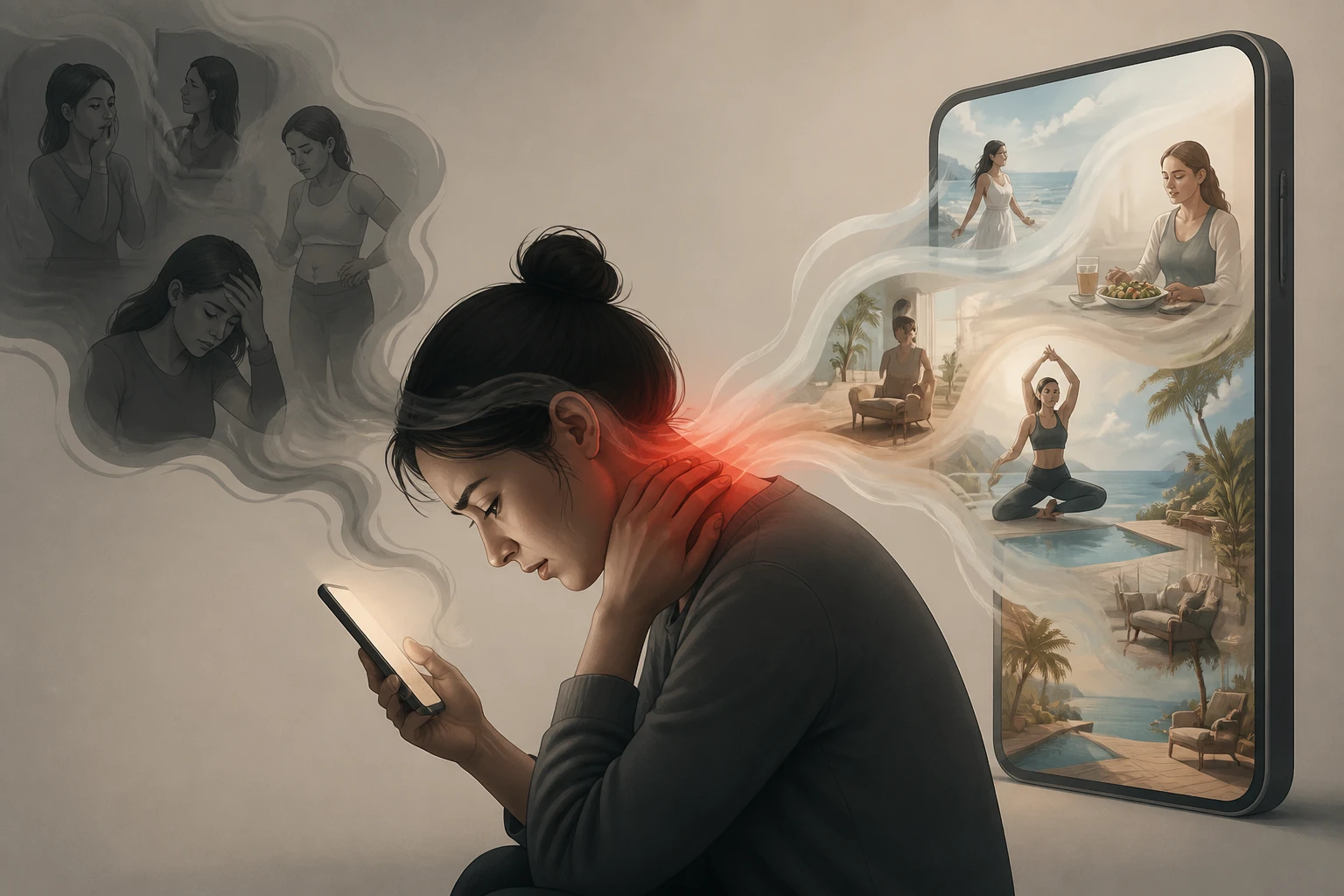
It's 11:47 PM. You're scrolling through Instagram after a long workday, promising yourself "just five more minutes" before bed. But instead of winding down, your heart starts racing. Your shoulders tense up. That familiar knot forms in your stomach as you watch yet another colleague's promotion announcement, another friend's perfect vacation, another influencer's flawless morning routine. You tell yourself it's just social media fatigue, but what if it's something more sinister? Recent research suggests that Instagram isn't just affecting your mental health—it's literally making your body sick. And the culprit isn't comparison culture or FOMO like you might expect. It's something far more insidious: chronic stress-induced inflammation triggered by the platform's algorithmic design, creating a perfect storm that's rewiring your nervous system and compromising your immune function in ways that can lead to serious physical illness.
The Problem Defined
Here's what's really happening when you open Instagram: your brain doesn't distinguish between the rapid-fire stream of curated content and actual real-world threats. Think of it like this—imagine explaining to a five-year-old why their favorite toy keeps changing every few seconds. They'd get overwhelmed and confused, right? That's essentially what's happening to your autonomic nervous system every time Instagram's algorithm serves you content designed to maximize engagement.
Meta's own internal research, revealed in the 2021 Facebook Papers, showed that 32% of teen girls reported that Instagram made them feel worse about their bodies when they were already feeling bad. But the physical implications go deeper. Dr. Larry Rosen's research at California State University found that heavy social media users show elevated cortisol levels comparable to those found in people with chronic anxiety disorders.
The algorithm creates what researchers call "intermittent variable reinforcement"—the same psychological mechanism used in gambling. Your brain releases dopamine in anticipation of reward (likes, comments, interesting content), but the unpredictable nature of when these rewards come creates a stress response. This isn't just about feeling bad; it's about your body being in a constant state of low-level fight-or-flight mode.
Stanford researchers found that people who used social media for more than 2 hours daily showed measurable increases in inflammatory markers like C-reactive protein and interleukin-6. These are the same biomarkers associated with cardiovascular disease, diabetes, and autoimmune disorders. Your Instagram habit isn't just wasting time—it's potentially shortening your life.
Analysis
The economic implications of this phenomenon are staggering. Meta Platforms generated $117.9 billion in revenue in 2022, primarily through advertising that relies on keeping users engaged for maximum time. The longer you scroll, the more ads you see, the more money they make. This creates a fundamental conflict: what's profitable for the platform is potentially harmful for users' physical health.
From a policy perspective, we're seeing the emergence of what economists call "negative externalities"—costs imposed on society that aren't reflected in the market price. When Instagram's design contributes to stress-related illness, those healthcare costs are borne by individuals and health systems, not by Meta. It's like a factory polluting a river while downstream communities deal with contaminated water.
The business model itself is the problem. Attention merchants, as Columbia Law Professor Tim Wu calls them, profit by capturing and selling human attention. Instagram's algorithm is optimized for engagement, not wellbeing. Features like infinite scroll, push notifications, and personalized content feeds are engineered to be addictive. The average user spends 53 minutes daily on Instagram, often in multiple fragmented sessions that create repeated stress spikes throughout the day.
Consider the physiological impact: each notification triggers a cortisol release. Multiple notifications throughout the day create what researchers term "chronic stress activation." Your adrenal glands weren't designed for this constant stimulation. Over time, this can lead to adrenal fatigue, disrupted sleep patterns, digestive issues, and compromised immune function.
The demographic most affected—working professionals aged 25-40—are particularly vulnerable because they're already dealing with career stress, financial pressures, and major life transitions. Adding Instagram-induced stress creates a compound effect that can manifest as everything from frequent colds to serious cardiovascular issues.
Real-World Examples
Salesforce became one of the first major corporations to address this issue directly. After internal wellness surveys revealed that employees' social media usage was correlating with increased sick days and decreased productivity, they implemented "mindful technology use" training programs. Employees who participated showed 23% fewer stress-related health complaints over six months.
Dr. Brenda Wiederhold, editor-in-chief of Cyberpsychology, Behavior and Social Networking, documented cases of patients developing physical symptoms—headaches, digestive issues, muscle tension—that improved significantly when they reduced Instagram usage. One case study followed a 28-year-old marketing professional whose chronic fatigue and frequent illnesses resolved after a 30-day Instagram detox, despite no other lifestyle changes.
Unilever conducted an internal study tracking employee health metrics alongside social media usage patterns. They found that employees who used Instagram during work hours had 18% higher cortisol levels and took 27% more sick days than those who didn't. This led them to partner with mental health apps and implement "phone-free" meeting policies.
Research from the University of Pennsylvania tracked college students for three weeks, with half limiting Instagram use to 30 minutes daily. The limited-use group showed significant improvements in sleep quality, reduced inflammation markers, and fewer reported physical symptoms like headaches and stomach issues.
The Challenge
Addressing this problem isn't straightforward because it challenges fundamental assumptions about digital capitalism and personal responsibility. Section 230 of the Communications Decency Act protects platforms from liability for user-generated content, but what about liability for algorithmic design that causes physical harm?
Regulatory bodies like the Federal Trade Commission are designed to address traditional consumer protection issues, not the complex intersection of technology design and public health. European regulators are ahead of the curve—the Digital Services Act requires platforms to assess and mitigate systemic risks, including health impacts. But implementation remains unclear.
There's also the individual agency paradox: while users technically choose to use Instagram, the platform's design exploits psychological vulnerabilities that make "just don't use it" an inadequate solution. It's like telling someone to "just ignore" a slot machine designed by teams of neuroscientists and behavioral economists.
The medical establishment is still catching up. Most doctors aren't trained to recognize or treat technology-induced physical symptoms, and there's limited research on long-term health impacts of algorithmic content consumption.
Future Implications
We're likely heading toward a "digital health reckoning" similar to what happened with tobacco. Just as we eventually recognized that cigarette companies knew their products were harmful while publicly denying it, we may see similar accountability for tech platforms.
Apple's Screen Time and Google's Digital Wellbeing features suggest that tech companies are beginning to acknowledge the problem, but these tools are often buried in settings and default to permissive configurations. Real change would require "health by design"—building platforms that prioritize user wellbeing over engagement metrics.
The EU's proposed AI liability framework could establish precedent for holding platforms accountable for algorithmic harm. If Instagram's algorithm can be proven to cause physical harm, this could fundamentally change how social media platforms operate.
Healthcare systems are starting to adapt. Kaiser Permanente now includes social media usage assessment in routine wellness checkups, and some insurance companies are exploring whether excessive social media use should be considered a risk factor for certain conditions.
Looking Ahead
The question isn't whether Instagram is making you sick—the research increasingly suggests it can. The question is what we do about it. Will we continue accepting physical illness as the hidden cost of "free" social media, or will we demand platforms that prioritize human wellbeing over engagement metrics? Your health might literally depend on how society answers this question.