

Overview
Picture this: You're planning a summer vacation to the mountains, expecting crystal-clear streams and snow-capped peaks. But when you arrive, the rivers are running lower than usual, and the glaciers look smaller than the photos you saw online. This isn't just a disappointment for tourists—it's a canary in the coal mine for one of India's most critical water sources.
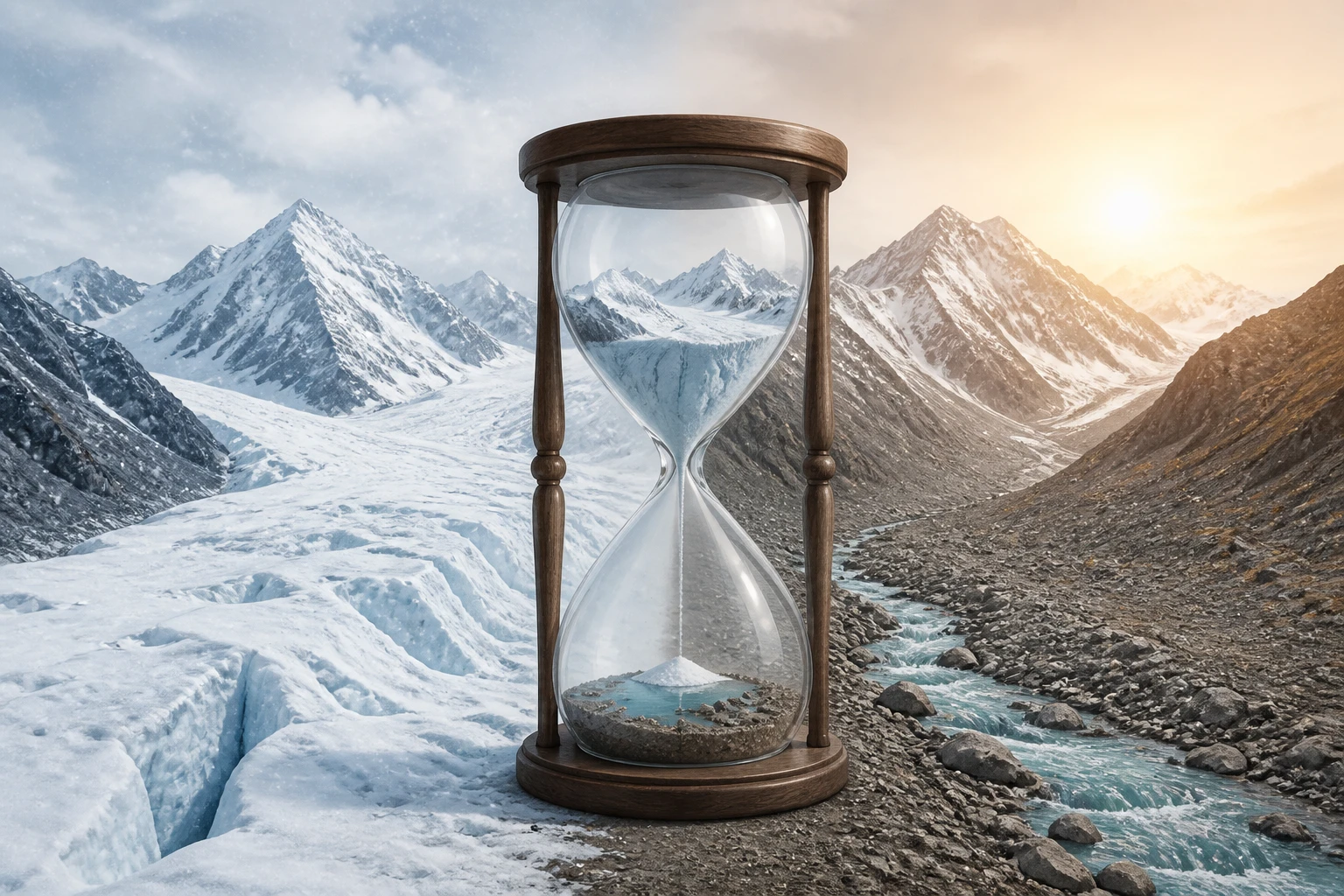
The Gangotri Glacier, source of the sacred Ganga River, is experiencing something unprecedented. Recent research has revealed that this massive ice system is losing its snow cover earlier each year, disrupting patterns that have remained stable for centuries. Think of it like your neighborhood's reliable water supply suddenly becoming unpredictable—except this "neighborhood" includes 400 million people who depend on the Ganga basin for their daily water needs.
The Problem
Here's what's happening in simple terms: Imagine the Gangotri glacier as a giant ice bank that has been making regular "deposits" and "withdrawals" of water for thousands of years. The Gangotri Glacier System (GGS) covers approximately 286 square kilometers and feeds the Bhagirathi River, which later becomes the Ganga.
Recent studies reconstructing the long-term discharge flow patterns show that this natural bank is now making withdrawals much earlier in the season than ever before. The glacier typically releases water gradually through the summer months, but climate change is accelerating this process. Surface temperatures in the Himalayas have risen by 0.6°C over the past century—that might sound small, but for a glacier, it's like turning up the thermostat in your freezer.
This isn't just about melting ice; it's about timing. The glacier's early snowmelt means peak water flow occurs weeks earlier than communities downstream have adapted to expect.
Analysis
The implications ripple through multiple sectors like dominoes falling in slow motion. From an economic perspective, this affects everything from agriculture to hydroelectric power generation. The Ganga basin contributes approximately 26% of India's total land area and supports the livelihoods of nearly half the country's population.
Agricultural impact is perhaps most immediate. Farmers in the Indo-Gangetic plain have structured their cropping patterns around predictable water availability. Earlier glacier melt means initial flooding followed by water scarcity during crucial growing periods. This timing mismatch could reduce crop yields by 15-20% in affected regions, according to agricultural scientists.
Energy security presents another challenge. Hydroelectric projects in Uttarakhand depend on consistent water flow throughout the monsoon and post-monsoon periods. Earlier peak discharge means power generation becomes less reliable, affecting the grid stability that industries rely on.
From a policy angle, this creates a perfect storm of challenges. Water resource management requires long-term planning, but glacier behavior is becoming increasingly unpredictable. The government must now balance immediate flood management with long-term water security—like trying to fill a bucket with a hole in it while the tap pressure keeps changing.
Urban planning in downstream cities also faces disruption. Cities like Haridwar and Kanpur, which have built their water infrastructure around historical flow patterns, now need expensive adaptive measures.
Real-World Examples
NHPC Limited, India's largest hydroelectric company, has already begun adjusting operational strategies at its Himalayan projects. Their Tehri Dam operations now factor in earlier peak flows, requiring modified reservoir management protocols that cost approximately ₹200 crores annually in operational adjustments.
ITC Limited's agricultural sourcing division reports that wheat procurement from Gangetic plains has become 12% more volatile over the past five years, directly correlating with irregular water availability. The company has invested in alternative sourcing networks and drought-resistant seed varieties to maintain supply chain stability.
Glaciologist Dr. Anil Kulkarni from the Indian Institute of Science explains that the Gangotri glacier has retreated approximately 22 meters per year since 1780, but the rate has accelerated significantly since 2000. His research team uses satellite imagery to track these changes, providing data that helps predict future water availability.
Uttarakhand's tourism industry, worth approximately ₹15,000 crores annually, is also adapting. Tour operators report that traditional trekking seasons are shifting, forcing them to revise packages and insurance policies to account for changed glacier conditions.
The Challenge
Why can't we just adapt quickly? The problem is like trying to redesign a city's entire plumbing system while people are still using it. Glacier systems operate on geological timescales, but their impacts affect human systems that operate on economic cycles.
Regulatory frameworks designed for stable climate patterns don't account for rapid environmental changes. Interstate water-sharing agreements, some dating back decades, become obsolete when the fundamental water source behaves unpredictably. Renegotiating these requires political consensus across multiple states—a process that typically takes years.
Future Implications
Looking ahead, this trend suggests we're entering an era of "peak water"—similar to peak oil, but for freshwater resources. The Gangotri glacier's changing patterns are likely irreversible under current climate trajectories, meaning adaptation isn't optional—it's inevitable.
Investment implications are significant. Water-intensive industries may need to relocate or invest heavily in water recycling technologies. Real estate markets in water-stressed regions could see valuation impacts as buyers factor in long-term water security.
Career considerations for young professionals might include the growing field of climate adaptation consulting. Companies across sectors—from agriculture to manufacturing—will need experts who understand both climate science and business operations.
For policy makers, this represents a shift from reactive flood management to proactive water resource planning, requiring new institutional frameworks and international cooperation on transboundary water management.
Looking Ahead
The Gangotri glacier's changing behavior isn't just an environmental story—it's a preview of how climate change will reshape economic and social systems. The question isn't whether we'll adapt, but how quickly and equitably we can do so.
What this means for you: Whether you're in finance, technology, agriculture, or any other sector, understanding water security risks is becoming as important as understanding market trends. The glacier's early snowmelt today could be affecting your industry's supply chain tomorrow.