

Overview
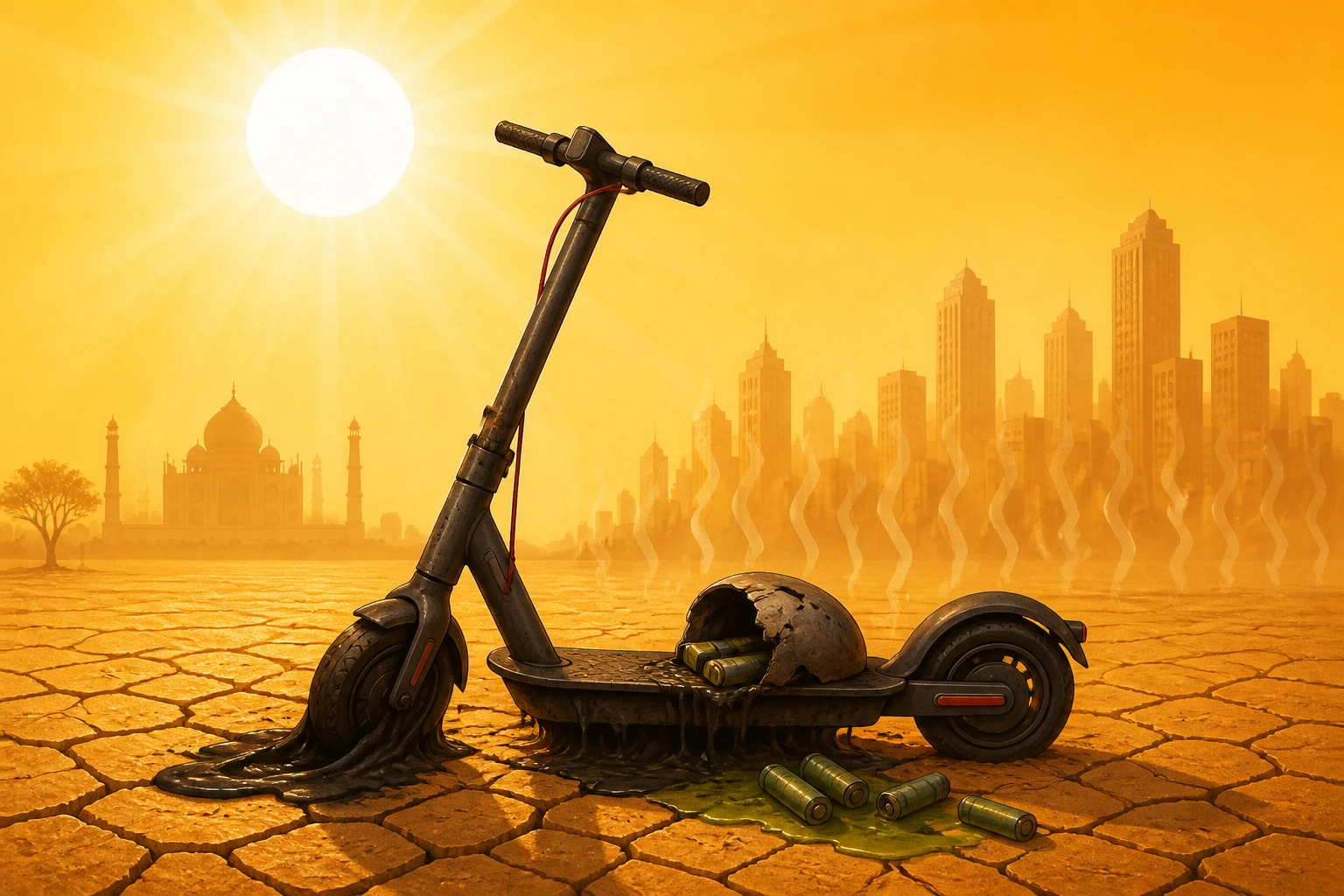
Picture this: It's May 2024 in Delhi, the mercury hits 47°C, and somewhere in the city, an Ola Electric scooter starts smoking. Then another. By summer's end, 400 e-scooters had caught fire across India. Everyone pointed fingers at faulty batteries, but here's the twist – the batteries weren't faulty. They were just doing exactly what they were designed to do: shut down when temperatures exceeded their 40°C operating limit. India's scorching summers had just exposed a fundamental flaw in our electric vehicle revolution.
Here's What's Happening
The Indian EV market, worth ₹5.4 lakh crores and growing at 49% annually, hit an unexpected roadblock this summer. Companies like Ola Electric, Ather Energy, and TVS Motor watched helplessly as their scooters became viral memes for all the wrong reasons. Social media exploded with videos of burning e-scooters, and suddenly, India's green transition looked less like progress and more like a safety hazard.
But here's what the headlines missed: these weren't manufacturing defects. Chinese battery manufacturers like CATL and BYD design their lithium-ion cells for global markets where 40°C is considered extreme heat. In 48 Indian cities, temperatures regularly cross this threshold between April and June, turning every parked scooter into a potential fire hazard.
Let's Break This Down
Think of a battery like a pressure cooker. At normal temperatures, everything works perfectly. But crank up the heat beyond its design limit, and things get dangerous fast. Lithium-ion batteries undergo thermal runaway – a chain reaction where heat generates more heat until the battery catches fire or explodes.
Chinese manufacturers optimize their batteries for temperate climates. When temperatures hit 45-47°C – routine for Indian summers – the battery's internal chemistry goes haywire. The electrolyte breaks down, gas builds up, and in worst cases, fires break out. ISRO studies show that battery efficiency drops by 20-30% when temperatures exceed 40°C, and safety risks multiply exponentially.
Now, companies are scrambling to develop "tropical batteries" – cells designed specifically for hot climates. Ather Energy partnered with Samsung SDI to create batteries that can handle up to 55°C. Ola Electric invested ₹500 crores in its own cell manufacturing facility to produce heat-resistant batteries. But here's the kicker: these tropical batteries cost 30% more than standard ones.
This cost increase ripples through the entire value chain. A standard e-scooter that cost ₹1.2 lakhs might now cost ₹1.5 lakhs. Suddenly, the price advantage that made EVs attractive to middle-class Indians is shrinking. Hero Electric CEO Sohinder Gill estimates that tropical batteries could increase vehicle costs by ₹15,000-20,000.
The problem gets worse with climate change. IMD data shows Indian summers are getting hotter – Delhi recorded 49.9°C in May 2024, the highest in 79 years. If temperatures keep rising, even tropical batteries might need upgrades, creating an endless cycle of redesign and cost increases.
The Bigger Picture
This heat problem reveals a deeper issue with technology transfer in developing countries. Global companies design products for their home markets, then expect them to work everywhere. But India's extreme conditions – from -20°C in Ladakh to 50°C in Rajasthan – demand localized engineering.
Government policy now faces a dilemma. The FAME II scheme incentivizes EV adoption with ₹10,000 crore in subsidies, but if vehicles become 30% more expensive, these incentives might not be enough. Transport Minister Nitin Gadkari recently announced stricter battery testing norms, but this might slow down the EV transition just when India needs to reduce emissions.
Insurance companies are also recalibrating. New India Assurance reported a 300% spike in EV fire-related claims this summer. Higher insurance premiums add another cost layer to EV ownership.
What's Next?
The Indian EV industry stands at a crossroads. Companies that invest in tropical battery technology early – like Ather and Bajaj – might gain competitive advantages. Others might struggle as summer fires continue making headlines.
Mahindra Electric is betting on solid-state batteries that handle heat better than lithium-ion, while Tata Motors explores lithium-iron-phosphate chemistry that's more stable at high temperatures. The race is on to crack India's heat code.
The bigger question: will climate change make our green revolution more expensive than we calculated? As summers get hotter, the true cost of electric mobility in tropical countries is only beginning to emerge.