

Overview
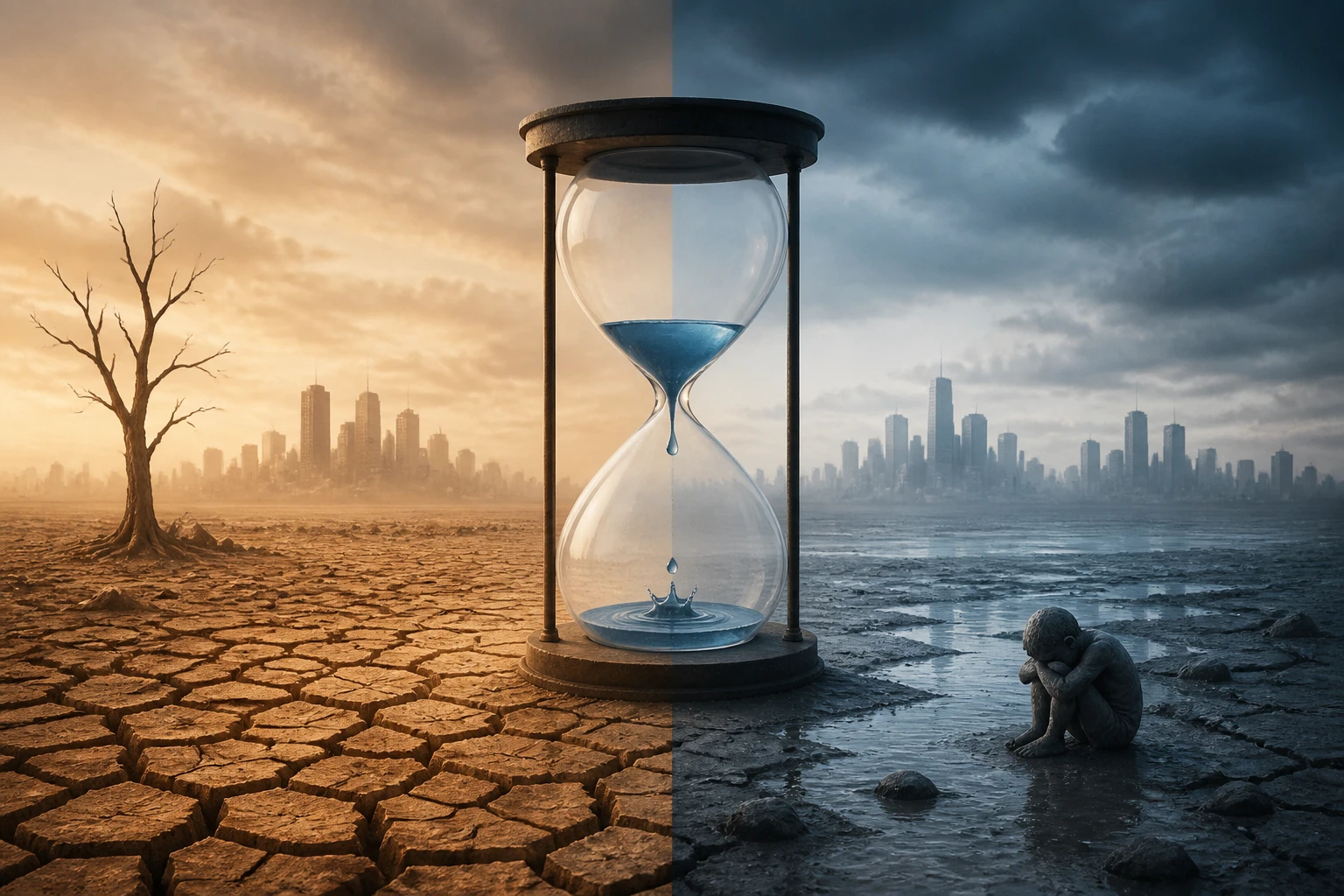
Imagine waking up one morning in 2050 to find your taps running dry for the third week this month. You check your phone – water trucks won't arrive for another four days, and the queue at the community well already stretches three blocks. This isn't a dystopian movie plot; it's the reality 5.1 billion people could face by 2050, according to UN Water. Currently, 3.6 billion people already experience severe water shortages for at least one month annually. For a generation that's witnessed pandemics and climate extremes, the water crisis might be the defining challenge of our lifetime.
Here's What's Happening
The numbers are staggering, but the story behind them is even more alarming. UN Water projects that water stress will intensify dramatically over the next three decades, with nearly 40% of the global population potentially affected by 2050. This isn't just about distant countries – India is already experiencing this crisis firsthand. Cities like Chennai, Bangalore, and Cape Town have faced "Day Zero" scenarios where municipal water supplies nearly ran out completely.
The crisis stems from a perfect storm: growing populations demanding more water, changing precipitation patterns due to climate change, and groundwater depletion happening faster than natural replenishment. Think of it like withdrawing money from a bank account faster than you're depositing – eventually, you hit zero.
Let's Break This Down
To understand this crisis, imagine Earth's water as a massive pizza. 97.5% of it is saltwater – completely inedible for our purposes. Of the remaining 2.5% freshwater, most is locked in glaciers and ice caps. We're left fighting over less than 1% of all water on Earth for drinking, agriculture, and industry.
Here's where it gets complicated. India, home to 18% of the world's population, has access to only 4% of global freshwater resources. We're already living on borrowed time, extracting groundwater at rates that would make our ancestors weep. The Central Ground Water Board reports that 36% of India's groundwater blocks are overexploited.
Climate change is reshaping rainfall patterns like a cosmic game of musical chairs – except when the music stops, entire regions are left without water. Monsoons are becoming more erratic, droughts longer, and floods more destructive but less useful for water storage. Cities that historically never worried about water – like Bangalore, India's Silicon Valley – are now rationing supplies.
Agriculture consumes 80% of available freshwater globally, yet we need to feed 9.7 billion people by 2050. It's like trying to fill an expanding balloon with a shrinking water source. Smart irrigation technologies exist, but adoption remains painfully slow, especially among smallholder farmers who produce most of the world's food.
The Bigger Picture
This water apocalypse won't affect everyone equally. Wealthy communities will likely adapt through technology – desalination plants, advanced water recycling, and smart distribution systems. But for billions in developing countries, including rural India, the choice will be stark: migrate or struggle.
Think about the economic implications for your career. Water-stressed regions will see reduced agricultural productivity, forcing food prices higher. Industries will relocate to water-abundant areas, reshaping job markets. Real estate values in water-secure cities will soar, while water-stressed areas become economically unviable.
Technology companies are already pivoting toward water-efficient solutions. Urban planners are rethinking city designs around water conservation. Financial institutions are factoring water risk into investment decisions. This crisis is creating new industries while destroying traditional ones.
The social implications are equally profound. Water conflicts – between farmers and cities, states and nations – will intensify. Migration patterns will shift dramatically as people chase reliable water sources, potentially creating the largest displacement in human history.
What's Next?
The 2050 timeline isn't inevitable – it's a warning. Countries investing in water infrastructure, conservation technologies, and policy reforms today will fare better tomorrow. Israel transformed from water-scarce to water-abundant through innovation and political will. Singapore turned from water importer to water technology exporter.
For India's youth, this crisis represents both challenge and opportunity. Careers in water technology, sustainable agriculture, and climate adaptation will boom. Cities that act now – implementing rainwater harvesting, wastewater recycling, and smart distribution – will become tomorrow's economic powerhouses.
The water apocalypse of 2050 isn't just an environmental issue; it's an economic, social, and political revolution waiting to happen. The question isn't whether it's coming – it's whether we'll be ready.